“AI Picked My Numbers, Then I Won $100,000” Powerball Winner Goes Viral Nationwide

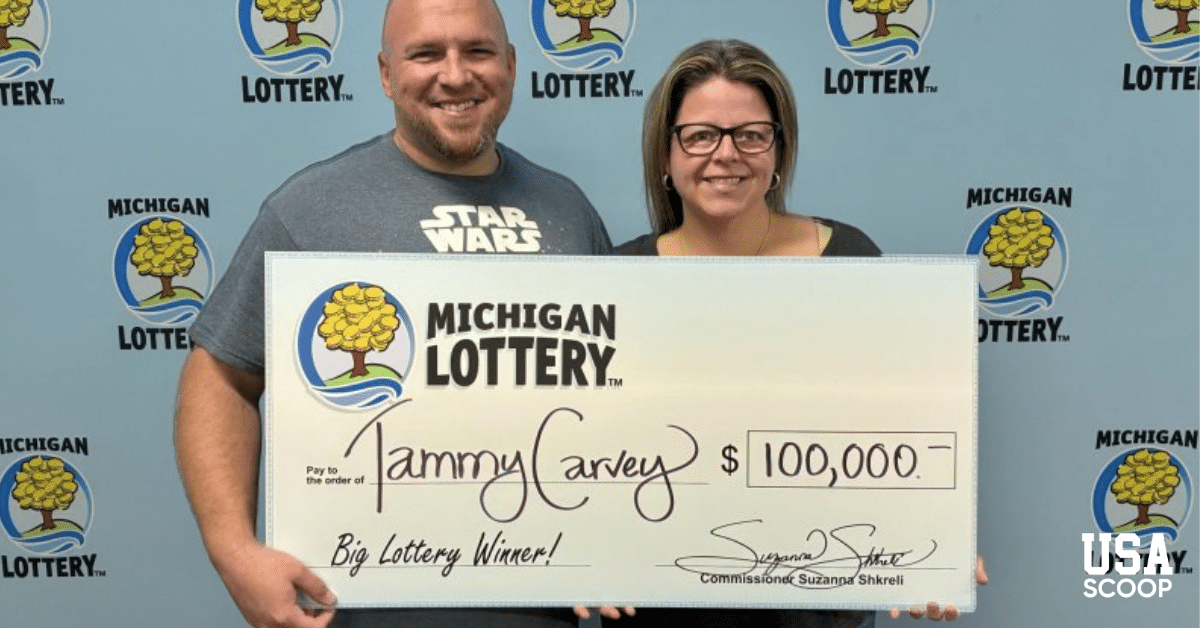
A 45-year-old Michigan woman asked ChatGPT to pick her Powerball numbers, and walked away with a $100,000 win that stunned lottery officials, sparked national headlines, and kicked off a heated debate about AI, luck, and superstition.
Tammy Carvey wasn’t trying to make headlines. She wasn’t launching an experiment or a TikTok challenge. All she wanted was a Powerball ticket for a billion-plus jackpot, and a little help picking numbers. So she opened her phone, asked ChatGPT to generate a sequence, and bought a ticket using the AI-produced numbers.
Forty-eight hours later, she was staring at a $100,000 winning slip and telling the Michigan Lottery she was in total disbelief. The story took off instantly. It exploded across social media, reached national outlets from Fox News to People Magazine, and became one of the strangest AI-meets-reality stories of the year.
According to the Michigan Lottery, Carvey matched four white balls and the Powerball in the September 6 drawing. And because she added the Power Play option, a $1 upcharge most players skip, her prize doubled from $50,000 to $100,000.
The Viral Moment: ‘I Asked ChatGPT’
When Carvey claimed her prize, officials asked her how she chose her numbers. She didn’t hesitate. “I asked ChatGPT for a set of Powerball numbers and those are the numbers I played,” she said, according to the Michigan Lottery and multiple U.S. outlets.
Those numbers, 11, 23, 44, 61, 62, and Powerball 17, weren’t lucky in any traditional sense. They weren’t based on birthdays, anniversaries, lucky charms, horoscopes, or numerology. They were generated by a chatbot that openly admits lottery outcomes are unpredictable.
But that didn’t stop the Internet from losing its mind for a full 24 hours.
TikTok creators began posting videos asking ChatGPT for their own number combinations. Twitter/X filled with jokes about AI becoming the new psychic hotline. And dozens of U.S. outlets picked up the story because it captured a very 2025 mood, part tech fascination, part superstition, part chaos.
What Actually Happened, and What Didn’t
The Michigan Lottery made one thing very clear after the story went viral. ChatGPT did not predict the winning numbers. It does not access lottery predictions, inside data, probability models, or some hidden algorithm the public doesn’t know about.
It can’t forecast future random-number drawings.But the psychology behind Carvey’s decision and the public reaction to it tells a bigger story. People trust AI not just for information but for intuition. They treat it as a brainstorming tool, a decision-maker, sometimes even a digital lucky charm. Science hasn’t changed, but people have.
Why AI-Generated Lottery Numbers Hit a Cultural Nerve
Carvey’s story is funny and harmless on the surface. But the reason it resonated so widely is because it sits at the crossroads of multiple trends shaping modern life.
First, there’s the AI mystique. Even though most people understand ChatGPT isn’t magical, the cultural perception of AI blurs the lines between logic and superstition. Using it to pick lottery numbers taps into the same impulse that leads people to check astrology apps or wear lucky socks.
Second, the jackpot was enormous, over $1.04 billion, which already makes every Powerball story pop. When jackpots cross the billion-dollar line, casual players flood stores for tickets, and any quirky anecdote becomes fuel for a viral headline.
Third, there’s a social trend emerging, as people are using AI not just to answer questions but to make small personal choices, like picking meals, planning vacations, or now, choosing lottery numbers. Carvey’s win makes that behavior feel validated, even though the result was pure luck.
How the Money Changes Things
Carvey told officials that she plans to pay off my house and save the rest. A far more grounded approach than the blow-it-in-Vegas stereotype most lottery stories carry.
Her use of Power Play doubled the prize, a move many players ignore. Power Play doesn’t increase the jackpot, but it multiplies second-tier wins. On this particular night, it turned a good day into a life-changing one.
But even then, Carvey wasn’t expecting the outcome. She said she initially believed she’d won $50,000, still significant, before realizing the multiplier boosted her prize to six figures. Her husband reportedly looked at the ticket three times before accepting it. It’s the kind of domestic, everyday disbelief that makes stories like this feel real rather than sensationalised.
What Experts Are Saying
Lottery officials and tech experts have both weighed in, and they are on the same page, that AI is not lottery magic. Tech analysts told outlets like TechRadar that using AI for number generation is no more predictive than choosing based on birthdays or picking random digits.
It simply feels different because AI adds a psychological layer of authority, even when the underlying randomness is unchanged. Michigan Lottery spokespersons reinforced the randomness message, reminding players that no method can predict an outcome and advising them to play responsibly.
Still, experts also note the cultural impact that stories like Carvey’s accelerate the normalisation of AI in personal decision-making, even in areas where it has no predictive power.
What This Means for the Future of AI + Luck
Carvey’s win won't change how lotteries work. It won’t spark a wave of AI-assisted predictions because such predictions are impossible. But it does mark a new moment in how people interact with technology.
We have moved from asking AI for recipes and shopping lists to asking it for life advice, dating help, college essays, and now lottery numbers. It’s not that people think AI can bend probability. It’s that people enjoy adding a technological twist to an old ritual. It feels modern, and it feels fun. And sometimes, one out of millions, it pays off.
Final Takeaway
Tammy Carvey didn’t outsmart the Powerball system. She didn’t exploit AI or discover a hidden algorithm. She gambled, and luck, not logic, did what luck does on rare and random nights. But her story is a sign of the times that technology has become so embedded in daily life that even lottery numbers feel like something we can outsource.
For Carvey, outsourcing worked. For everyone else, the odds are still the odds. But in a world where people constantly blend tradition and tech, her win is the perfect example of what happens when old luck meets new tools, and the universe decides to let someone hit big.