Arizona AG Kris Mayes Sparks Outrage After Suggesting Residents Could Shoot Masked ICE Agents

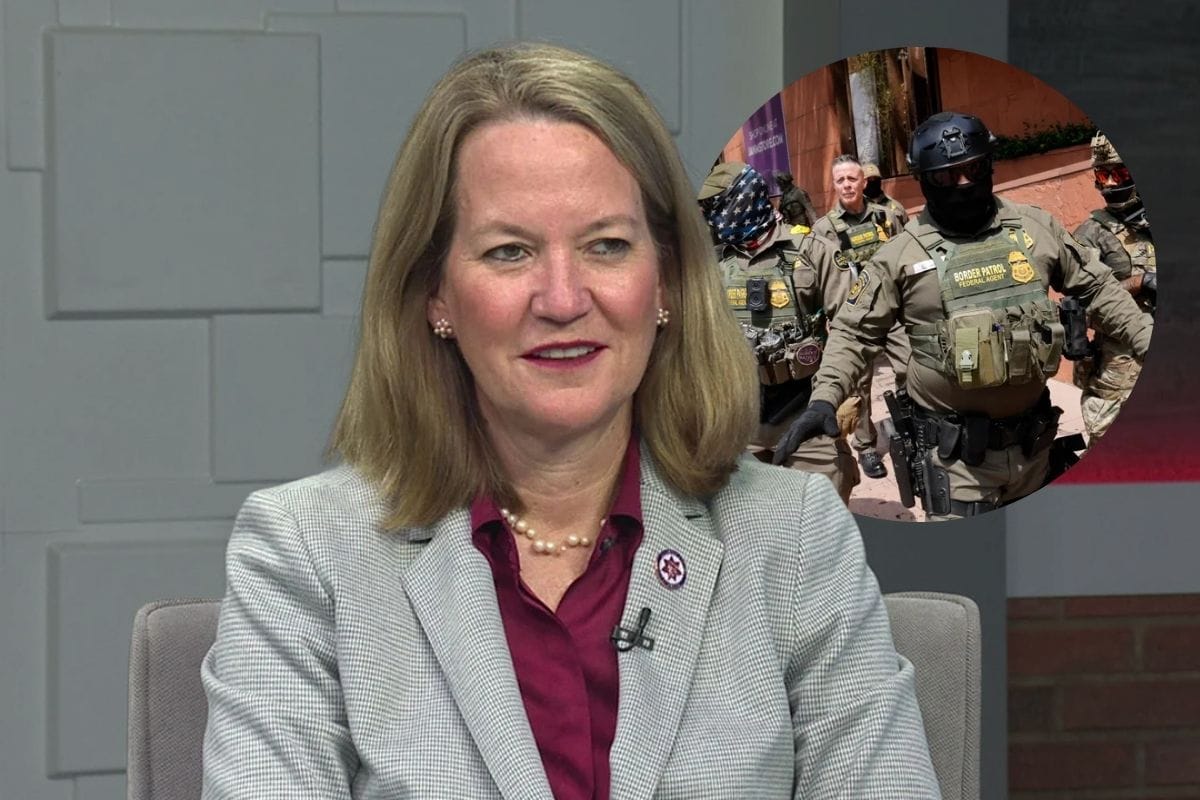
A firestorm erupted this week after Arizona Attorney General Kris Mayes made comments suggesting that residents could legally use deadly force against masked ICE agents if they reasonably feared for their lives under Arizona’s self-defense laws. Her remarks, made during a televised interview, immediately drew fierce criticism from lawmakers, law enforcement officials, and federal authorities, who warned that such rhetoric could put lives at risk.
Mayes, a Democrat elected in 2022, raised concerns about the growing presence of federal immigration officers in Arizona and the way some operations are being carried out. She pointed to Arizona’s “Stand Your Ground” law, which allows individuals to use lethal force if they believe they are in imminent danger while on their property, in their vehicle, or inside their home.
According to Mayes, the combination of armed federal agents wearing masks or plain clothes and Arizona’s expansive self-defense statute creates a dangerous situation.
“It’s kind of a recipe for disaster,” she said, describing scenarios where residents might not be able to tell whether someone confronting them is a legitimate law enforcement officer.
A Heated Exchange on Live Television
The attorney general’s remarks came during an interview with local news anchor Brahm Resnik, who repeatedly challenged her statements. Resnik warned that her words could easily be interpreted as giving residents a “license” to shoot federal agents.
Mayes pushed back, saying she was not encouraging violence but was simply stating how Arizona law works.
“If you’re being attacked by someone who is not identified as a peace officer, how do you know?” she asked during the interview. She added that “real cops don’t wear masks,” a statement that quickly drew backlash from federal agencies and police groups.
Mayes emphasized that she owns firearms herself and understands how quickly fear can escalate when someone believes they are being threatened. Still, she insisted she was explaining legal realities, not urging people to pull out their guns.
Federal and Republican Leaders Push Back
Reaction from Washington and Arizona Republicans was swift and harsh.
Arizona Republican Representative David Schweikert condemned the attorney general’s remarks, calling them reckless and irresponsible. He accused Mayes of casually describing scenarios where violence could break out and then brushing off the consequences.
“Words matter,” Schweikert said, arguing that comments from a state’s top law enforcement official carry enormous weight. “You don’t hand out a permission structure for violence and then act surprised when people hear it as a green light.”
The Department of Homeland Security also issued a sharp response, accusing political leaders of inflaming tensions at a time when threats against federal officers are rising.
“This kind of rhetoric is going to get someone killed,” a DHS spokesperson said, describing the comments as dangerous and inflammatory.
Vice President JD Vance echoed those concerns during a recent visit to Minneapolis, urging local and state leaders across the country to “tone down the temperature” as immigration enforcement continues to spark protests nationwide.
Context: Rising Tensions After a Deadly Shooting
Mayes’s remarks did not come in a vacuum. Immigration enforcement has become one of the most volatile political issues in the country, especially after a series of high-profile confrontations between federal agents and protesters.
Earlier this month, a deadly encounter in Minnesota involving an ICE officer and a protester intensified nationwide outrage. Demonstrations spread across multiple states, with activists accusing federal agents of excessive force and secrecy, while federal officials warned that officers are increasingly being targeted.
Arizona has recently seen an uptick in immigration enforcement activity, raising fears that similar clashes could erupt in the state.
Mayes said she plans to prosecute any federal agent who violates Arizona law, adding fuel to an already tense standoff between state and federal authorities.
Law Enforcement Groups Sound the Alarm
Police unions and law enforcement associations reacted with alarm, saying the attorney general’s comments undermine officer safety and public trust.
Many pointed out that federal agents sometimes wear masks to protect themselves and their families from retaliation, especially during high-risk operations involving organized crime or human trafficking networks.
“These officers are not hiding their identity to scare people,” one law enforcement official said. “They’re doing it to stay alive.”
Critics argue that suggesting masked officers are not “real cops” creates confusion and could lead to tragic misunderstandings during already tense encounters.
A State on Edge
Arizona’s “Stand Your Ground” law has long been controversial, and Mayes’ remarks have reignited debate over how far self-defense protections should go. Legal experts say the law does not give blanket permission to shoot someone simply because they are unidentified, but fear and confusion can blur those lines in real-world situations.
As immigration enforcement expands and protests continue, many worry that rhetoric from leaders on both sides is pushing communities closer to violence.
With Mayes facing reelection later this year, her comments are likely to remain a major political flashpoint. Supporters say she is standing up for civil liberties and transparency in policing. Critics argue she crossed a dangerous line by publicly discussing lethal force in such stark terms.
For now, federal officials are urging calm, while state leaders brace for what could be a volatile period ahead. One thing is clear: the debate over immigration enforcement, police authority, and self-defense laws is far from over and Arizona has become one of its most explosive battlegrounds.