Autopen Controversy The Machine Behind Trump’s Attack on Biden

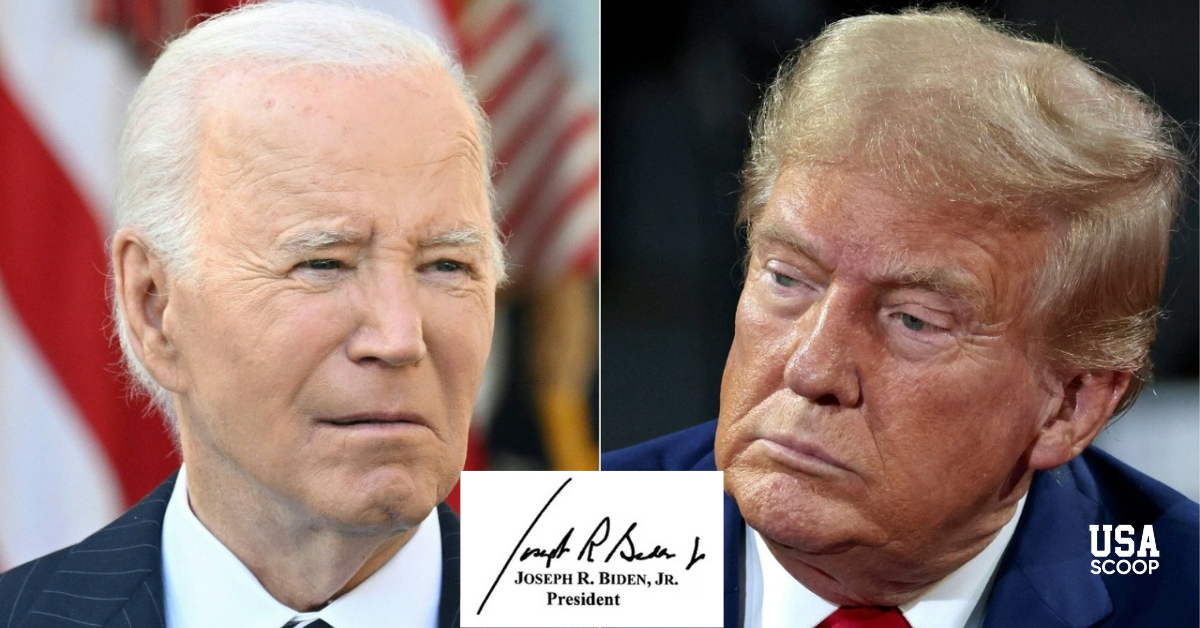
A mechanical pen, long used quietly inside the White House, is now under fierce public scrutiny as a tool of legitimacy and partisan attack.
The autopen is, at its core, a mechanical device that is designed to reproduce a handwritten signature. A pen sits in a robotic arm that traces a stored signature template onto paper, creating a signature that looks identical to the original. It’s real ink, with real pressure, but executed by a machine rather than a human hand.
For decades, US presidents have relied on the autopen to handle the sheer volume of paperwork that comes with the office, from letters and routine correspondence to legislation, pardons, and executive actions.
The rationale is that when time zones, travel, legislation deadlines, or massive workloads collide, the autopen allows the president to delegate the act of signing, though not the act of deciding.
A 2005 legal opinion from the Department of Justice affirmed that as long as the president personally authorizes the content, the device can be used to affix the signature.
Historically, the autopen has been employed by presidents across party lines, from those working from abroad to those juggling momentous schedules at home. So far, the practice has been treated as a mundane convenience rather than a point of controversy.
Trump’s Attack on Biden’s Legacy
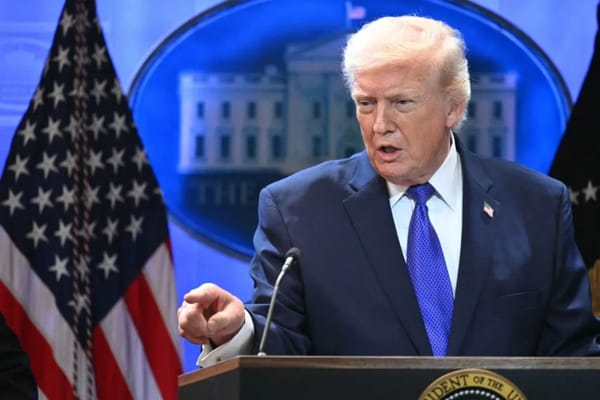
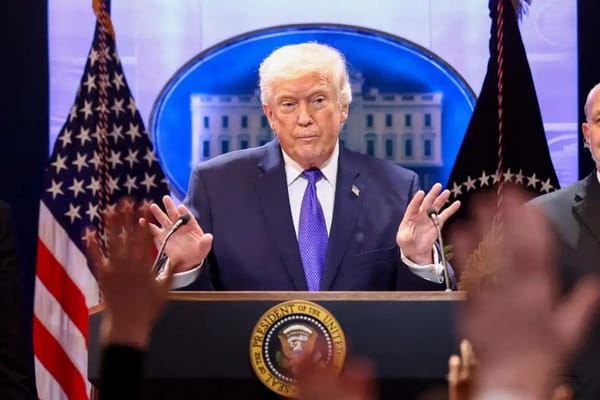
What changed in 2025 is the context. Recently, Trump renewed claims that virtually all of Biden’s executive orders, pardons, and major documents were signed using an autopen. He told supporters that in doing so, Biden was not involved, and on that basis, declared such orders invalid. Trump estimated about 92 per cent of Biden’s official actions fell into that category.
Even more dramatically, he threatened perjury charges against those who assert Biden personally signed the papers, contending that the use of a machine usurped the authority vested in a hand-written signature.
In one symbolic gesture, his administration replaced Biden’s portrait in a presidential walk of fame with a picture of an autopen signing, i.e., a provocative statement showing that this is a weapon in a broader narrative about legitimacy, competence, and power.
What had once been a discreet administrative tool is now at the center of a constitutional and political firestorm.
Why Autopen Use Has Been Considered Valid, Until Now
The autopen is not a novelty. Rooted in early 19th-century experiments in mechanical writing, the device and its descendants have been part of presidential life for more than two centuries. Its use became especially pragmatic with the rise of global travel and the growing demands of asynchronous governance.
Legal clarity had come in 2005, when the DOJ addressed outright whether a signature affixed by autopen counts under Article I, Section 7 of the Constitution. The conclusion was yes, so long as the president personally approved the content. That legal framework has allowed successive administrations to treat autopen-signed documents as fully valid, including laws, military orders, and pardons.
Even under intense partisan scrutiny, courts have historically declined to invalidate presidential acts solely because of autopen signatures. There is no federal law that prohibits its use, nor any blanket requirement that every executive action bear a handwritten signature.
So legally, the autopen is accepted, and its legitimacy is embedded in decades of practice. What’s changed is the political will to question that legitimacy.
Why Some See the Attack as Political Grandstanding
Given the history, many constitutional scholars, legal analysts, and veteran White House aides view Trump’s repudiation of autopen signed orders as his political posturing. There is no clear evidence that Biden lacked personal approval, and the Justice Department’s 2005 memo still stands its ground despite the recent developments.
Beyond legal semantics, the controversy reveals a deeper tension between presidential authority and public trust. By attacking the autopen’s legitimacy, Trump is questioning the credibility of an entire presidency. Moreover, the uncertainty this stirs is consequential as citizens, foreign governments, businesses, and courts rely on the stability of executive actions. If one president retroactively redeems or rejects another’s orders based on signature form rather than substance, the continuity of governance and the confidence in US institutions could fray.
Legal, Political and Institutional Crossroads
In the short term, one can look forward to legal challenges, political dueling, and perhaps even court filings if the episode escalates to that measure. Autopen-signed pardons, executive orders, and regulatory documents may be challenged on form, pushing the limits of constitutional interpretation.
Institutionally, this could force a review of how signatures and authorisations are handled at the highest levels. White House staff could lean toward more hand-written or digitally authenticated processes for institutional survival. The devices that once sat in a security-cleared room may become relics of convenience rather than accepted practice.
Politically, the controversy may reshape debates around presidential age, capacity, delegation, and transparency, which could be a fuel for adversaries and also reassurance for the supporters. The autopen becomes a symbol of deeper anxieties about who really holds power in the Oval Office.
And for citizens, the shock may come from realising how bureaucratic tools, i.e., a pen, a machine, a signature, carry weight far beyond paper, as a decision by delegation has always existed, but what now matters is who controls the ink, who defines consent, and whether legitimacy leaps from automation to affirmation or fracture.
The autopen has long been mundane, and as a mechanical assist to the presidential workload. It lived behind closed doors, unnoticed by most, but accepted by all.
But when a politician chooses to cast it as a symbol of illegitimacy, it becomes almost mythical, as a lever to challenge an entire presidency.
What’s remarkable is not that the device exists, but that the autopen stands at the center of a clash over authority, trust, and how a democracy remembers its law-making moments.
Whether the controversy ends with a court judgement, a political compromise, or faded memory, one thing may change forever, i.e., the quiet convenience of a pen letting the machine do the writing. In its place, the White House, and perhaps the world, could demand a human mark of consent once again.