Does Trump’s MRI Reveals Moment of Transparency or Another Political Gamble?

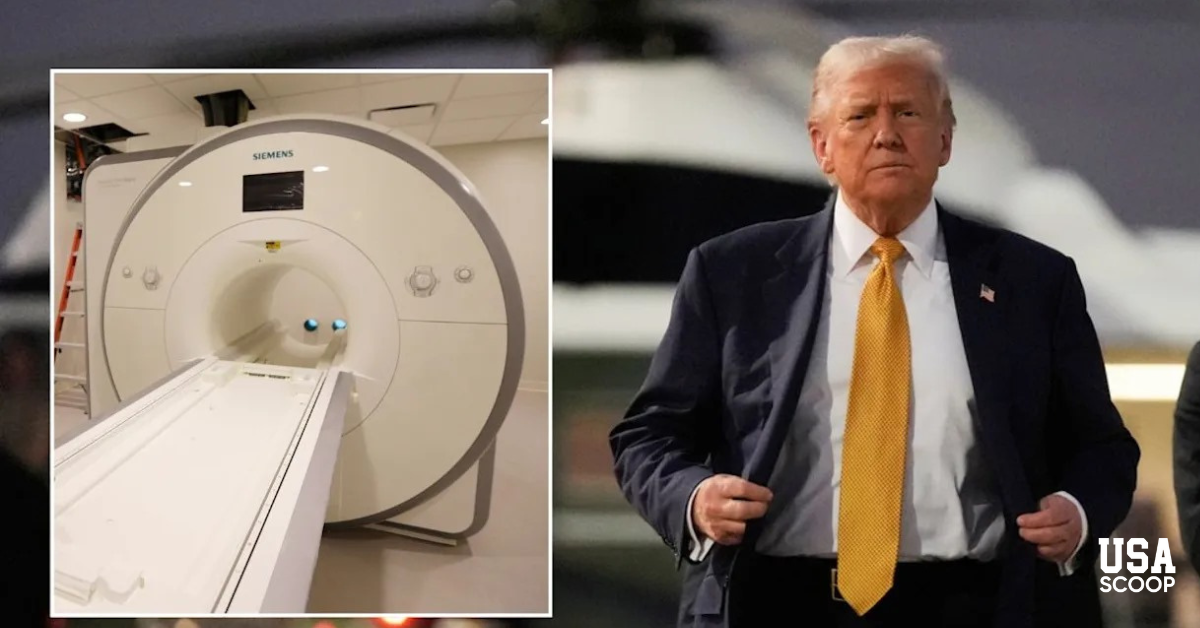
As Trump vows to publish the results of his recent medical scan, America braces for fresh scrutiny over presidential health and the stakes of the disclosure.
In October, President Trump visited Walter Reed National Military Medical Center for what the White House described as a routine physical, part of the periodic health reviews afforded to those in the Oval Office.
Among the tests was an MRI scan, and the medical visit was largely unremarkable until late November, when the existence of the MRI quietly surfaced and prompted renewed scrutiny.
On November 30, Trump publicly declared he was ready to release the scan’s results, calling them perfect. Yet almost immediately, the pledge was accompanied by disconcerting ambiguity; when asked what part of his body had been scanned, the president said he had “no idea.”
He added that it wasn’t the brain because he took a cognitive test and he aced it.
The shift from silence to conditional transparency has stirred more questions than it answered, about him, medical disclosures, and what the American public deserves when it comes to assessing the fitness of its leader.
Why This MRI Has Become a Symbol
At 79 years old, Trump is the oldest serving US president in history. Concerns about his health, physical stamina, cognitive sharpness, and overall capacity have quietly shadowed his tenure for months. These concerns resurfaced earlier this year when the White House acknowledged a diagnosis of chronic venous insufficiency, a common condition in older adults that affects blood flow in the legs. That disclosure came alongside photos and reports that fueled speculation about bruising, fatigue, and physical decline.
In that context, the MRI was a potential check on transparency. For many Americans, it represented a chance to offer hard evidence about what health conditions, visible or hidden, the commander-in-chief might be carrying.
By offering to release the results while withholding key details like what was scanned, Trump has walked into a political tightrope.
Trust, Transparency and More Than Just Perception
If Trump releases a full MRI report showing no problems, it may quell some speculation, as critics who question his energy or sharpness may be forced to step back. Supporters, in turn, could claim vindication. But if the release comes with redactions, omissions, or limited context, as is common in medical disclosures, it risks doing little more than raising further doubt.
Leaders often face a tension between privacy and public duty. But voters, lawmakers, foreign governments, and institutions rely on evidence. A president’s health is not a private matter when it potentially affects policy, world stability, and the reins of power.
Moreover, the response to the MRI disclosure could set a lasting precedent, as a full, unfiltered disclosure could raise expectations for future office-holders, resetting what transparency means at the highest levels.
Mixed Signals, Heated Debate
Critics have been vocal, as some lawmakers and pundits have argued that an MRI was done behind closed doors, never previously mentioned, and then acknowledged only when challenged, which has eroded credibility overall. For them, the delayed acknowledgement, vague explanation, and the president’s own admission that he doesn’t know what part of his body was scanned fuel suspicion more than they resolve it.
Others warn that releasing detailed medical scans sets a dangerous precedent, risking misinterpretation, medical privacy exposure, and politicisation of personal health records, as what looks like transparency to some may feel like an invasive spectacle to others.
Yet demand is rising, as calls for release of the MRI results have surged, from veterans, medical-ethics observers, civil-liberties groups, and everyday citizens concerned about the seriousness of presidential health.
What Happens Next And What the Public Should Watch For?
The form and scope of disclosure will shape the entire narrative. Whether the White House chooses to publish full MRI scans, issue a detailed doctor’s summary, or limit itself to a brief press note will determine how much confidence the public can place in the information.
A scan provides visual proof and granular detail, while a summary is easier to digest but inherently less transparent. A prompt and comprehensive release could steady anxious voices, while any delay or redaction risks amplifying suspicion and fuelling speculation.
Equally important is the question of follow-up transparency, as this will be a one-time concession or the beginning of regular, institutionalised disclosures of check-ups, test histories, and cognitive assessments? Public reaction will dictate whether the episode fades or intensifies.
President Trump’s willingness to release the results of his October MRI is an acknowledgement that in modern democracy, power is inseparable from public confidence. What remains to be seen is whether this act becomes a genuine step toward transparency or just another headline designed to stall deeper questions.
The hope, for citizens weary of uncertainty, is that the results bring clarity, not more confusion. In the next few days, as the report comes out, every word, omission, and medical phrase will be scrutinised for medical insight, alongside the judgment and the future of leadership.