Donald Trump Unveils “Genesis Mission” To Supercharge America’s AI Power

With the executive order unleashing a massive federal-private AI platform, Washington is betting big on artificial intelligence to reboot America’s scientific edge, but questions about funding and strategic coherence loom large.
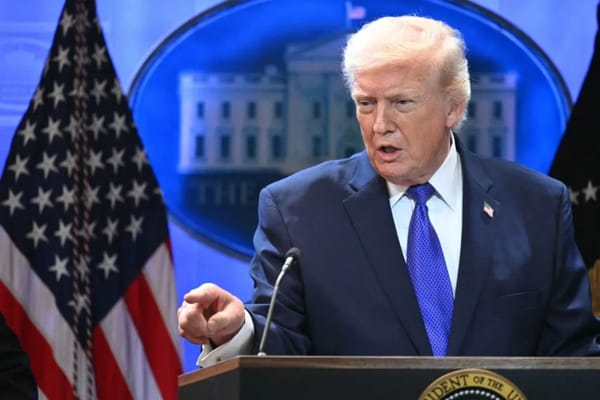
On 24 November 2025, President Trump signed an executive order launching the Genesis Mission, a federal initiative described by the White House as the largest marshaling of scientific resources since the Apollo programme.
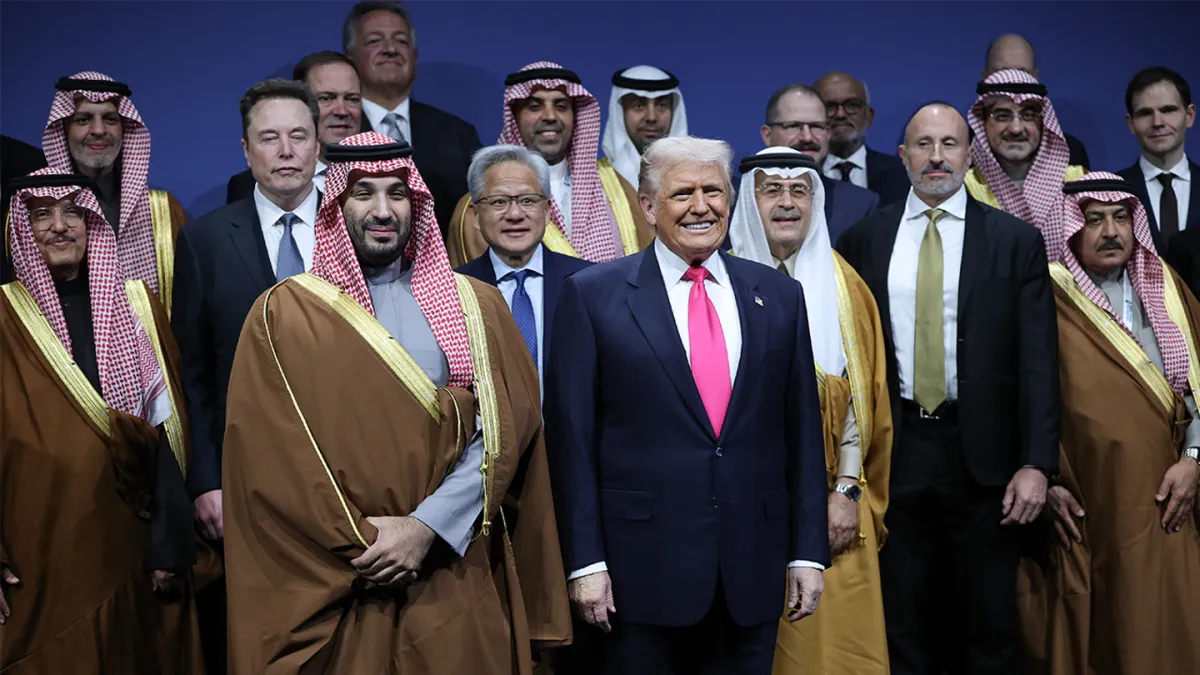
The order directs the US Department of Energy (DOE) and its national laboratories to build a unified AI platform, pair federal scientific datasets with advanced supercomputing and invite participation from universities and private-sector firms such as chips and server providers.
The ambition is to accelerate scientific discovery in fields like fusion and assert US global leadership in artificial intelligence. Still, launching such a mission at high speed risks misalignment between ambition and reality.
What the Mission Encompasses
According to the executive order, scientific data held across federal agencies, especially the DOE’s 17 national labs, will be opened (or made AI-readable), supercomputing capacity will be pooled and private-sector AI platforms brought in to work on national-scale problems.
A key stated objective is to automate experiment design, accelerate simulation, and generate predictive models for everything from protein folding to fusion plasma dynamics.
For example, DOE statements explain that integrating data along with AI and computing aims to double US R&D productivity and address energy security, innovation backlogs and defence readiness.
Strategic Motives of Technology Race, Energy Imperative, National Security
The US is in a tech rivalry with China and this initiative is meant to cement American leadership in AI and scientific capability. Furthermore, energy concerns about the large-scale AI and computing demand huge electricity resources and hence the mission ties into grid modernisation, fusion energy, and reducing dependence on foreign energy flows.
Moreover, the initiative explicitly names biotechnology, microelectronics, quantum science and defence materials among target areas.
In short, the mission is framed as part of a broader competition for global standing and military-technical advantage.
Where the Rubric Meets Reality
The promise is of faster breakthroughs, reduced timelines, integration of public data and private AI, but the realities raise immediate questions.
While the executive order calls for using existing resources, there’s no large new appropriation that has yet been clearly committed. Without sustained investment, such an expansive mission may stall in the long run.
The order also proposes making federal datasets available and connecting private-sector supercomputers with government networks, but safeguards for national-security and proprietary records remain intricate and incomplete.
Finally, the energy and sustainability trade-off looms large, as AI infrastructure is power-hungry, and until grid upgrades catch up, the initiative could create higher costs or environmental strain.
Messaging, Technology and Workers
For President Trump, the mission reinforces his narrative of American renewal of making the US the leader in AI, science, industry and security.
It appeals to parts of his base that are optimistic about technology and infrastructure, while also speaking to national-power themes.
At the same time, the American First policy wing of his coalition has raised concerns about AI’s impact on jobs, energy costs and worker displacement, issues the initiative will need to address.
The campaign for AI supremacy must reconcile with worker protections and energy affordability.
Overreach, Governance, and Strategic Drift
However, proclaiming Apollo-scale ambition also sets expectations that may prove impossible to meet within time or resources.
Failure would not only underdeliver but could damage trust in government science programmes. Combining private-sector AI power, supercomputing infrastructure and sensitive government data brings alive questions about accountability, transparency and oversight.
If safeguards falter going forward, the initiative could face backlash from civil-liberties groups and lawmakers. Tying US science and AI leadership to a single initiative further places a high-stakes bet on the outcome.
Next Steps and What to Monitor
Several key indicators will determine whether the Genesis Mission becomes meaningful or murky.
The first is budget appropriations, over whether Congress is willing to allocate the funds needed to scale computing, data infrastructure and cross-sector partnerships.
Attention will also turn to partnership announcements, which private-sector firms and universities sign on, under what terms, and whether hardware companies, cloud providers and AI startups make tangible commitments.
Milestone metrics will be of importance too, especially whether the Department of Energy publishes clear performance benchmarks showing faster research cycles, concrete breakthroughs and clarity on which scientific fields deliver first.
Alongside this, the regulatory and ethics frameworks surrounding the initiative will be crucial, as the opening of data and the deployment of AI for science and security raise questions around privacy, bias, national security and accountability.
A Strategic Gamble With Stakes Beyond Science
The Genesis Mission is at once a science policy project, a technology industrial strategy and a geopolitical manoeuvre.
President Trump’s executive order signals a belief that America will leap ahead in AI by using federal data, supercomputing muscle and private-sector energy to shape the future.
But, vision without resources, ambition without governance, or promise without performance tends to run into turbulence. If executed well, the mission could shift the research paradigm and strengthen US strategic posture in energy, biotech and tech, but if it falters, the legacy may be of missed opportunities, wasted spending and most importantly, of political regret.