Eileen Higgins Wins Miami, Ends 30 Years of GOP Control

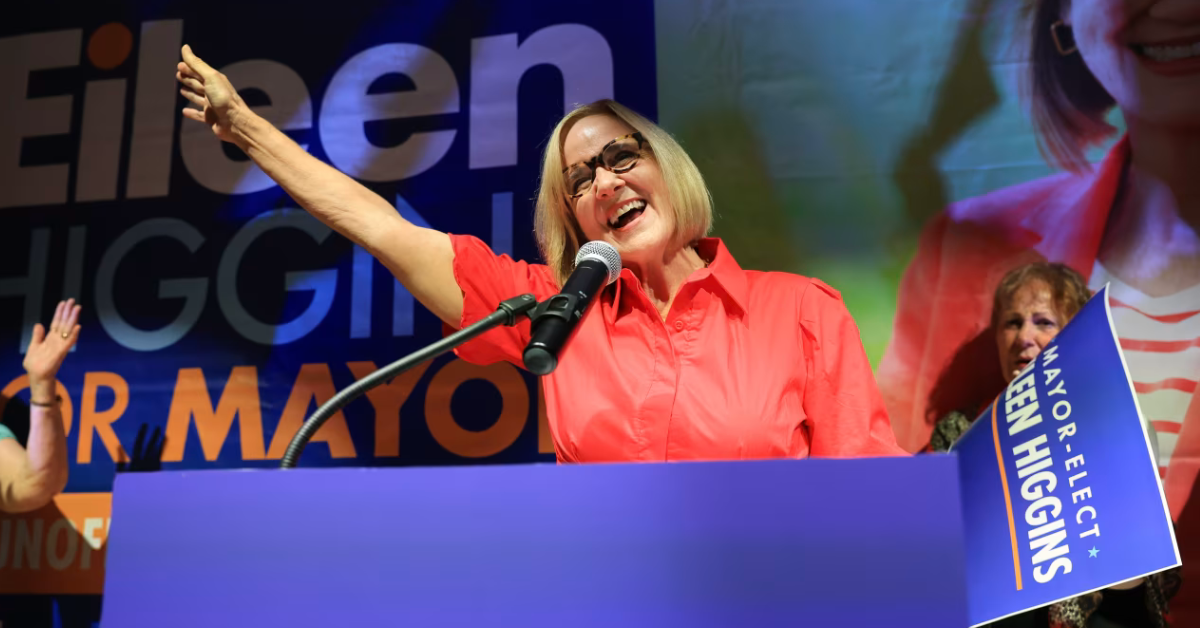
With nearly 60% of the vote in the December 9 runoff, Higgins becomes Miami’s first woman mayor and first Democrat in decades.
On the evening of December 9, 2025, Miami voters decisively backed Eileen Higgins in the city’s mayoral runoff, handing her a 59% to 41% victory over Republican Emilio Gonzalez.
The preliminary tallies from the Miami-Dade County Supervisor of Elections marked the end of a nearly three-decade era of Republican-led city government. With this result, Higgins becomes Miami’s first female mayor and also its first Democrat in the position since 1997.
That outcome came after a first round of voting on November 4 in which Higgins led with 35.95 % against Gonzalez’s 19.47 %, but fell short of a majority, triggering the runoff. Through the campaign and into the final vote, Higgins maintained a lead, but the size of her margin reflected a broader shift in the political leanings of Miami’s electorate, one that may carry implications beyond city hall.
Who Eileen Higgins Is
Eileen Higgins is a long-time public servant, as she served on the Miami-Dade County Commission from 2018 until 2025, representing District 5, and during that period, she focused on issues such as affordable housing, public transportation, climate resilience, and reforming permitting processes, priorities that she carried into her mayoral campaign.
Her campaign stressed accountability, improvements in city services, affordability for residents, and inclusive policies for Miami’s diverse and heavily immigrant population. In a city where immigration, economic pressure, and housing costs have become central concerns, her platform appeared to resonate strongly. Observers note that those messages, along with her local record, helped build a coalition across age, income, and ethnic lines, enough to deliver a clear victory.
Given Miami’s demographic makeup, including a large Hispanic and immigrant community, and rising discontent with rising living costs and governance issues, many see her win as a reflection of shifting priorities among voters. The result may signal a desire for policies oriented around inclusion, affordability, and community services rather than partisan identity.
What the Victory Means
Higgins’ win represents more than just a change of mayor; it marks a political reset for Miami. Following a generation of Republican stewardship, the city now enters a different chapter under Democratic leadership. With her win, long-standing city governance patterns may be re-examined, and priorities like affordable housing, transport expansion, climate resilience, and immigrant rights may get renewed focus under her administration.
The result also sends a broader signal about urban politics in South Florida. At a time when national conversations are polarised, local elections sometimes cut across partisan lines, but Miami’s electorate appears to have endorsed a shift. For the Democratic Party, the victory provides momentum heading into 2026, offering a high-profile example of how candidates can win major offices by focusing on local issues and outreach rather than national partisan divides.
Moreover, being both the first woman and first Democrat in nearly 30 years to serve as mayor gives Higgins symbolic significance, and her tenure could redefine civic leadership for future generations and reshape governance styles in a city marked by complexity and diversity.
Challenges Ahead: Expectations, Governance and Delivering Promises
Yet the path forward will be demanding, and voters will expect tangible progress on affordability, housing, public transportation, climate resiliency, and inclusive governance. Miami faces structural challenges, rapid urban growth, infrastructure strain, inequality, and pressure on immigrant communities, and meeting campaign promises will require effective administration, resources, and political will.
Higgins must also navigate potential resistance from entrenched interests and logistical constraints inherent to urban management. Transforming rhetoric and campaign goodwill into concrete policy outcomes is rarely straightforward. Success will depend on her ability to build coalitions, govern transparently, deliver services efficiently, and maintain public trust.
Furthermore, given Miami’s regional significance, its role in trade, tourism, immigration, finance, and culture, decisions made under her leadership may reverberate far beyond city limits. The expectations placed on her administration will likely be high.
Why This Election Captures Broader Trends
The 2025 Miami mayoral election shows how demographic changes, economic pressures, and shifting voter priorities are reshaping urban politics across the United States. In cities with diverse populations and growing inequality, voters may increasingly lean toward candidates promising inclusion, affordable living, and pragmatic governance over partisan loyalty.
Higgins’s success demonstrates the appeal of local leaders who combine political experience, community engagement, and policy-oriented platforms, especially when national politics feels polarised and disconnected from everyday concerns. Her win may serve as a template for local campaigns elsewhere where cities face similar pressures and diversifying electorates.
It also highlights the transformative role of Hispanic and immigrant communities in shaping electoral outcomes, particularly when their needs around housing, immigration policy, services, and representation are addressed directly.
A New Leadership Chapter Begins for Miami
Eileen Higgins’s election as Miami’s mayor is historic because she breaks decades of Republican control and becomes the city’s first woman mayor, and also because her victory reflects shifting civic priorities, demographic change, and a desire for inclusive and issue-driven leadership.
Her win carries both promise and responsibility, as for the city’s residents, it raises hope that governance may become more responsive, equitable, and focused on long-term challenges, and for observers outside Miami, it offers a case study in how urban politics may evolve under demographic pressure and grassroots mobilisation.
As the city turns the page, all eyes will be on how quickly and effectively the new administration translates campaign pledges into tangible change. What unfolds in the next few months may set the tone for Miami’s future, and perhaps also for urban America’s evolving political landscape.