Elon Musk Crosses $600 Billion, Redefining Extreme Wealth

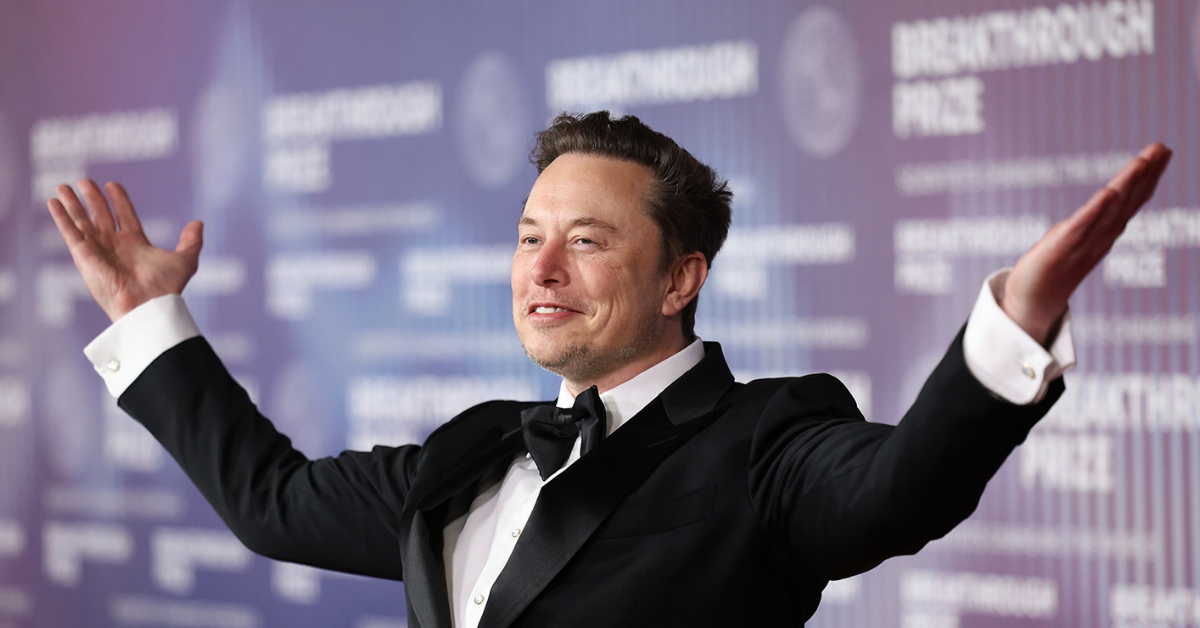
With Tesla, SpaceX, and Starlink valuations surging in tandem, Elon Musk has become the first person in history to be worth $600 billion, a milestone that says as much about this economic moment as it does about the man himself.
At $600 billion, numbers begin to lose their familiar shape. They stop behaving like wealth and start functioning more like abstract power. That is the threshold Elon Musk has now crossed, becoming the first person in recorded history whose net worth has reached that level, a figure so large it no longer sits comfortably alongside traditional comparisons to peers, companies, or even governments.
This is a break in the pattern altogether. The difference between $300 billion and $600 billion is not linear. It represents a compounding effect of ownership, leverage, and timing that very few economic systems were built to anticipate.
Where the Wealth Is Actually Coming From
Musk’s fortune is not parked in cash, and it never has been, as it is concentrated, volatile, and deeply tied to the valuation of companies that sit at the intersection of technology, infrastructure, and geopolitics. Tesla remains the most visible pillar, with its market value continuing to defy skeptics as investors price it less like an automaker and more like a technology platform with global reach.
But the acceleration toward $600 billion has come increasingly from SpaceX and its satellite arm, Starlink. Private market valuations for SpaceX have surged as Starlink’s subscriber base expands and governments lean more heavily on satellite infrastructure for communication, defense, and disaster response. The company’s position is operational, embedded, and difficult to displace.
Together, these holdings have created a feedback loop. Rising valuations unlock new capital, which funds expansion, which reinforces valuation again. Musk sits at the center of that loop, not as a passive beneficiary but as the controlling force behind it.
Extreme wealth is not new. What is new is its concentration in a single individual whose assets span space, energy, communications, and artificial intelligence. Musk’s companies are not niche. They are foundational. They influence how people move, how data travels, how nations communicate, and how future industries are shaped.
That breadth is why $600 billion matters because it is not just a personal milestone. It reflects a structural shift in how value is created and captured in the global economy. Platform dominance, combined with first-mover advantage and regulatory gray zones, has allowed a small number of founders to accumulate influence at a pace previously reserved for states.
The Volatility Beneath the Figure
For all its scale, Musk’s wealth is also fragile in ways traditional fortunes were not. It is exposed to market sentiment, political pressure, and regulatory change. Tesla’s stock has a history of dramatic swings. SpaceX remains private, but its valuation rests on continued execution and geopolitical demand that can shift quickly.
Musk’s fortune is therefore less like a vault and more like a live wire. It grows fast, but it carries risk. That tension has always defined his public persona, celebrated by supporters as visionary boldness and criticized by detractors as instability.
The $600 billion figure does not eliminate that volatility, and instead, it amplifies the same.
There is a tendency to frame Musk’s wealth as a personal story, a product of ambition and innovation, but that framing is incomplete. His rise is also a story about capital markets willing to reward scale over certainty, and about governments increasingly reliant on private companies to provide public-adjacent infrastructure.
Starlink contracts, defense partnerships, energy subsidies, and regulatory accommodations all play a role. Musk operates in spaces where public and private interests overlap, sometimes uneasily. His wealth reflects that overlap.
As his net worth grows, so too does scrutiny. Questions about accountability, influence, and democratic oversight become harder to dismiss when one individual commands resources that rival national budgets.
Awe, Unease, Fatigue
Reaction to the milestone has been predictably divided. It is seen as proof that innovation still pays at an extraordinary level, that a single individual can reshape industries and reap the rewards. Others view it as an indictment of economic imbalance, evidence that wealth accumulation has outpaced any meaningful system of redistribution or constraint.
There is also a quieter reaction, less vocal but noticeable, i.e., fatigue. The sense that these numbers have become so extreme that they no longer shock, only numb. When wealth reaches this scale, it becomes difficult for the public to process it emotionally, let alone politically.
The question is not whether Musk’s wealth will fluctuate, as it will. The question is whether the systems that enabled it will change. So far, there is little evidence of that. Capital continues to chase scale, and governments continue to outsource infrastructure, whereas markets continue to reward dominance.
Musk’s $600 billion moment is therefore less a finish line than a snapshot. It captures a specific alignment of technology, capital, and political demand that may not last forever, but for now appears remarkably resilient.
History may not remember the exact number. It will remember what it represented, i.e., the point at which personal wealth stopped being a curiosity and started looking like a structural force.