Elon Musk Merges SpaceX and xAI in $1.25 Trillion Power Play
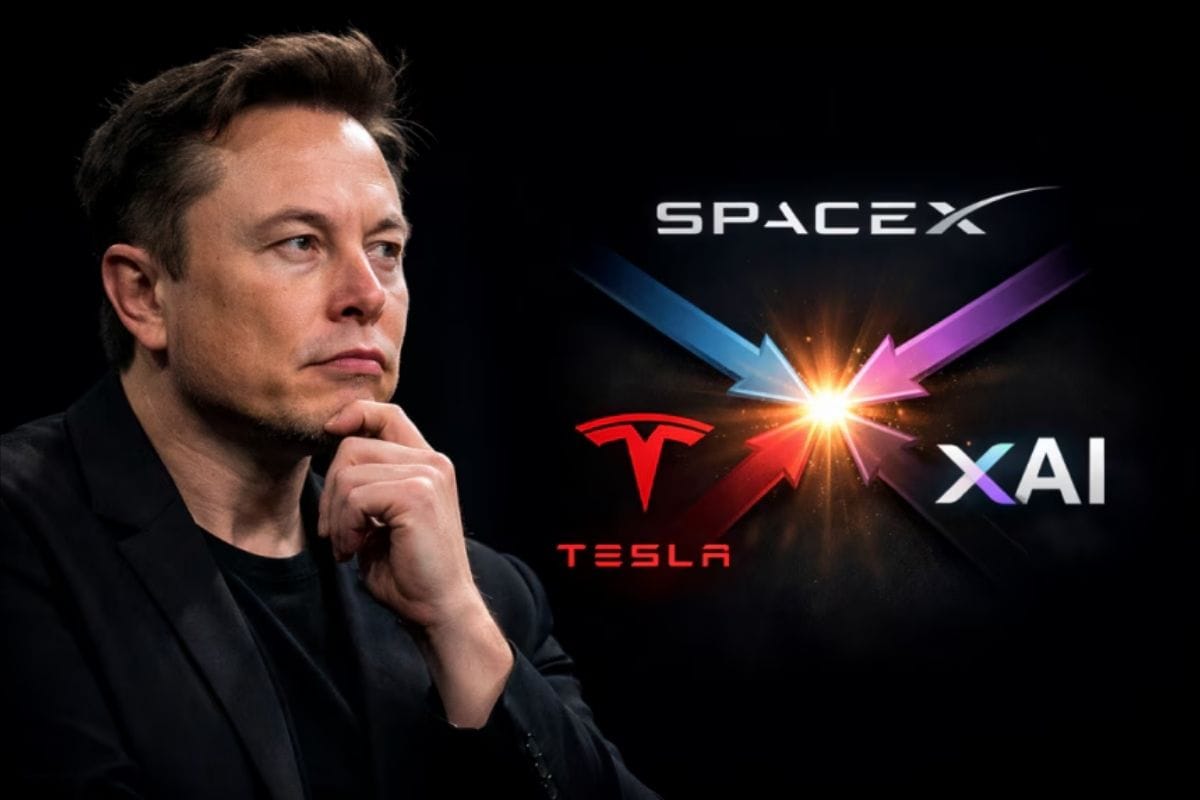
Elon Musk has taken another bold step toward reshaping the future of technology. In a move that stunned both Silicon Valley and Wall Street, his rocket company SpaceX, has acquired his artificial intelligence startup xAI, merging two of his most ambitious ventures into a single powerhouse.
The deal creates a combined company valued at roughly $1.25 trillion, according to reports, instantly making it one of the most valuable privately held entities in the world. More importantly, it signals Musk’s long-term vision: blending artificial intelligence, space technology, global internet access, and real-time data into one tightly connected ecosystem.
This merger is not just about money or scale. It’s about control, speed, and Musk’s belief that the future of AI will stretch far beyond Earth.
Why SpaceX and xAI Are Joining Forces
At first glance, rockets and chatbots may seem worlds apart. But for Musk, the connection is obvious.
SpaceX builds rockets, satellites, and space-based infrastructure. xAI builds advanced artificial intelligence systems, including the Grok chatbot and the technology that powers the social media platform X. By bringing the two companies together, Musk is creating a vertically integrated tech engine that controls everything from data collection to deployment both on Earth and in space.
In a statement, the companies described the merger as a way to create “the most ambitious, vertically integrated innovation engine on (and off) Earth,” combining AI, rockets, satellite internet, and direct-to-device communications.
Simply put, Musk wants AI systems that don’t just live in data centers on land, he wants them in orbit.
The Valuations Behind the Deal
The numbers involved are massive, even by Musk's standards.
SpaceX was recently valued at around $800 billion after allowing employees to sell shares in a secondary offering. xAI, meanwhile, reportedly raised $20 billion at a valuation of about $230 billion. When combined, the two firms push past the trillion-dollar mark.
While neither company is publicly traded, the scale of the valuation puts them in the same conversation as the world’s largest tech giants without the scrutiny of public markets.
That independence matters to Musk, who has often clashed with regulators, investors, and critics over how his companies are run.
What This Means for SpaceX’s IPO Plans
The merger could complicate or completely reshape SpaceX’s long-rumored plans to go public.
Just weeks ago, reports suggested Musk had floated the idea of a SpaceX IPO timed around mid-June, possibly aligning with a rare planetary alignment and his 55th birthday. With xAI now folded into the business, any public offering becomes far more complex.
Investors would no longer be buying into just a rocket company. They would be investing in a hybrid of aerospace, AI, satellite internet, social media infrastructure, and data services.
That could make a future IPO far bigger or push it further into the future.
AI Data Centers… In Space?
One of the most striking implications of the merger is Musk’s long-discussed idea of launching AI data centers into orbit.
Traditional data centers on Earth consume enormous amounts of energy and water. Musk believes space-based infrastructure could solve those problems by tapping into near-constant solar power while reducing environmental impact.
In recent filings, SpaceX asked regulators for permission to launch up to one million satellites to support growing data demands driven by AI. The idea is to process data in space, closer to the source of satellite information, rather than sending everything back to Earth.
With xAI now part of SpaceX, that vision becomes far more realistic and far more centralized.
How xAI Fits Into Musk’s Larger Empire
xAI is not just an AI lab. It also owns and operates the social media platform X, which generates vast amounts of real-time data from users around the world. That data is critical for training AI systems like Grok.
By merging xAI with SpaceX, Musk gains tighter control over the entire data pipeline from content creation and user interaction to AI training and global distribution via satellites.
It’s a powerful combination, and one that few other tech leaders could replicate.
Musk now simultaneously leads SpaceX, xAI, Tesla, Neuralink, The Boring Company, and other ventures. The merger further concentrates power around a single figure who already plays an outsized role in global technology and infrastructure.
Strategic Advantages — and Big Questions
Supporters see the merger as a visionary move that accelerates innovation. Combining SpaceX’s launch capabilities with xAI’s intelligence systems could unlock breakthroughs in communications, autonomous systems, and global connectivity.
Critics, however, warn about concentration of power, lack of oversight, and the risks of tying AI development so closely to a single private infrastructure network.
There are also regulatory questions ahead. Launching massive numbers of satellites, deploying AI in orbit, and merging data platforms with aerospace systems will inevitably draw attention from governments around the world.
So far, Musk appears undeterred.
A Glimpse Into Musk’s Endgame
This merger offers a rare glimpse into Musk’s long-term strategy. He is no longer just building individual companies. He is building an interconnected technological ecosystem, one that spans Earth, orbit, and eventually deep space.
AI will think. Rockets will move. Satellites will connect. Data will flow instantly, globally, and increasingly beyond the reach of traditional systems.
Whether that future is thrilling or unsettling depends on who you ask. But one thing is clear: with the SpaceX–xAI merger, Elon Musk has taken another decisive step toward shaping it on his own terms.
And once again, he’s done it faster and bigger than almost anyone expected.