
Google Goes All-In on AI With $185B Spending Spree That Shocks Wall Street
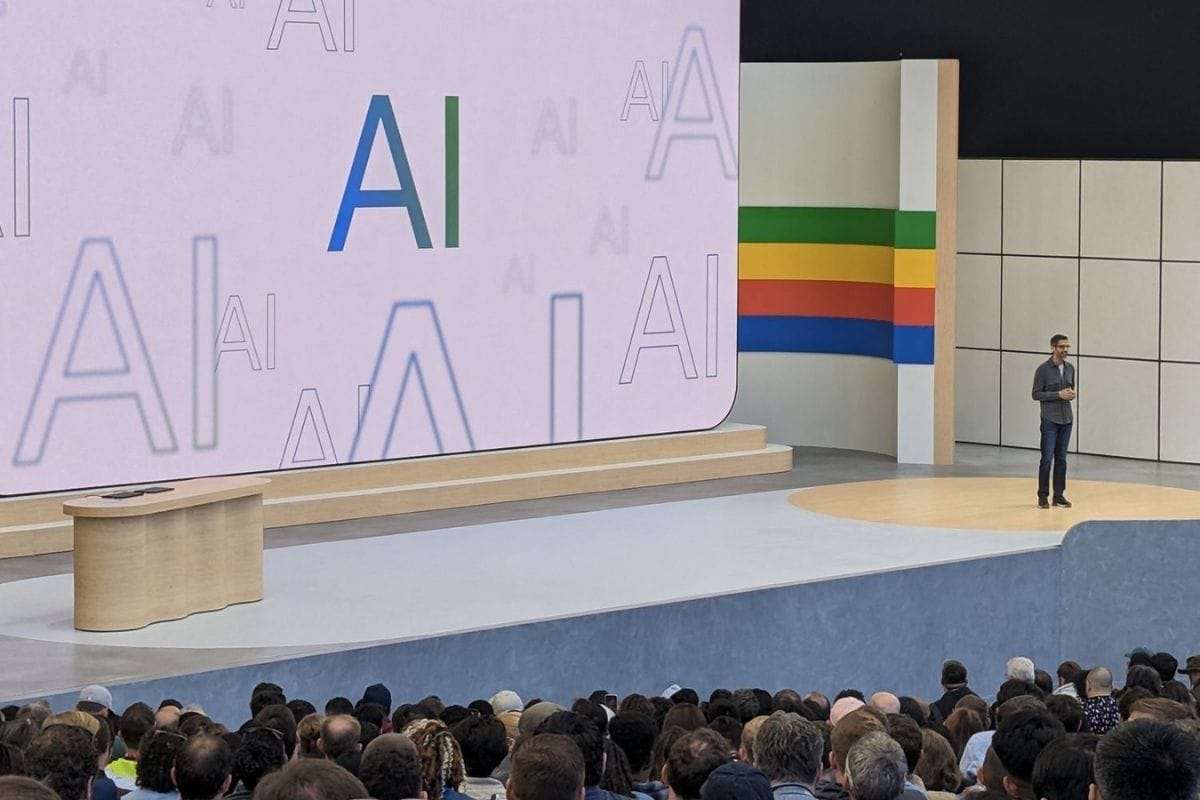
Alphabet, Google’s parent company, just made it clear it’s not tiptoeing into artificial intelligence it’s sprinting. The tech giant says it plans to spend as much as $185 billion this year, nearly double what analysts had expected, as it goes all-in on AI.
The announcement landed with a thud on Wall Street. Alphabet’s stock dipped sharply in after-hours trading before bouncing back, as investors tried to wrap their heads around just how big this bet really is. The numbers were strong. The spending, though, was massive.
Still, for Alphabet, this moment feels less like a gamble and more like a statement: AI is no longer a side project. It’s the future of the company.
A spending surge that turned heads
Last year, Alphabet spent just over $91 billion, much of it on the heavy machinery of AI data centers, servers, chips, and networking gear. This year’s plan nearly doubles that figure, putting Google on par with Microsoft, Amazon, and Meta in what’s quickly becoming a spending war.
CEO Sundar Pichai framed the decision. Demand is exploding, and Google wants to be ready.
Behind the calm corporate language is a sense of urgency. Businesses want AI tools now. Consumers are using AI assistants daily. And whoever can build the fastest, biggest infrastructure wins.
Alphabet didn’t make this announcement in a vacuum. The company also reported better-than-expected revenue and profits, which helped soften investor anxiety.
Even so, the market’s reaction showed just how uneasy people are about the pace of AI spending. The fear isn’t that AI won’t matter, it’s that companies might spend far more than they earn, at least in the short term.
Alphabet’s response? The money is already starting to work.
Google Cloud finally has momentum
If there’s one area where Alphabet’s AI push is clearly paying off, it’s Google Cloud. The division posted 48% revenue growth, blowing past expectations and sending a strong signal that businesses are buying what Google is selling.
For the first time in years, Google Cloud even outgrew Microsoft’s Azure, a quiet but meaningful milestone in a market dominated by just a few giants.
The irony is that success has created a new problem: capacity. Google says demand is outpacing what its current infrastructure can handle. That’s a big reason why the company is spending so aggressively now.
Alphabet’s move is part of a much larger trend. Big tech companies are collectively expected to spend more than half a trillion dollars on AI this year.
Meta has sharply raised its own AI budget. Microsoft continues to pour money into data centers. Amazon is doing the same. No one wants to be the company that hesitates while rivals surge ahead.
AI isn’t cheap, and it isn’t forgiving. Failing to keep up on infrastructure, catching up becomes nearly impossible.
Gemini helps Google find its footing
Google’s recent progress has a name: Gemini.
The company’s latest AI model, Gemini 3, has been widely seen as a turning point. After playing catch-up early in the AI boom, Google suddenly feels competitive again and in some areas, even ahead.
Pichai says Gemini now has more than 750 million monthly users, a number that grew surprisingly fast. That kind of scale matters, not just for bragging rights, but because AI improves as more people use it.
The success of Gemini reportedly sent shockwaves through rival companies, prompting urgent internal efforts to speed up their own AI development.
Apple deal changes the game
Then there’s Apple.
Google recently struck a deal to help power Apple’s revamped Siri using Gemini technology. For Alphabet, that’s more than a partnership; it’s access to one of the largest device ecosystems on the planet.
Billions of Apple devices could soon rely, at least in part, on Google’s AI. That kind of reach is hard to overstate and could cement Gemini as a central player in everyday digital life.
A risky move — but one Google believes in
There’s no denying the risk here. AI infrastructure is expensive, energy-hungry, and constantly evolving. Today’s best models could be obsolete faster than anyone expects.
But Alphabet has made these kinds of bets before on search, on mobile, on cloud computing. Each time, it spent early, absorbed criticism, and emerged stronger.
This time feels bigger. AI isn’t just another product category. It’s reshaping how people work, search, create, and communicate. Alphabet knows it can’t afford to hesitate.
So it’s spending boldly, trusting that scale, patience, and experience will pay off even if the road there is expensive and unpredictable.
One thing is clear: Google isn’t waiting to see how the AI future unfolds. It’s trying to build it first.