
He Left Neuralink. Now He Wants To Upgrade the Human Brain

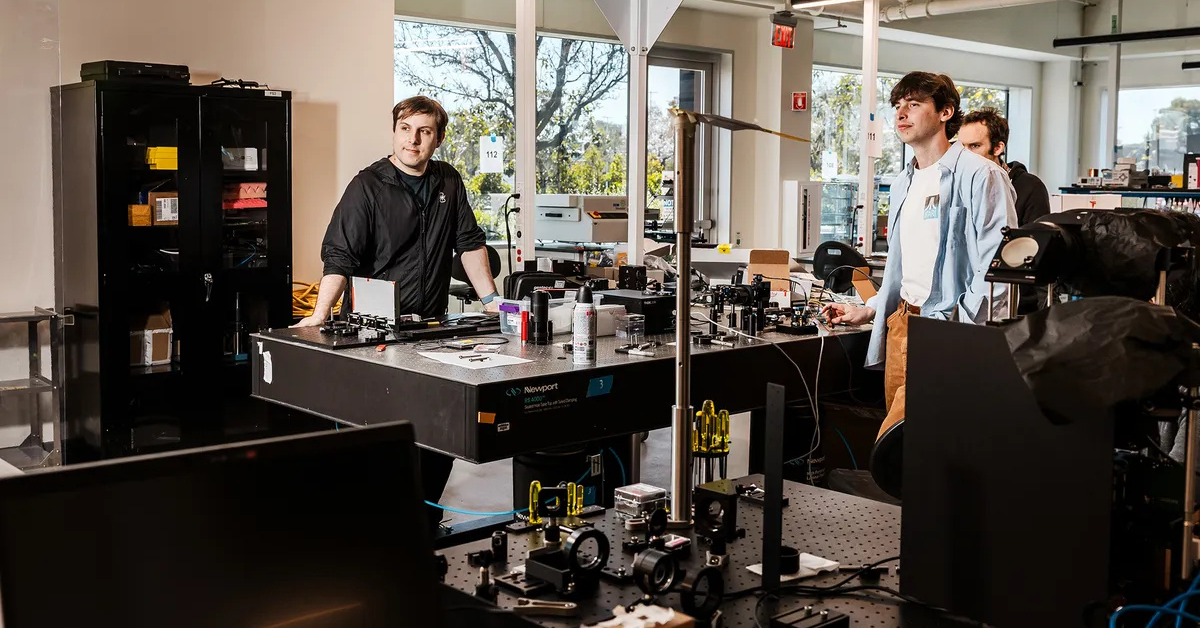
Once co-founder of Neuralink, Max Hodak is now steering Science Corp towards a world where microchips restore vision today, optogenetic implants rebuild neural circuits tomorrow, and biohybrid consciousness.
When Max Hodak, the engineer who once co-founded Neuralink and ran it through years of experimental growth, stepped onto a San Francisco stage this month under the Science Corp banner, it felt like the beginning of a bolder thesis. His new venture is an escalation, a narrative shift from interfacing with neurons to reshaping the substrate of consciousness itself.
Hodak’s origin story inside neurotech circles is already lore: programming at age six, neuroscience research at Duke, then Neuralink in 2016, only to exit quietly in 2021. Post-departure, instead of fading into biotech anonymity or building incremental medical tools, Hodak formed Science Corp with three early Neuralink engineers, raising nearly $260 million and operating with an air of reserved ambition that feels equal parts research lab and science fiction nursery
Restore Sight, Not Upload Minds
Despite its cosmic long-term pitch, Science Corp begins in the eye. Its first flagship product, Prima, is a retinal implant about the size of a grain of rice placed under the retina and paired with camera glasses to convert external imagery into nerve-stimulating patterns.
In early trials involving dozens of patients with retinal degeneration, the company reports that 80% regained the ability to read, even if only two letters at a time, marking a milestone in practical visual restoration.
Regulatory approval in Europe is horizon, with US filings in progress. The procedure may cost roughly $200,000, meaning adoption will begin within specialist centres, but even modest uptake could make Prima commercially viable, a foothold to prove Science Corp isn’t just imagining futures, but delivering function today.
Optogenetics, Light-Responsive Neurons and a Future Without Electrodes
Hodak views Prima as a beginning, a case study in biological receptivity and neural plasticity. Science Corp’s second phase involves optogenetic gene therapy, modifying neurons to respond to pulses of light rather than electrical spikes. This, if it scales into the brain, would eliminate the reliance on electrodes and allow stimulation through softer, gentler optical interfaces.
The eye, immune-protected and structurally narrow, is a safe testbed, as the brain, far more complex, sits further down the roadmap. Yet early internal research suggests that neurons can indeed be reprogrammed to communicate optically, a step that moves us from hardware-instrumented brains to bio-integrated ones.
And here is where the narrative turns speculative, but in scientific ambition.
Growing New Neurons to Join the Brain Like Software Updates
Hodak’s loftiest idea is biohybrid neural substrates, wafer-grid scaffolds embedded with lab-grown neurons that integrate into the living cortex.
In experiments with rodents, one such grid reportedly induced directional movement when stimulated, crude yet historic, because it shows synthetic neurons can speak in the same electrochemical language as biological ones. If communication is possible, integration could follow. And if integration is possible, enhancement or expansion might be next.
Hodak extends this line of thinking with unusual calm. Intelligence may be substrate-independent, he suggests, present whether in neurons or GPUs. The implication is startling, with consciousness might someday operate beyond the boundary of flesh, scalable like computation, distributed like cloud networks.
Therapy, Enhancement, and Maybe Immortality
If Science Corp’s plan succeeds even partially, the consequences would run beyond medicine. Blind patients could regain functional sight, and stroke victims may reclaim lost circuits. Parkinson’s disease could be slowed or reversed, and neurodegeneration might lose inevitability. But past therapy lies in enhancement, through clearer memory, broader sensory input, and even cognition amplified like computer cycles.
Biology, Regulation and the Weight of Reality
Science is slow, and bodies are defensive. Immune rejection ruins perfect architectures, with long-term implant safety taking years of data. Regulatory agencies move cautiously around devices that sit inside skulls.
Even if vision restoration launches commercially soon, biohybrid consciousness is not arriving in 2027, or even in the early 2030s, without breakthroughs, patience, and enormous ethical oversight. The gap between rodent tests and human neural augmentation is a canyon.
Yet while Neuralink opened the modern brain-tech imagination, Hodak is pushing its edges outward, suggesting that if neural prosthetics can restore, and they might someday improve, and if they can improve, they might eventually transform.
The First Brick of a Cathedral No One Has Seen Finished
Science Corp today is two parallel narratives: a practical medical company restoring vision, and a philosophical bet on a post-biological future. Prima is real, measurable, nearly market-ready, i.e. the foothold. Behind it sits a bolder blueprint, with optogenetic implants, biohybrid scaffolds, and integrative neural growth, leading toward a question.
Hodak insists breakthroughs must start with helping real patients, restoring function before granting transcendence. But if even fragments of his roadmap succeed, future historians may look back on this era as the moment humanity first attempted to edit its own operating system.
Until then, the world watches with anticipation not for incremental progress, but for the possibility that the brain, our most private frontier, may soon have doors.