Hundreds of Minnesota Businesses Shut Down as Massive Anti-ICE Protests Erupt
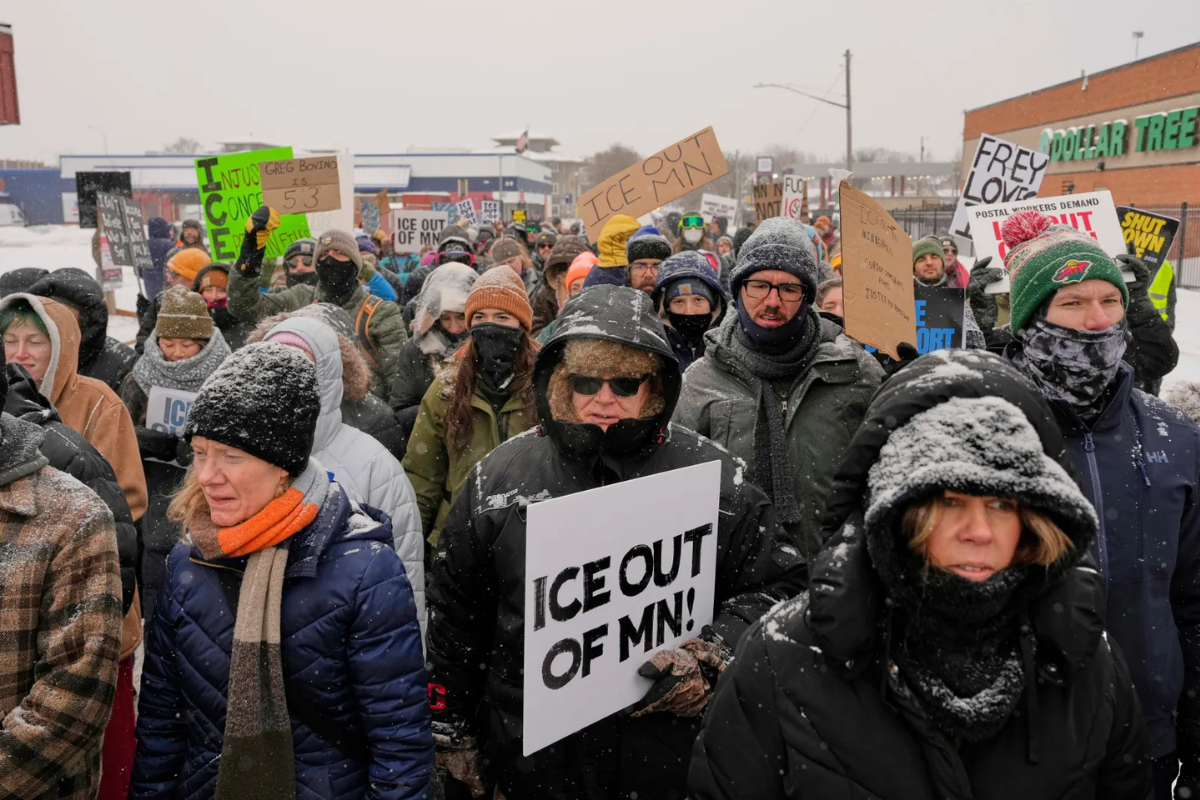
Hundreds of businesses across Minnesota shut their doors on Friday as thousands of residents poured into the streets, braving bitter cold to protest the growing presence of federal immigration officers in the state. The coordinated shutdown, described by organisers as an “economic protest,” marked the largest public backlash yet against the Trump administration’s immigration crackdown in Minnesota.
From restaurants and coffee shops to tattoo parlours and toy stores, businesses across Minneapolis and surrounding areas chose to close for the day. Protest leaders urged people to stay home from work or school and avoid spending money, hoping to send a clear economic message to state and federal leaders: the current immigration enforcement strategy is hurting communities.
The demonstrations come after more than six weeks of intensified Immigration and Customs Enforcement (ICE) operations under what federal officials have called “Operation Metro Surge.” Thousands of federal officers have been deployed across the state as part of the effort, which the administration says is focused on removing dangerous criminals from the country.
But critics say the reality on the ground looks very different.
Community groups, local leaders and civil rights advocates argue that people with no criminal record, including U.S. citizens and children, are being detained, spreading fear throughout neighbourhoods and workplaces.
A city on edge
Tensions in Minnesota have been especially high since the killing of 37-year-old Minneapolis resident Renee Good earlier this month during a confrontation involving federal immigration agents. Her death sparked widespread outrage, renewed protests and deepened distrust toward ICE operations in the state.
Friday’s protests reflected that anger. Despite temperatures dropping to nearly minus 10 degrees Fahrenheit, thousands of people marched through downtown Minneapolis, chanting, playing music and waving signs calling for ICE to leave Minnesota altogether.
The rally eventually made its way to the city’s NBA arena, where demonstrators gathered for a large anti-ICE event on the Minnesota Timberwolves’ home court.
“We want ICE out of Minnesota, and we want ICE out of every state,” said Bishop Dwayne Royster, whose organisation Faith in Action helped organise the protests. “This level of federal overreach is unacceptable. Congress needs to step in and provide oversight.”
Clergy arrests at the airport
The protests extended beyond city streets. Earlier in the day, about 100 clergy members were arrested at Minneapolis–Saint Paul International Airport while demonstrating against the use of commercial airlines to transport ICE detainees.
The group had called on U.S. airlines to refuse participation in deportation flights. Airport officials said the arrests occurred after protesters exceeded the terms of their permitted demonstration and that action was taken to ensure safety and access for travellers.
Even so, the arrests added another flashpoint to an already volatile situation.
Small businesses feel the strain
For many business owners, closing shop was not an easy decision.
Corey Lamb, owner of Harriet Grove Botanicals in Minneapolis, shut down his store in solidarity and joined the protests. He said the ICE presence has created fear among workers, customers and suppliers alike.
“When people are scared to leave their homes or show up to work, it doesn’t just hurt morally, it hurts economically,” Lamb said. “We rely on each other to survive. When that breaks down, the whole community suffers.”
Lamb’s business was one of hundreds that participated in the shutdown, joining restaurants, cafés, bars and retail shops across the city.
Kim Bartmann, who owns six restaurants in Minneapolis, said she closed four of them on Friday even though winter is one of the hardest times to lose revenue.
“Everyone wants to show solidarity, but everyone also needs to pay rent and buy groceries,” Bartmann said. “This was a really hard call.”
She said sales across her restaurants have already dropped more than 30% in the past three weeks, largely due to fear surrounding immigration raids. Many employees, she added, are U.S. citizens or legally authorised to work but are still afraid to leave their homes.
“We’ve had to reduce hours and scale back operations,” she said. “People are terrified and that affects everyone.”
Families caught in the middle
Reports of ICE detaining children have further inflamed public outrage.
School officials in the suburb of Columbia Heights confirmed that four students, ranging in age from five to 17, were detained by immigration officers this week. In another incident, a two-year-old child was reportedly detained while riding home from a grocery store with her undocumented father.
These cases have become rallying points for protest organisers, who say they undermine the administration’s claim that the operation is narrowly focused on criminals.
Political pressure mounts
Minnesota’s sanctuary-style policies, which limit cooperation between local authorities and federal immigration agents, have been sharply criticised by the Trump administration. Vice President JD Vance recently called on state and local law enforcement to work more closely with ICE, arguing that resistance puts public safety at risk.
Local officials and community leaders strongly disagree.
Adding to the controversy, reports surfaced this week that an FBI agent in Minneapolis resigned over concerns about pressure to alter or scale back the investigation into Renee Good’s death. Several federal prosecutors in the state reportedly resigned earlier this month over similar concerns.
The FBI has not publicly commented on those reports.
A protest with lasting impact
Friday’s economic shutdown is believed to be the largest coordinated protest against current immigration policies in Minnesota so far. Organisers say it won’t be the last.
For many residents, the demonstrations are about more than immigration enforcement. They reflect deeper concerns about civil liberties, public safety, government transparency and the economic survival of local communities.
As winter grips the state and federal operations continue, Minnesota finds itself at the centre of a national debate, one that is playing out not just in courtrooms and political speeches, but in neighbourhood streets, small businesses and the daily lives of ordinary people.
Whether the protests will lead to policy changes remains unclear. But for one freezing Friday in January, Minnesota’s message was unmistakable: fear, uncertainty and forceful enforcement have consequences and communities are pushing back.