Iran on Edge as Deadly Protests Erupt, Over 100 Killed, and Leaders Threaten U.S. and Israel

Iran is facing one of its most volatile moments in decades. What began as scattered demonstrations over economic hardship has grown into a nationwide wave of anger that now openly challenges the country’s ruling system. As protests stretch into a third week, the human cost is rising, and so are the stakes.
At least 116 people have been killed so far, according to human rights groups, and more than 2,600 others have been detained. Streets in major cities have been filled with demonstrators despite a sweeping internet blackout and heavy security presence. At the same time, Iran’s leaders have shifted their focus outward, issuing direct warnings to the United States and Israel amid fears of foreign intervention.
The country now sits at a dangerous crossroads, with tensions building both inside its borders and across the region.
A Growing Crisis Behind an Information Blackout
Understanding what is happening inside Iran has become increasingly difficult. Authorities have cut off the internet and international phone services, effectively isolating the country from the outside world. Families abroad struggle to reach loved ones, while journalists and activists fear the blackout is allowing security forces to act without scrutiny.
Even so, fragments of information continue to slip through. Videos believed to be shared via satellite connections show protesters gathering after dark in parts of Tehran, waving lit mobile phones, blocking streets, and making noise by banging metal objects. Fireworks flash in the sky, both as signals of defiance and attempts to draw attention in the darkness.
In Mashhad, Iran’s second-largest city, the atmosphere appears more confrontational. Footage suggests protesters clashing with security forces as fires burn in the streets and debris is used to block roads. The unrest there carries special weight. Mashhad is home to the Imam Reza shrine, the holiest site in Shiite Islam, and protests in the city strike at the heart of Iran’s religious identity.
Demonstrations have also been reported in other cities, including Kerman in the southeast, pointing to the breadth of the unrest.
A Defiant Response From Iran’s Leadership
Rather than seeking compromise, Iran’s leadership has doubled down. During a tense session of parliament broadcast live on state television, Speaker Mohammad Bagher Qalibaf praised police and paramilitary forces for suppressing the demonstrations. Lawmakers chanted anti-American slogans as he warned that any U.S. military action would be met with retaliation.
Qalibaf declared that U.S. troops and Israel would be “legitimate targets” if Washington follows through on threats to strike Iran. He suggested that Iran would not wait for an attack before responding, raising fears of a dangerous escalation.
While such rhetoric is not new, it comes at a sensitive moment. Iran’s military capabilities were weakened during last year’s conflict with Israel, and analysts question how far Tehran would actually go. Still, the language alone has intensified anxiety at home and abroad.
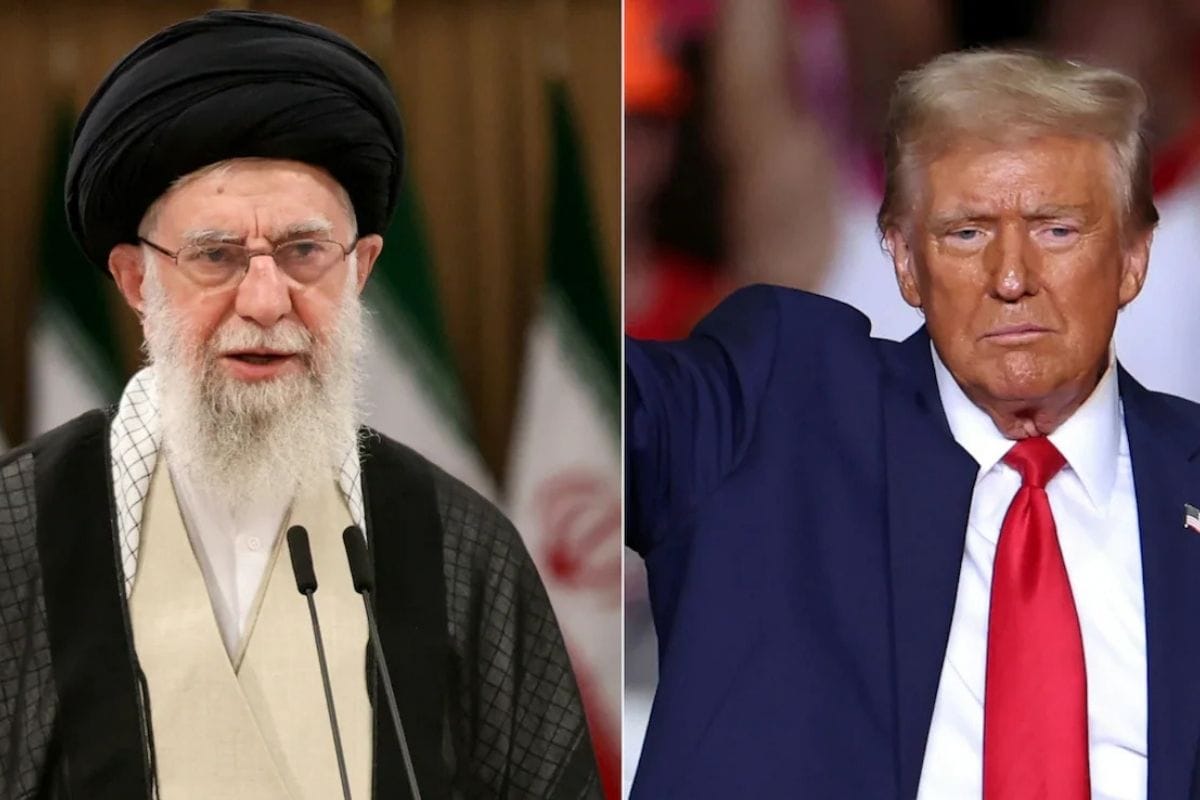
Any final decision to escalate would rest with Iran’s Supreme Leader, Ayatollah Ali Khamenei, whose long rule has been defined by a zero-tolerance approach to dissent.
The United States Signals Support for Protesters
In Washington, President Donald Trump has taken a public stance in support of Iran’s protesters. In social media posts, he described the demonstrations as a historic push toward freedom and warned Tehran against violent repression.
Reports from U.S. media suggest Trump has been briefed on possible military options, though no final decision has been made. Even so, American officials have delivered sharp warnings, emphasizing that threats against U.S. forces or allies would not be taken lightly.
The State Department cautioned Iran not to test Trump’s resolve, while U.S. military officials said American forces across the Middle East remain fully prepared to defend themselves and their partners.
These exchanges have added to fears that a domestic uprising in Iran could trigger a broader international confrontation.
Fear of a Brutal Crackdown
Inside Iran, concern is growing that authorities are preparing a severe crackdown. The country’s attorney general has warned that protesters could be charged as “enemies of God,” a crime punishable by death. Even those accused of helping demonstrators could face the same charge.
Human rights advocates say such language is meant to terrify the population into submission and justify harsh punishments. With courts often operating behind closed doors, many fear arrests could quickly turn into executions.
State media has tried to project calm, airing footage of quiet streets and pro-government rallies in select cities. Notably absent from these broadcasts are Tehran and Mashhad, where unrest appears most intense.
Officials continue to frame the protests as foreign-backed unrest, a narrative used repeatedly during previous uprisings.
Economic Collapse and a Cry for Change
The roots of the protests lie in Iran’s deep economic pain. The national currency has collapsed to record lows, trading at more than 1.4 million rials to the dollar. Years of sanctions, mismanagement, and corruption have left many families unable to afford necessities.
What began as protests over prices and wages has evolved into a broader rejection of Iran’s ruling system.
Iran’s exiled Crown Prince, Reza Pahlavi, has urged protesters to continue demonstrating and reclaim public spaces. Some demonstrators have waved Iran’s old lion-and-sun flag, reflecting nostalgia for life before the 1979 Islamic Revolution. Whether this signals support for Pahlavi himself or simply a rejection of the current system remains unclear.
A Nation Holding Its Breath
Iran now stands at a pivotal moment. Protesters continue to risk arrest, injury, and death in their push for change. The government, under pressure at home and abroad, appears increasingly determined to assert control rather than seek dialogue.
With communication cut, threats escalating, and violence mounting, the coming days could shape Iran’s future for years to come. Whether this moment leads to reform, repression, or regional conflict remains uncertain, but for millions of Iranians, the struggle has already become deeply personal.