
J.D. Vance’s Palantir Ties Ignite MAGA Revolt and Expose a GOP Identity Crisis

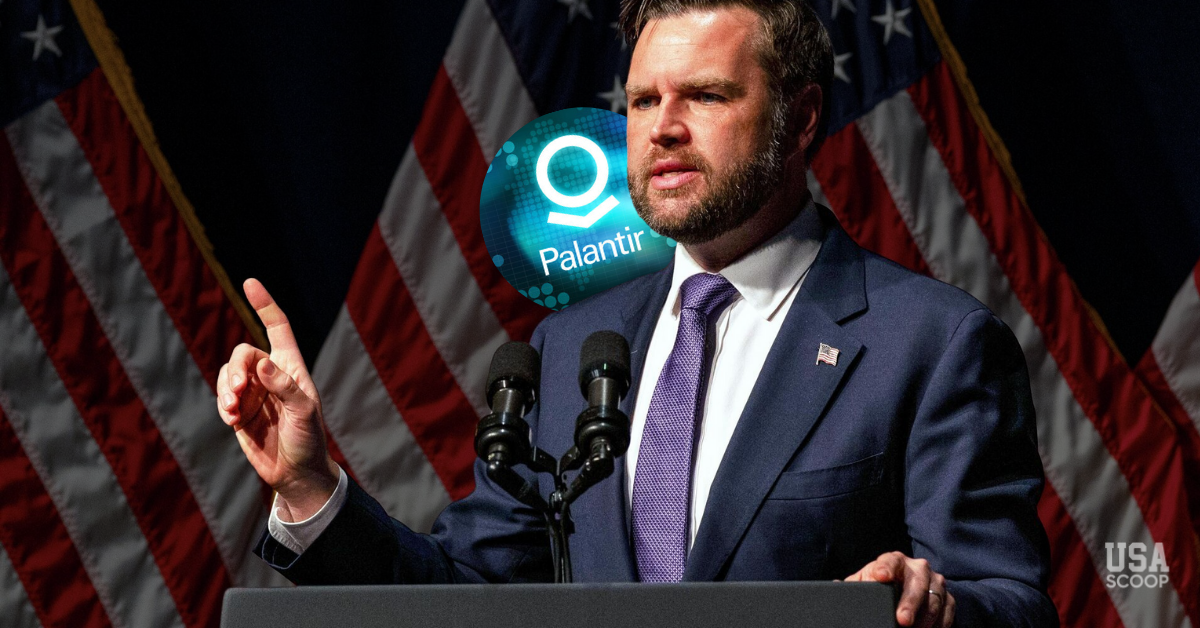
As Vance leans into Big Tech backing via Palantir’s Peter Thiel network, populist Republicans accuse him of betrayal. The dispute demonstrates the rising tension between data-tech elites and America-First populists.
J.D. Vance rose from an Appalachia success story to US Senator, and now occupies a prominent role within the MAGA-aligned Republican movement.
His early identity was rooted in anti-elitist, anti-Big Tech rhetoric, but in recent years, his alliances show a different story. Among his most consequential links are a network of Silicon Valley financiers and tech entrepreneurs built around Palantir’s co-founder, Peter Thiel.
These ties raise critical questions about whose side he is really on, and according to recent commentary, Vance’s role as the conduit between MAGA populists and tech billionaires places him in the cross-hairs of a deeper ideological battle.
So when the latest reporting spotlighted Vance’s links to Palantir and the rising disquiet in conservative media and among the MAGA base, it was hardly a surprise, and yet the implications may be much broader than one politician’s alliances.
Palantir’s Problem and the Tech Elite Network
Palantir Technologies is no ordinary tech firm.
Founded by Peter Thiel and others, the company sits at the intersection of government intelligence, defence contracting, data analytics, and surveillance.
In recent years, it has garnered government contracts and high-stakes involvement in national security projects. To many MAGA and populist critics, this combination of private-sector tech power merged with government data access represents a potential threat to civil liberties and a symbol of the very elite that they deride.
Vance’s connections to this world, involvement with Thiel’s network, earlier venture-capital ties, and now an administration role have thus become a target of suspicion.
While he continues to promote “America First” nationalism, his tech-investment ties suggest entanglement with the very institutions that many in his base view as adversaries.
The tension is now visible, as that gap between populist narrative and personal network potentially risks alienating both the MAGA grassroots and the tech elite.
MAGA Populism vs Tech-Bro Counterculture
One of the most striking dynamics is how the populist base of the Republican Party views big tech as antithetical to their worldview. At conservative gatherings, many voices now warn of a surveillance state, with claims that tech brokers are part of an elite cartel, and treat Silicon Valley investment as an existential threat to national sovereignty.
Vance finds himself caught in the middle of this.
On the one hand, he speaks to MAGA voters about broken institutions, anti-woke culture and nationalist renewal.
But, he also holds relationships with venture capitalists and tech founders whose world is global, libertarian and elite. That dual role becomes possibly politically risky as the base smells compromise and the elite suspects only convenience.
Critics have argued that this fracture could undermine the coalition that brought MAGA to prominence. If the populist wing views its leaders embracing tech capital rather than confronting it, the movement also risks internal conflict, and Vance’s positioning hence carries more than merely a personal risk.
Surveillance and Data Power
Beyond optics, though, this battle has prepared concrete policy implications.
Palantir and similar firms wield data analytics capabilities that governments and intelligence agencies increasingly rely upon. The question of who holds that power, how it is used, and whether it is accountable is now central to debates about privacy, national security, and corporate dominance.
Vance’s involvement via his network links him to these questions, raising the risk that his nationalist rhetoric may undercut his credibility when confronted with policy decisions regarding surveillance, government-tech partnerships, or the role of private firms in public security.
If he supports unfettered data-sharing or lax oversight, he will anger his base; however, if he imposes constraints, he will alienate his tech allies.
In a moment when artificial intelligence, national security, and data governance are blending, Vance’s position becomes a litmus test for how conservative politics approach a muddy ground.
The Tactical Stakes and the 2028 Horizon
Politically, Vance is widely viewed as a contender for future leadership in the party. His role is that of a bridge between Silicon Valley and the populist base as a strategic asset.
However, with this alignment comes risk, as if the base turns against him over perceived tech betrayal, and the elite views him as an insufficiently orthodox technocrat, he may lose both wings.
This moment is therefore about whether Vance can reconcile contradictory pieces of his bio into a lasting political brand. The upcoming policy decisions, on AI oversight, data access, tech regulation, and national security contracting, will serve as flashpoints.
With regards to the Republican coalition, too, this internal tension may project its next chapter, as if the populist wing demands more anti-tech rigor, while the party leadership prioritises innovation and capital, Vance’s role may tilt either way or become untenable.
This story is about the evolution of a political movement and how it interfaces with one of the most powerful segments of the economy, i.e., tech.
As big-data firms, AI developers, and defence-tech contractors gain increasing influence, political figures who align with them risk walking a tightrope, and how they manage this alignment will influence the identity of the conservative movement.
In an era of widening economic and cultural divides, the clash between grassroots populists and global tech elites could alter party coalitions, legislative agendas, and public trust.
The Vance-Palantir issue is thus a microcosm of a larger dynamic, of the tension between nationalism and technocracy, localism and global capital, and dissent alongside data control.
A Bridge Under Strain
J.D. Vance’s tech ties, especially via Palantir, have become a signpost of his political identity and also a source of tension. The question now is whether he can bridge the populist base that sees Silicon Valley as a foe and the tech-capital networks that view him as an opportunity, with failure in doing so potentially leaving him isolated between the two worlds.
The outcome does signal a broader choice for the conservative moment. They could pull away from tech-capital influence and return to a more populist identity, or rather, embrace innovation, investment, and global networks at the cost of some base loyalty; hence, Vance’s navigation of this conflict could help define the future of the party.