Jasmine Crockett Launches Senate Bid After Colin Allred Withdraws

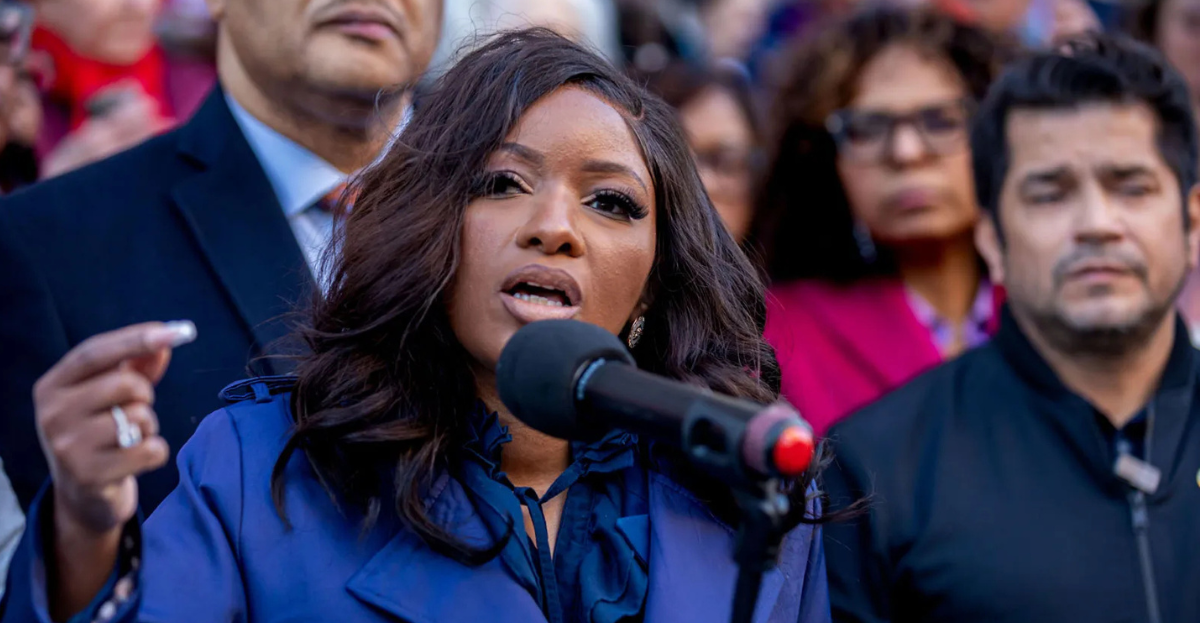
Just hours after Colin Allred abandoned his Senate bid, Jasmine Crockett plunged into the Democratic primary for US Senate. This gamble changed the race in Texas and forced Democrats to regroup fast ahead of a high-stakes 2026 campaign.
On December 8, 2025, former US Representative Colin Allred quietly pulled the plug on his own campaign for the US Senate, citing concern that a bruising Democratic primary could fracture party unity ahead of next year’s general elections.
Allred, who had hoped to run in 2026 after his 2024 Senate bid failed, opted instead to shift his ambitions, as he will now seek election to the newly redrawn 33rd Congressional District in the Dallas-Fort Worth area, a seat reshaped under recent redistricting.
In a statement, he expressed a desire to avoid a protracted, divisive contest and suggested that by stepping aside, he could help preserve Democratic cohesion, a nod to internal party dynamics ahead of a volatile midterm landscape.
Crockett Enters the Senate Race
Less than a day later, Representative Jasmine Crockett filed her paperwork to run for the US Senate, launching what many describe as a bold, high-risk, high-reward campaign aimed at a seat held by a long-serving Republican incumbent.
The timing is dramatic, as Crockett jump-started her bid just hours after Allred exited, erasing any doubt that her decision was carefully calculated and signalled a new chapter in Texas Democratic politics.
For Crockett, a step from House backbencher to a contender for one of the most consequential statewide seats, and a message that her combative, unapologetic style may resonate beyond the borders of her Dallas-based district.
Redistricting and a Strategic Opening
Behind this dramatic reshuffle lies a complex mix of redrawn maps, political pressure, and shifting calculations within the Democratic Party. In 2025, Texas underwent mid-decade redistricting, creating new districts and reshuffling old ones, a process that unsettled many incumbent strategies and electoral forecasts.
Allred’s move to run for Congress instead of the Senate, and Crockett’s sudden entrance, reflect that unsettled ground, as Democrats appear to be recalibrating, hoping to avoid intra-party splits while maximizing their chances across key districts and statewide races.
Some analysts argue that Allred’s exit spared the party a costly primary battle between two prominent figures, while Crockett’s leap might energize grassroots voters and bring fresh national attention to a race that had previously lacked punch.
Strengths, Risks, and What’s at Stake
For Crockett, the payoff could be immense, as a vocal, media-savvy legislator known for fierce clashes in Congress, a powerful social media presence, and an activist background, and she brings energy and visibility that few other contenders can match. That might help her in a Democratic primary where turnout and passion could matter more than moderate consensus.
Her entry changes the dynamics completely, as instead of a straightforward re-run, Texas Democrats now face a primary between themselves before even challenging the Republican incumbent.
Yet the risks are stark. Texas remains a Republican stronghold in statewide elections, and Crockett’s outspoken style, often polarising, may energise opponents as much as supporters. Critics within and outside her party may argue she is too divisive, confrontational, and risky for a general election.
In addition to political headwinds, there is the logistical challenge of building a statewide campaign in weeks, raising resources, reaching across a vast and diverse electorate, and crafting a broad coalition.
What This Means for Texas And Dems’ Broader 2026 Strategy
Crockett’s decision and Allred’s pivot together reshape potentially the electoral map for 2026 in Texas, where Democrats once saw limited options for statewide influence. This reshuffling offers a chance, narrow but tangible, to contest a Senate seat, test voter enthusiasm, and recalibrate strategy in light of redistricting changes and shifting demographics.
If Crockett manages to win the primary and run a credible general-election race, she could inject fresh energy into a state where Democrats have struggled in statewide races for decades. Her candidacy might also inspire new engagement among younger voters, urban communities, women, and people of color, turning a long shot into a long-game push as well.
Conversely, if her campaign falters or turns fractious, the consequences could ripple, i.e., a weakened Democratic showing statewide, reduced morale, and a reinforcement of the narrative that Texas remains out of reach for non-establishment, progressive-leaning Democrats. In either scenario, the 2026 midterms in Texas have become far more fluid, unpredictable, and consequential.
The Personal Stakes for Allred and Crockett
For Allred, the pivot back to a House race may preserve political capital, positioning him as a team player who defused tension and avoided a bruising Senate primary, while keeping alive his own political future under a new map. It might also give him a shot at redemption on a familiar turf, with name recognition and established networks in parts of the redrawn district.
In the case of Crockett, this is potentially the defining moment of her career, i.e., a high-stakes gamble that could catapult her onto the national stage or expose her to grueling scrutiny and political risk. Win or lose, the campaign will test organisational ability, coalition-building, and capacity to stretch beyond a localised base.
But, for the Democratic Party, the move represents both hope and danger, and a hope that new faces and bold voices might break through entrenched Republican dominance, along with a danger that internal divisions or miscalculations might squander opportunities in a crucial electoral cycle.
Calculated Risk Meets Wild Potential
In Texas politics, a few days deliver as sharp a turn as December 8, 2025. On that day, with one resignation and one launch, the chessboard was rearranged, as Colin Allred stepped aside, and Jasmine Crockett stepped forward, forcing Democrats to rethink strategy, voters to reassess choices, and opponents to reconsider their guard.
Whether this becomes a story of a bold insurgent rising, a party rallying, or another failed attempt to crack Texas’s resistance to Democrats remains to be seen. What is clear is that the 2026 election season in Texas just became one of the most closely watched and uncertain political contests in the country.