
Kalshi Hits $11B Valuation After a Massive $1B Funding Round
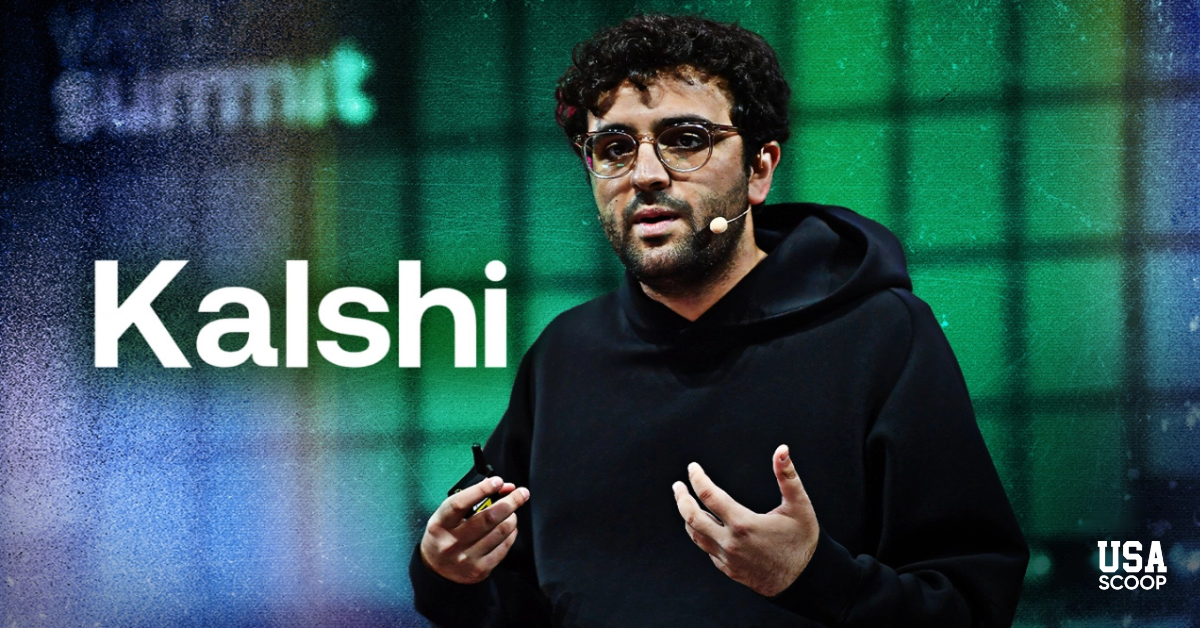
A $1B cash surge transforms Kalshi into the new heavyweight of prediction markets.
In what may go down as a landmark moment for prediction-market infrastructure, Kalshi has secured a $1 billion financing round at an $11 billion valuation, according to a person familiar with the deal.
The raise comes less than two months after the startup pulled in $300 million at a $5 billion valuation, highlighting investor conviction in this space.
Founded in 2018 by former hedge-fund traders Tarek Mansour and Luana Lopes Lara, the New York-based company allows users in over 140 countries to speculate on future events, right from political outcomes to entertainment metrics.
With this new capital, Kalshi is signaling its transition from a niche experiment to a mainstream fintech infrastructure.
The investor wave and competitive backdrop
The round was led by returning backers, including Sequoia Capital and CapitalG (Alphabet’s growth arm), with participation from notable names such as Andreessen Horowitz, Paradigm, and Anthos Capital. The speed and size of the round reflect faith in Kalshi’s thesis, and also the belief that prediction-market platforms can anchor newer layers of financial innovation.
Meanwhile, Kalshi’s closest rival, Polymarket, is reportedly in talks for a raise that could value it between $12 billion and $15 billion, as the competition is heating up at a moment when prediction markets are migrating from marginal to meaningful.
Technical growth under the hood
From an engineering perspective, Kalshi’s metrics are eye-opening, as the company reportedly reached $50 billion in annualised trading volume in October, up from roughly $300 million the previous year. For a platform that only recently moved into the US market with full regulatory backing, this kind of leap implies underlying infrastructure and liquidity are scaling fast.
Kalshi is integrating real-time data, live odds displays (including ad campaigns in New York subway cars tied to election odds), and global access, all of which demand elastic compute, high-frequency architectures, and risk-management systems built at institutional grade.
The architecture is about how you support seamless contract flows, margin, clearing, and global regulatory compliance
Regulation catching up, not leading
One of the most critical aspects remains regulatory clarity. Kalshi secured a major victory when it successfully litigated against the Commodity Futures Trading Commission (CFTC) last year, gaining the right for Americans to trade on its platform.
But legal questions over whether prediction markets sit in a grey zone between financial markets and gambling remain, and state regulators in various jurisdictions still argue they amount to illegal wagering.
From a tech-infrastructure angle, this means two things: i.e., one, legal frameworks must scale as fast as code stacks, and two, institutional-grade platforms must build for regulation as much as they build for volume.
That’s far harder than scaling users, as it means architecting latent audit trails, user-segmentation rules, and geolocation controls, and for Kalshi, the raise signals an acknowledgment of that full stack, i.e., product, compliance, clearing, and regulatory strategy.
Why this matters for fintech and markets
Prediction markets have long existed, but they were niche at best. Kalshi’s leap suggests that they might evolve into the next infrastructure layer for information markets, through pricing event-risk, aggregating collective belief, and effectively monetising what happens next.
For fintech watchers, this matters because these platforms challenge traditional asset classes. Instead of equity, crypto, or commodities, we now have event contracts tied to outcomes like elections, films, or economic indicators, and if prediction markets scale, they become an alternative asset class.
For engineers, developers, and builders, the implications are clear that if Kalshi’s tech stack works, the next frontier is building marketplaces where belief becomes asset-flow. The rapid rise in volume suggests that latency-sensitive architecture, global distribution, real-time pricing, and clearing will be table-stakes, and the funding gives Kalshi the runway to build those systems.
Challenges over the scaling puzzle
Even with this momentum, the puzzle pieces are complex. Rapid rise and valuation are not the same as sustained profitability or regulatory settlement, and Kalshi will need to show the following in the times to come.
Volume spike is one thing, but scaling the number of event types, global reach, and user retention matters for sustenance.
Further, as volumes explode, the risk of a user default, contract settlement failure, or clearing-house exposure becomes real. Operating across 140+ countries means dealing with geolocation, licensing, and compliance, especially when state regulators see these markets as gambling.
Moreover, Event contracts may exhibit far higher volatility than traditional markets, and hence systems must be able to handle spikes, sudden runs, and outcome shocks (e.g., election surprises).
The broader narrative over belief markets blending with scale
At its core, the rise of Kalshi speaks to a deeper idea, that we are moving toward markets where beliefs, forecasts, and collective information get priced.
In the digital age, data is about what’s next, and prediction markets craft a new instrument for futures, i.e., for probabilities of outcomes. As Kalshi scales, it tests whether that concept has staying power beyond hype.
Technologists reading this should note the twin priorities, like product velocity and robustness. It’s challenging to run a platform at a global scale, with high-frequency event updates, regulatory oversight, large capital flows, and institutional interest.
The $1 billion round and $11 billion valuation tell us that investors believe Kalshi can pull off the second part.
The tech race has begun
Kalshi’s giant leap is an arguably tectonic moment in the perplexing and evolving world of tech.
The company is moving from the fringe of fintech into the centre stage.
But those who build the stack know that the hard work starts now, as building predictive-event infrastructure is harder than launching an app, as you must build the rails, manage the outcomes, navigate layered regulation, and scale globally with trust.
If Kalshi falters, it will be a cautionary tale of tech valuations racing ahead of underlying stack strength, but for now, the raise provides a runway to them. The next chapter is about execution, and in fintech and startup land, that is often the hardest part.