Kevin Warsh Takes the Fed Helm in Trump’s High-Risk Economic Gamble
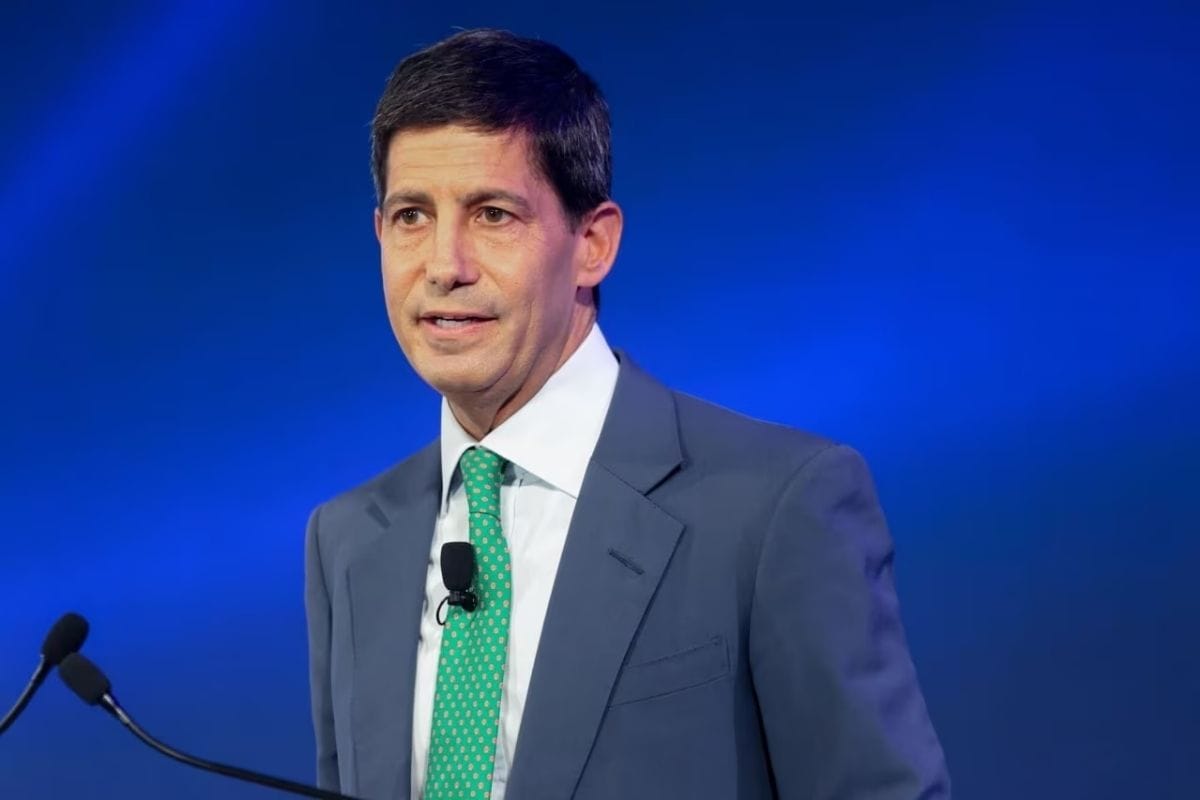
When President Donald Trump tapped Kevin Warsh to lead the Federal Reserve, the reaction in Washington and on Wall Street was swift and unusually mixed, with relief, curiosity, and caution. Relief because Warsh is widely seen as serious about inflation. Curiosity because of his long history criticizing the Fed. And caution because this job now sits at the center of one of the most delicate relationships in American government: the one between the White House and the central bank.
Warsh isn’t just stepping into a powerful role. He’s stepping onto a tightrope.
On one side is his reputation as a disciplined inflation hawk who believes the Fed has drifted dangerously far from its core mission. On the other is the president who nominated him, a leader known for favoring rapid growth, cheap money, and a willingness to pressure institutions that get in the way.
Making that partnership work may be the defining challenge of Warsh’s career.
A Fed Chair Who Knows the Cost of Getting It Wrong
Kevin Warsh is no stranger to financial crisis or high-stakes decision-making. He first rose to national prominence during the 2008 financial meltdown, when the U.S. economy was teetering on the edge of collapse.
At the time, Warsh was a Federal Reserve governor, working alongside Treasury officials and Fed leadership to stabilize a banking system that was rapidly unraveling. Markets were frozen. Confidence was shattered. The fear wasn’t a recession it was a full-blown economic depression.
The Fed responded by flooding the system with liquidity. Interest rates were slashed. Emergency programs were rolled out. And in that moment, it worked. The collapse was avoided.
But what separates Warsh from many of his peers is what he did afterward.
From Crisis Manager to Fed Critic
Once the immediate danger passed, Warsh became one of the most vocal critics of the very policies he had helped implement. He argued that tools designed for an emergency were being treated like permanent features of the economy.
Cheap money, he warned, comes with consequences.
As the Fed continued to keep rates low and expand its balance sheet under successive chairs, Warsh began sounding alarms about inflation risks, asset bubbles, and institutional overreach. He believed the central bank was no longer acting as an independent referee, but as an active participant in shaping economic outcomes.
From his perch as an academic and public commentator, he criticized the Fed for trying to do too much managing employment, financial markets, climate risk, and social priorities while neglecting its most basic responsibility: protecting the value of the dollar.
A Sharp Break From Recent Fed Leadership
Warsh’s views put him at odds with much of the Fed’s recent direction.
Over the past decade, the central bank expanded its scope well beyond interest rates. It weighed in on inequality, embraced environmental and social considerations, and increasingly coordinated its messaging with elected officials. Critics argued this blurred the line between monetary policy and politics.
Warsh didn’t just disagree quietly. He said the Fed had lost focus.
In his view, inflation didn’t surge by accident. It was the result of years of excessive stimulus, money creation, and a reluctance to tighten policy even when warning signs were flashing. By the time inflation finally forced action, the damage had already been done.
That history is exactly why many see his nomination as a reset.
Why Trump Chose Warsh — And Why It’s Complicated
For President Trump, choosing Warsh sends a signal. It suggests a desire to restore credibility at the Fed after years of public tension between the White House and the central bank.
But it also creates friction.
Trump has never been shy about his economic instincts. He favors growth-first policies, aggressive tax cuts, and lower interest rates. During his first term, he openly criticized the Fed for raising rates and accused it of holding back the economy.
Warsh, by contrast, believes inflation is the silent killer of prosperity especially for working families. He sees price stability as the foundation on which growth must be built, not something to be dealt with later.
Reconciling those views won’t be easy.
Independence Will Be the Real Test
The Federal Reserve’s power depends almost entirely on its independence. Once markets believe the central bank is taking orders from politicians, trust erodes fast.
That’s why Warsh’s challenge isn’t just economic it’s institutional.
He must prove that he can stand firm when necessary, even if that means disappointing the president who appointed him. At the same time, he has to avoid open warfare with the White House that could destabilize markets or undermine confidence.
That balance requires restraint, credibility, and political discipline traits Warsh’s supporters believe he possesses.
Markets Are Watching Closely
Investors are already trying to read the tea leaves. Some see Warsh as a steady hand who will prioritize inflation control and restore predictability to monetary policy. Others worry that political pressure could soften his resolve over time.
What’s clear is that expectations are high.
Warsh inherits an economy still grappling with the aftershocks of inflation, global uncertainty, and heavy government debt. Every decision rate hikes, cuts, or pauses will be scrutinized not just for economic impact, but for political motivation.
A Defining Moment for the Fed — and the Presidency
If Kevin Warsh succeeds, he could re-anchor the Federal Reserve to its original mission and reassert its independence at a time when public trust in institutions is fragile.
If he fails, the Fed risks becoming another political battleground, and inflation could once again spiral out of control.
For President Trump, the nomination may turn out to be one of his most consequential decisions. A strong, independent Fed chair could provide stability and credibility. A conflicted one could deepen economic uncertainty.
Either way, this partnership is now unavoidable. And the entire country will be watching how it unfolds.
FAQs - Kevin Warsh as Fed Chair