
Massive Shutdown Imminent as Freddy’s Franchisee Files For Chapter 11

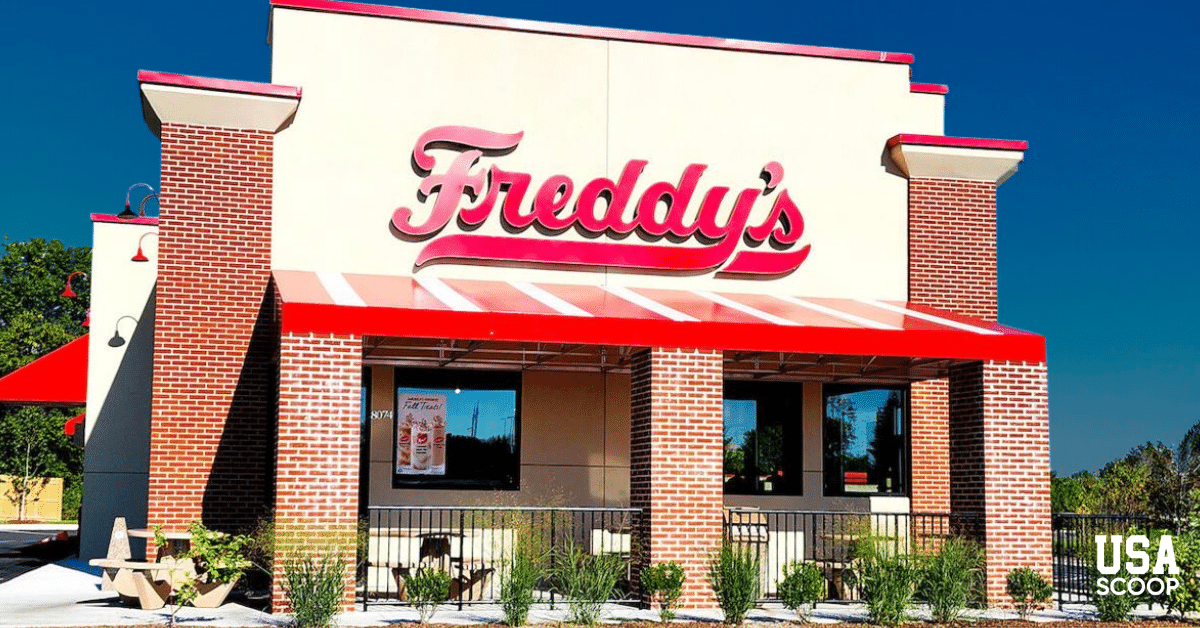
All you need to know about a major bankruptcy controversy, causing concerns over one of the biggest restaurant chains in the country
In a surprise move that’s sending shockwaves through the fast-casual industry, one of Freddy’s largest franchisees, M&M Custard LLC, has filed for Chapter 11 bankruptcy protection. The filing puts 32 Freddy’s locations across six states at risk, showing mounting pressure on restaurant chains as inflation, labour costs, and real-estate burdens squeeze margins.
For the brand itself, Freddy’s may be insulated for now, but the filing raises questions about the franchise system’s resilience and whether more operators could face the same storm. Franchisee strain can quickly ripple into brand stability, and given how competitive the burger/custard space has become, this episode demands attention.
What Exactly Happened?
On November 14, 2025, M&M Custard LLC and 31 affiliated businesses, which operate Freddy’s restaurants in Missouri, Kansas, Illinois, Indiana, Kentucky, and Tennessee, filed for Chapter 11 in US Bankruptcy Court for the District of Kansas.
The documents list roughly $5.2 million in assets against $27.7 million in liabilities.
While the filing names the 32 restaurants, it does not automatically mean they will shutter immediately.
M&M Custard continues operations for now, but the company requested court approval to maintain access to bank accounts and grant permissions to pay employees and existing vendors.
This move aims to keep the lights on while restructuring takes place.
Why It Matters to Freddy’s and the Restaurant Sector
Franchisee bankruptcies signal broader systemic stress. In this case, Freddy’s is a fast-growing chain known for its steakburgers and frozen custard treats with over 500 locations.
A chapter-11 filing from a large regional operator could lure attention from other franchisees or even future site developers who may rethink expansion plans.
That said, Freddy’s corporate brand isn’t the direct debtor here. The bankruptcy is by a franchisee, not the franchisor. So the immediate brand risk is lower.
Supply chain, brand image, and franchisee morale could all take hits. And in the ultra-competitive fast-casual burger space, momentum and consistency matter.
What’s Going Wrong for the Franchisee?
M&M Custard’s numbers suggest a classic squeeze scenario, like hefty liabilities, likely pressured cash flow, rising food-and-labor costs, perhaps stalled traffic.
The timing also hints at broader market stress, as many chains are reporting higher costs, thinner margins and fewer new openings in 2025.
In short, this operator appears to have ridden the wind of expansion, but when costs rose and perhaps growth slowed, the leverage caught up.
That kind of dynamic is increasingly common among multi-unit operators in the restaurant business.
What’s Next for the 32 Locations and the Brand?
For now, the immediate priority is stabilisation. The franchisee will ask the bankruptcy court for debtor-in-possession protections, meaning they remain in control while restructuring.
If approvals come through, the restaurants may keep operating unchanged while new terms are negotiated with creditors.
However, closures are on the table. The filing flags the possibility of shutting down under-performers, renegotiating real estate leases, or off-loading certain units.
That means some Freddy’s guests could wake up one morning and find their local store has closed or been sold. The brand will likely focus on protecting higher-performing units and maintaining franchisee confidence.
Franchise System Under Pressure
Freddy’s isn’t immune to the broader restaurant headwinds, inflation, labour shortage, real estate pressure and shifting consumer habits are squeezing everyone.
A large franchisee bankruptcy can act as a domino warning, as if one big operator collapses under those pressures, others could follow.
It also forces the brand to prove franchisee model strength. How the franchisor handles this event, communication, support, and restructuring will matter for future investors, site developers, even customers who associate parties like this with risk or instability.
Insider Quotes & Framing
In the court filing, M&M Custard stated the restructuring is intended to preserve and maximize value for all stakeholders, including team members, guests and the brand.
That language suggests the franchisee is positioning this more as a corrective measure than a collapse.
This kind of filing, while not a death knell, can spark caution among franchise prospects.
The Takeaway
Freddy’s may have dodged immediate brand collapse, but this event shifts the narrative.
Growth plans may slow, and national expansion could pause as operators digest the risk.
Consumers might not notice day-to-day changes yet, but savvy franchisees, investors and competitors will. When a chain’s large regional operator files for bankruptcy, it becomes a benchmark.
“If they can’t make it work, what does that mean for us?” many new players in the market may wonder, leading to stagnation in a sustained growth of the sector overall.