Minneapolis Erupts After Federal Agent Shoots Man, Protests Clash With Police

Minneapolis is once again grappling with anger, fear, and deep uncertainty after a federal agent shot and injured a man during an arrest on Wednesday evening, triggering protests and clashes with law enforcement just one week after a separate incident in which an immigration officer fatally shot a woman in the city.
City leaders spent the night urging residents to stay calm as tensions flared near the shooting scene. For many in Minneapolis, the latest incident felt like a painful repeat of another violent confrontation involving federal agents, another crowd in the streets, and another community struggling to make sense of it all.
According to the Department of Homeland Security, federal agents were conducting what they described as a “targeted traffic stop” when the situation escalated. Officials said the man involved, a Venezuelan national who they claim was in the country illegally, resisted arrest and allegedly assaulted a federal officer. During the confrontation, an agent fired a shot, striking the man in the leg.
City officials said the man was taken to a hospital with injuries that were not life-threatening. The officer involved was also hospitalized. Two other individuals were later taken into custody.
But the official account did little to slow the unrest that followed.
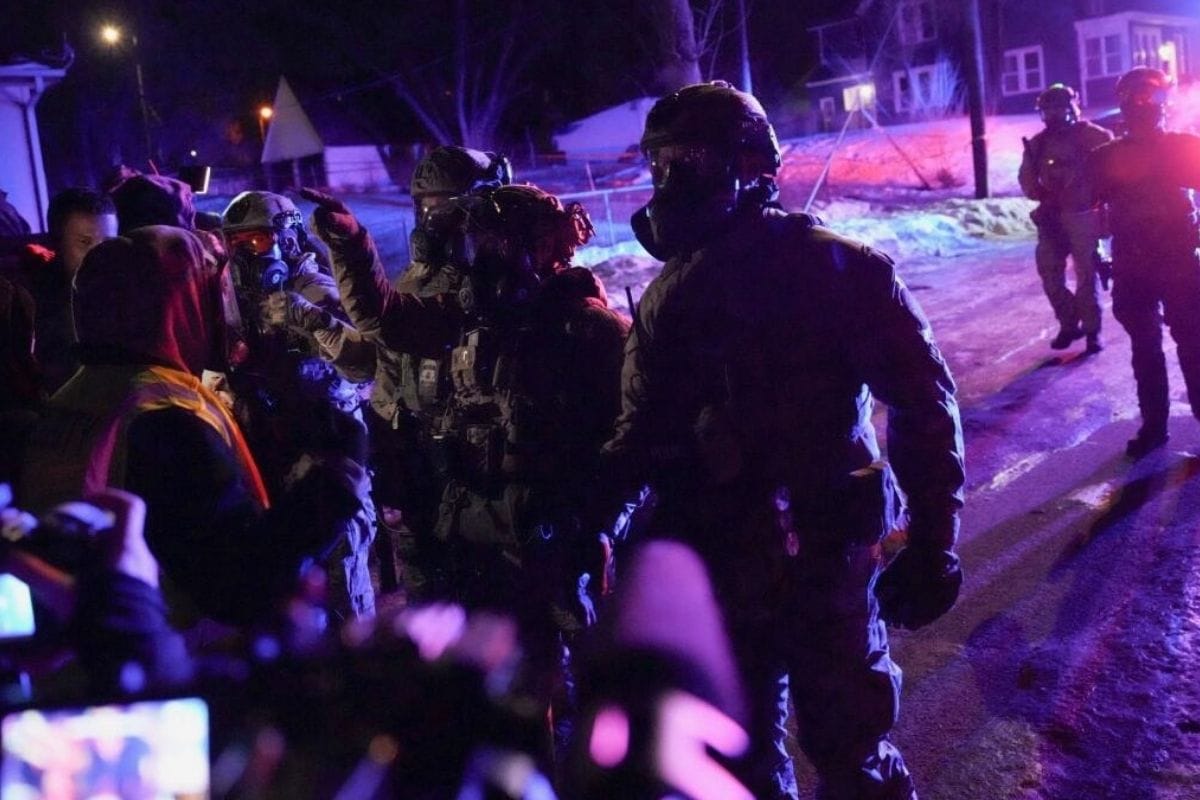
Within hours of the shooting, demonstrators gathered near the scene. As night fell, the situation grew more volatile. Law enforcement deployed tear gas, pepper balls, and what sounded like flash-bang devices to disperse the crowd. Smoke lingered in the air as officers repeatedly ordered people to leave.
Minneapolis Police Chief Brian O’Hara described the gathering as an “unlawful assembly” and warned protesters to go home immediately. “I urge anyone who is at the scene to leave,” he said during a late-night news conference.
Mayor Jacob Frey echoed the call for calm but acknowledged the deep frustration many residents are feeling.
“For those who have peacefully protested, I applaud you,” Frey said. “But for those who are taking the bait, you are not helping. You are not helping undocumented immigrants, and you are not helping this city.”
The mayor stressed that Minneapolis is being pushed into an unsustainable situation. “This is not sustainable,” Frey said bluntly, once again demanding that federal immigration enforcement operations stop in the city.
“This is an impossible position for our city to be in,” he added. “We are trying to protect our neighbors, maintain order, and keep people safe, and at the same time, we have different levels of government working against each other.”
A Chaotic Arrest and Conflicting Narratives
Federal officials say the incident unfolded quickly. According to DHS, the man initially fled the traffic stop in his vehicle, crashed into a parked car, and then ran away on foot. An officer caught up to him and attempted to make an arrest, at which point DHS says the man resisted and violently assaulted the officer.
The situation escalated further when two other individuals reportedly emerged from a nearby apartment and attacked the officer using everyday objects, a snow shovel and a broom handle, according to the agency.
DHS said the officer fired “defensive shots” during the struggle, hitting the original suspect in the leg. All three individuals then retreated into the apartment building and barricaded themselves inside before federal agents entered and took them into custody.
Local officials said the federal government’s version of events could not be independently verified at this time.
Chief O’Hara confirmed that one person was shot during a struggle and initially refused to come out of a residence. Federal agents eventually entered the building and removed the injured individual, who was taken by ambulance to the hospital.
A City Already on Edge
This shooting comes at a particularly raw moment for Minneapolis. Just one week earlier, an Immigration and Customs Enforcement officer fatally shot a woman during an enforcement operation, sparking nationwide protests and renewed scrutiny of federal law enforcement tactics.
That earlier killing left many residents shaken, and the latest shooting has only deepened the sense of unease.
Minnesota Governor Tim Walz addressed the situation Wednesday night, urging residents not to let anger spiral into chaos.
“I know you’re angry. I’m angry,” Walz wrote in a social media post. “But Minnesota will remain an island of decency, justice, and peace. Don’t give in to violence.”
Meanwhile, rhetoric from federal officials added fuel to the already tense atmosphere. Deputy Attorney General Todd Blanche described the unrest as an “insurrection” and accused local leaders of encouraging disorder.
“I’m focused on stopping YOU from your terrorism by whatever means necessary,” Blanche wrote, a statement that alarmed many observers.
Scenes of Protest and Confrontation
Journalists at the scene described a heavy law enforcement presence, with federal agents, Minneapolis police, and state troopers forming lines behind yellow police tape. A Minnesota Bureau of Criminal Apprehension mobile command unit arrived to process evidence, a notable development, as state investigators were previously blocked from participating in the investigation of last week’s fatal shooting.
Video from the scene showed damaged vehicles nearby, spray-painted with messages condemning immigration enforcement. One car had vulgar anti-ICE graffiti, while another carried slogans criticizing government authority. Debris littered the street.
Local authorities said Minneapolis police were not involved in the shooting itself but were assisting with crowd control and public safety.
An Uncertain Path Forward
As of Thursday morning, many questions remain unanswered. City officials say investigations are ongoing, evidence is still being processed, and details about what happened are still emerging.
What is clear, however, is that Minneapolis is caught in a widening struggle between federal enforcement actions and a community already scarred by years of tense encounters with law enforcement.
Mayor Frey summed up the city’s dilemma plainly: “We cannot be in a place where different arms of government are fighting each other in our streets.”
For residents, the fear is not just about one shooting, it’s about what comes next. Whether calm can be restored, whether trust can be rebuilt, and whether Minneapolis can avoid another cycle of violence remains an open and urgent question.