New York’s New Mayor Zohran Mamdani Faces Reality Check on Progressive Vision

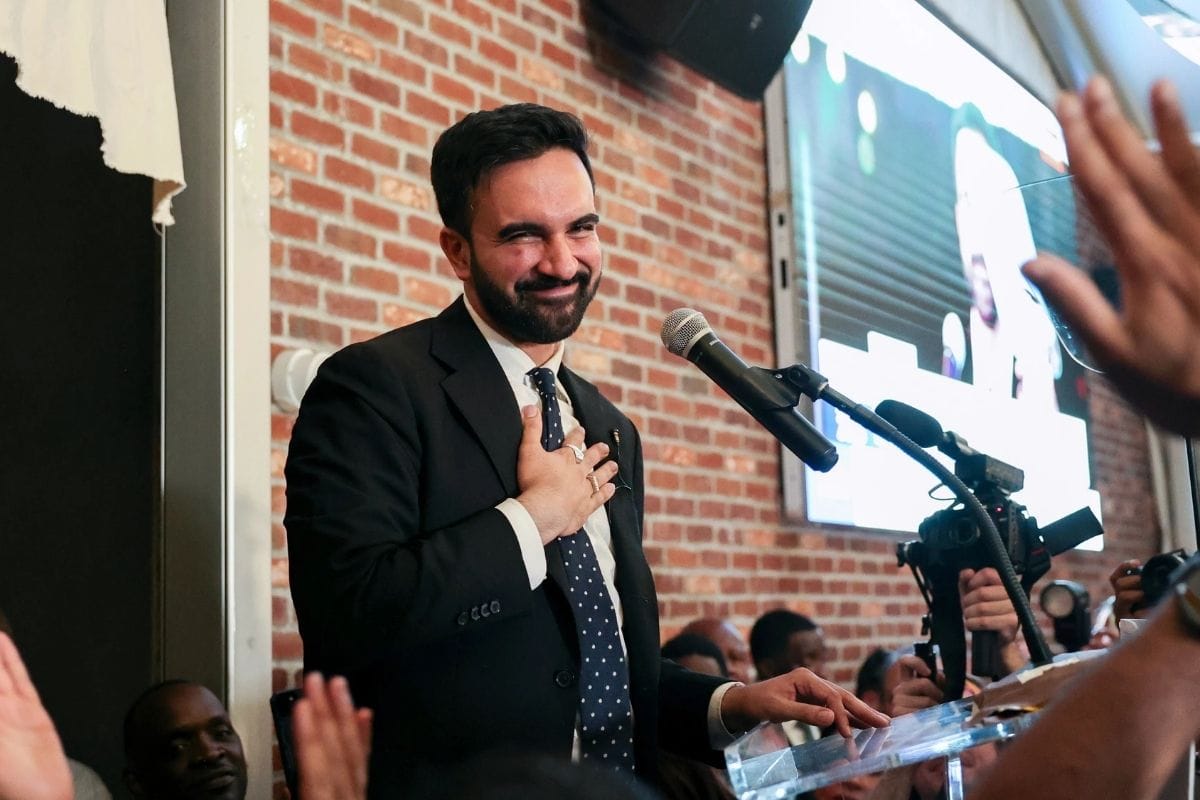
New York City is not a place that waits patiently for change. As Zohran Mamdani prepares to step into City Hall on New Year’s Day as the city’s next mayor, expectations are already sky-high, and so are the challenges.
At just 34 years old, Mamdani is taking on what many consider the second-hardest job in America, right after the president of the United States. He ran on a bold, democratic socialist platform that promised to make life in New York more affordable, more humane, and more equal. Whether he can actually deliver on those promises will not only shape the city’s future but may also influence how the rest of the country views progressive leadership.
Mamdani’s agenda is ambitious. He wants free buses, universal childcare, frozen rents, publicly run grocery stores, and a shift away from police responding to mental health crises. Supporters see these ideas as overdue fixes in a city squeezed by rising costs. Critics say the plans are unrealistic, expensive, or politically risky.
The truth likely lies somewhere in between.
A Mayor With Big Ideas and Limited Power
New York City’s mayor holds enormous influence, but the job comes with real limits. Mamdani will be leading a city of about 8.5 million people, spread across five very different boroughs, with competing political interests, powerful unions, major corporations, and a famously aggressive press.
Even if he wants fast action, Mamdani can’t govern alone.
He must work with the City Council, state lawmakers in Albany, Governor Kathy Hochul, and a maze of independent agencies that often have their own priorities. Many of those power centers lean more moderate than Mamdani himself.
Political scientists say this tension is unavoidable.
“It’s a tough place to succeed,” said Grant Reeher, a professor at Syracuse University. “There are many stakeholders with strong opinions and big egos.”
The City Council, in particular, is not known for quietly following the mayor’s lead. The likely next Council speaker, Julie Menin, is a moderate Democrat from Manhattan’s Upper East Side who did not endorse Mamdani. She has strong backing across party lines and is widely seen as a balancing force against his more progressive instincts.
Still, Menin has signalled a willingness to work with Mamdani on affordability a shared concern across the city.
Freezing Rents and Rethinking Public Safety
One of Mamdani’s most immediate opportunities lies in housing. He has promised to freeze rents on roughly one million rent-stabilised apartments. This would be done through the Rent Guidelines Board, whose members are appointed by the mayor.
But the timing is tricky.
Outgoing Mayor Eric Adams, who opposes a rent freeze, recently made appointments to the board that could limit Mamdani’s influence in the short term. Meanwhile, landlords warn that freezing rents could make it harder to maintain buildings or invest in new housing, especially after state laws limited how much renovation costs they can pass on to tenants.
On public safety, Mamdani is taking a more cautious approach than critics expected. He plans to keep Police Commissioner Jessica Tisch in her role, pointing to recent declines in crime and anti-corruption efforts. At the same time, he wants to create a new “Department of Community Safety.”
This department would send trained social workers not police officers, to respond to mental health crises or homelessness-related calls. Similar models exist in other cities, but scaling one in New York would be far more complex.
The proposal could cost more than $1 billion and would need City Council approval. Even supporters admit it will be difficult to implement smoothly.
“This idea makes sense,” said Jeffrey Butts, a professor at John Jay College of Criminal Justice. “But pulling it off in New York is another story.”
Grocery Stores, Buses, and the Price of Free Services
Mamdani’s plan for city-run grocery stores has drawn some of the loudest reactions. He wants at least one publicly run store in each borough, especially in neighbourhoods with limited access to affordable, healthy food.
Supporters say it could help families struggling with food prices. Critics compare it to failed government-run experiments and worry about competition with small businesses. While New York already has several public food markets, expanding the idea would require political support and public trust.
Transportation is another major focus. Mamdani wants buses to be fast and free, arguing that New York has the slowest buses in the country despite its strong transit culture.
Free buses could save riders money and increase ridership, but they come with a steep cost. Estimates range from $700 million to more than $1 billion per year. Fare-free pilots have shown mixed results, including slower service due to higher demand.
To make buses faster, Mamdani plans dedicated lanes, better traffic signals, and improved loading zones. Experts say this part is crucial. Without exclusive busways, free fares alone won’t fix the problem.
The biggest obstacle? Funding.
Mamdani wants to pay for free buses by raising taxes on wealthy residents and corporations a move that must be approved by the state Legislature. Governor Hochul has expressed support for some of his goals but remains cautious about tax hikes, especially with her own re-election campaign approaching.
Universal Childcare: Popular, Costly, and Complicated
Universal childcare may be Mamdani’s most popular idea and his most expensive.
Childcare in New York City costs more than $18,000 a year on average, putting enormous pressure on working families. Mamdani wants to make childcare free for children from six weeks to age five.
The challenge is scale.
Experts estimate the program could cost $6 billion annually. Beyond funding, the city would need to hire thousands of trained workers and find physical space for new facilities. As with free buses, approval and funding would largely depend on Albany.
The business community, surprisingly, appears more open to this proposal. Many see affordable childcare as essential to keeping workers in the city. City Council leaders have also shown interest, suggesting this may be one area where Mamdani finds common ground.
A National Test Case for Progressive Leadership
Mamdani’s mayoralty will be watched far beyond New York.
Supporters believe his platform reflects what many Americans want: affordability, dignity, and fairness. Critics hope his administration will expose what they see as the limits of progressive governance.
The reality is that success will likely come through compromise, negotiation, and patience — traits that New York City doesn’t always reward.
As Mamdani takes office, one thing is clear: his vision is bold, but the path forward is narrow. Whether he can turn campaign promises into workable policy will define not just his leadership, but the future direction of the nation’s largest city.
And in a city that never stops moving, he won’t have much time to prove himself.