Nobel Peace Prize Medal Given to Trump by Venezuelan Freedom Leader
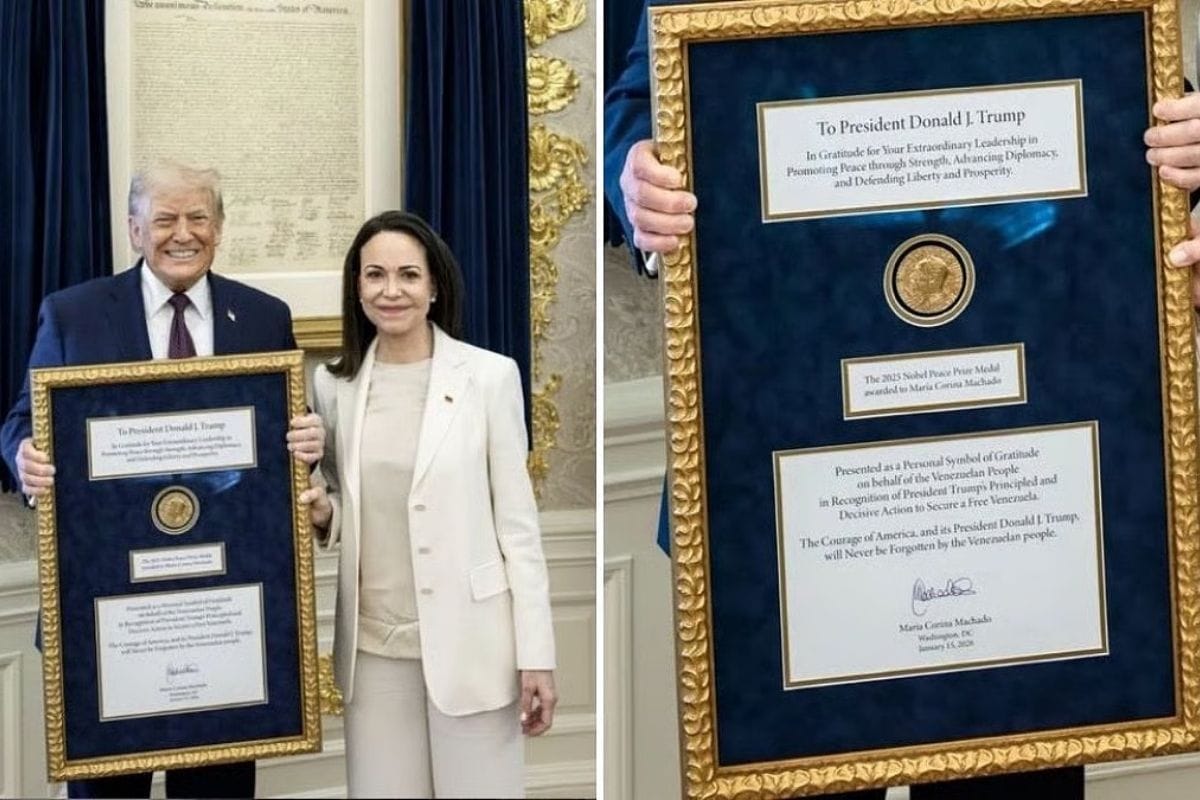
In a moment filled with symbolism and emotion, Venezuelan opposition leader and Nobel Peace Prize laureate María Corina Machado presented her Nobel Peace Prize medal to US President Donald Trump during a private meeting at the White House. The gesture, she said, was meant to recognize Trump’s role in what she described as a defining moment in Venezuela’s struggle for freedom.
Speaking after the meeting, Machado called the day “historic” for Venezuelans, saying the medal represented gratitude from a nation that has endured years of political repression, economic collapse, and international isolation. It was the first time she and Trump had met in person, coming just weeks after US forces captured Venezuelan President Nicolás Maduro in Caracas and brought him to the United States to face drug-trafficking charges.
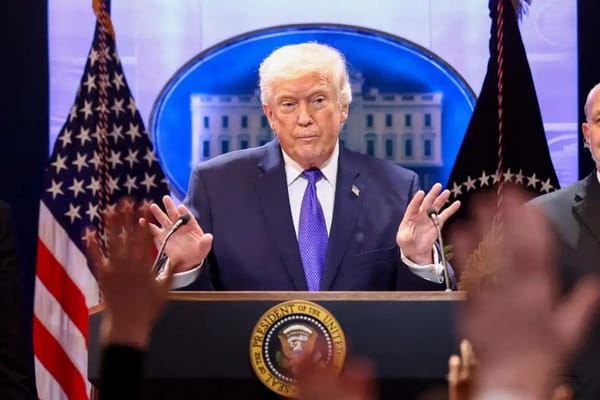
Trump later acknowledged the moment publicly, calling Machado’s gesture “a wonderful sign of mutual respect.” For a president who has frequently spoken about his desire to receive a Nobel Peace Prize himself, the moment carried personal meaning as well as political weight.
A Symbolic Gesture, Not a Transfer of the Prize
Machado was careful to frame the handover as symbolic rather than literal. While she physically gave Trump the medal, the Nobel Committee has made it clear that Nobel Prizes cannot be transferred, shared, or reassigned under any circumstances. The title of Nobel laureate remains solely with the original recipient.
Before the meeting, the Nobel Peace Center explained that while medals can change hands, the honor itself cannot. The committee reiterated that the prize awarded to Machado remains hers alone, regardless of where the medal is displayed.
Machado acknowledged this distinction and emphasized that the act was about recognition, not ownership. She said the medal was meant to honor Trump’s “unique commitment” to Venezuela’s freedom at a time when the country is navigating one of the most dramatic transitions in its modern history.
A Historic Parallel and a Message of Brotherhood
During her remarks, Machado drew a historical comparison that resonated deeply with her supporters. She referenced the Marquis de Lafayette, who fought alongside American revolutionaries and later gifted a medal bearing George Washington’s likeness to Simón Bolívar, one of Venezuela’s founding fathers.
In Machado’s telling, the gesture symbolized shared struggles against tyranny across generations. She described her act as Venezuelans “giving back” a medal to the political heir of Washington, more than two centuries later.
Standing outside the White House gates, she addressed cheering supporters waving Venezuelan flags and chanting her name. Speaking in Spanish, she told them confidently that Venezuelans could count on Trump’s support.
“We can count on President Trump,” she said, her words echoing across the gathered crowd.
Trump’s Praise — but No Formal Endorsement
Despite the warm tone of the meeting, Trump has stopped short of endorsing Machado as Venezuela’s next leader. While he praised her personally, calling her a “wonderful woman” and a “freedom fighter,” he has continued to work officially with Venezuela’s interim government, led by Delcy Rodríguez, Maduro’s former vice president.
Trump has previously argued that Machado lacks enough domestic support to lead Venezuela during its transition, despite her coalition claiming victory in the country’s disputed 2024 elections. That decision has frustrated some members of the Venezuelan opposition, who hoped her White House visit would result in a public endorsement.
Still, White House officials described the meeting as positive and frank. Press Secretary Karoline Leavitt said Machado is “a brave and remarkable voice” for Venezuelans and confirmed that Trump was eager to hear her perspective on the country’s future.
Venezuela’s Transition and a New Diplomatic Path
Since Maduro’s removal, the Trump administration has moved quickly to reshape US-Venezuela relations. Sanctions that once crippled Venezuela’s oil industry are being reconsidered, and the US has already completed its first sale of Venezuelan oil, reportedly valued at around $500 million.
American forces have also seized multiple tankers suspected of transporting sanctioned Venezuelan oil, signaling a tougher stance on illegal exports while formal agreements are negotiated.
At the same time, diplomatic channels are reopening. A Venezuelan government envoy aligned with Rodríguez is expected to travel to Washington to begin steps toward reopening Venezuela’s embassy in the US. Rodríguez herself has signaled openness to diplomacy, saying she would engage with Washington “standing tall” if necessary.
Trump and Rodríguez also spoke by phone recently, describing their conversation afterwards as respectful and productive. Trump even referred to her publicly as “a terrific person,” underscoring his willingness to work pragmatically with Venezuela’s interim leadership.
A Delicate Political Balancing Act
Machado’s visit highlighted the delicate balance Trump is trying to maintain: supporting democratic movements while avoiding overt interference in leadership decisions. While many Venezuelans view Machado as the face of resistance against authoritarian rule, the administration appears to be focused on stability, oil production, and a controlled transition.
For Machado, the visit was still a success. She met with US lawmakers, addressed supporters, and delivered a powerful symbolic message that placed Venezuela’s struggle within a broader historical and moral framework.
As she left Washington, it was clear that while she may not have secured Trump’s formal backing, she had secured something else global attention, renewed momentum, and a powerful image of solidarity that will resonate deeply with her supporters back home.
Whether the medal remains in Trump’s possession or returns to Machado, the moment itself has already become a part of Venezuela’s unfolding political story as a symbol of gratitude, hope, and an uncertain yet pivotal future.