Northeast Blizzard Slams NYC With Heavy Snow and Airport Shutdowns
A powerful NYC blizzard brings heavy snow, flight cancellations and dangerous road conditions as a major nor’easter slams the Northeast.
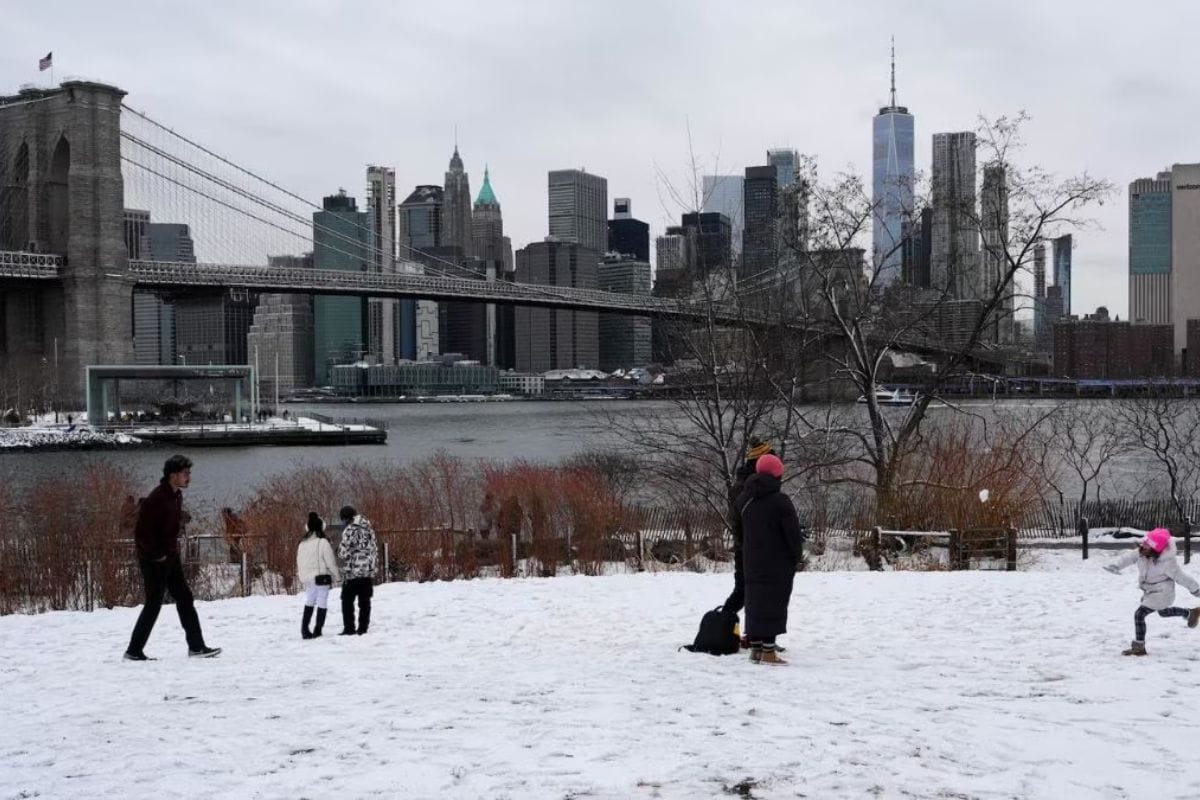
Snow started falling over New York City before dawn, soft at first, then steady, then relentless.
By mid-morning, Manhattan sidewalks disappeared under fresh accumulation. Plows crawled down avenues with flashing lights cutting through blowing snow. Wind pushed flurries sideways between skyscrapers. Commuters who stepped outside early quickly realized this was not just another winter morning; this was a full-scale Northeast blizzard.
Forecasters had warned that a powerful nor’easter would track up the East Coast. Now it is here. And from NYC to Boston, the impact is unmistakable: heavy snow, flight cancellations, road closures and a region pressing pause.
NYC Blizzard Conditions Turn Streets Into Snow Corridors
In New York City, the storm intensified quickly. Snowfall rates picked up through the morning, at times falling fast enough to coat roads minutes after plows cleared them.
Bridges and elevated highways felt the wind first. Gusts whipped across the Brooklyn Bridge and the FDR Drive, blowing snow into drivers’ windshields and reducing visibility. City officials issued travel advisories, urging residents to stay home unless necessary.
Sanitation crews deployed across all five boroughs. Plows ran repeated routes, focusing on major arteries before circling back through neighborhood streets. Still, snow drifted back into cleared lanes as winds strengthened.
In parts of the greater New York region and Connecticut, blizzard warnings took effect. Meteorologists warned that wind gusts could reach 40 to 50 mph, creating whiteout conditions in exposed areas.
For a city that prides itself on never stopping, the slowdown felt noticeable. Fewer taxis. Quieter intersections. Restaurants are delaying lunch service. The rhythm of NYC softened under falling snow.
Flight Cancellations Paralyse New York Airports
The disruption stretched well beyond city streets.
At JFK, LaGuardia and Newark Liberty airports, departure boards filled with red cancellation notices. Airlines moved aircraft out of the storm’s path or held them at gates as snowfall and low visibility made safe operations difficult.
Travelers who arrived early found themselves waiting in long lines to rebook flights. Some sat on luggage, refreshing airline apps for updates. Others simply went home.
The storm’s timing added pressure. Winter travel schedules already operate with tight margins. When a major blizzard shuts down one of the country’s busiest air corridors, the ripple effect spreads quickly.
Boston’s Logan Airport reported similar cancellations as the system pushed north. Philadelphia and smaller regional hubs also felt the slowdown. Even cities outside the storm’s direct path began adjusting schedules to absorb displaced aircraft.
For passengers, it was a reminder that winter weather in the Northeast does not stay local. When New York slows down, so does much of the national air network.
Snow-Covered Highways and Dangerous Driving Conditions
On the ground, highways across New York State turned slick as snowfall intensified. State police responded to spinouts and minor crashes, particularly in areas where blowing snow reduced visibility to just a few hundred feet.
Officials discouraged nonessential travel. In some counties, emergency declarations allowed local governments to restrict certain roadways to keep plow routes clear.
Driving during a nor’easter carries a particular risk. Snow falls heavily. Wind lifts it from the pavement. Then drifting snow hides lane markings altogether. Even experienced Northeast drivers hesitate when conditions shift that quickly.
Commuter rail lines reduced speeds. Snow and ice required extra inspections on tracks and switches. Suburban residents trying to reach Manhattan faced delays that stretched well beyond normal commute times.
Many businesses in NYC shifted to remote work for the day. Schools across parts of New York and New England canceled in-person classes. The collective decision was simple: reduce traffic and let crews do their work.
Power Outage Threat as Winds Strengthen
While snow captured attention, wind posed a quieter threat.
Utility companies positioned repair crews ahead of the storm, anticipating downed branches and stressed power lines. Wet, heavy snow clings to trees. Add strong gusts, and limbs can snap under pressure.
So far, outages have remained scattered, but officials warned that the strongest winds may arrive before snowfall completely tapers off.
Emergency management teams asked residents to prepare: charge devices, gather flashlights, and check on elderly neighbors. Small steps matter when temperatures stay below freezing and travel remains difficult.
In coastal communities, authorities also monitored tides. Nor’easters can combine snow inland with minor coastal flooding along exposed shorelines. Even when flooding remains limited, officials stay alert.
After the Snow: Frigid Temperatures and Cleanup Ahead
The storm will not linger forever. Forecasters expect it to gradually weaken as it tracks into New England and eastern Canada. But what follows may be just as important.
Cold air will settle over the region once snowfall ends. Any slush left on roads may refreeze overnight, creating black ice during early morning hours. Sidewalks that look clear could become slick without warning.
Cleanup will take time. Plow crews will continue rotating shifts through the night. Airport workers will clear runways and reposition aircraft. Businesses will reopen cautiously, assessing whether streets and transit lines can handle the return of commuters.
New York City knows winter storms. It has faced deeper snow, stronger winds and longer outages. But each major blizzard still demands coordination and patience.
By late afternoon, some New Yorkers stepped outside just to look. Snow softened the city’s hard edges. Traffic noise faded. Parks filled with children pulling sleds up small hills.
Then another gust of wind blew snow across the pavement, a reminder that the storm had not yet finished.
For now, officials continue repeating the same message across the Northeast: stay home if you can, avoid unnecessary travel and let emergency crews clear the way.
The blizzard will pass. Flights will resume. Highways will reopen fully. But in this moment, from downtown Manhattan to suburban Connecticut and up through Boston, winter holds the region firmly in its grip.