
Philly Youth Football Stars Charged With Felony Theft in Florida
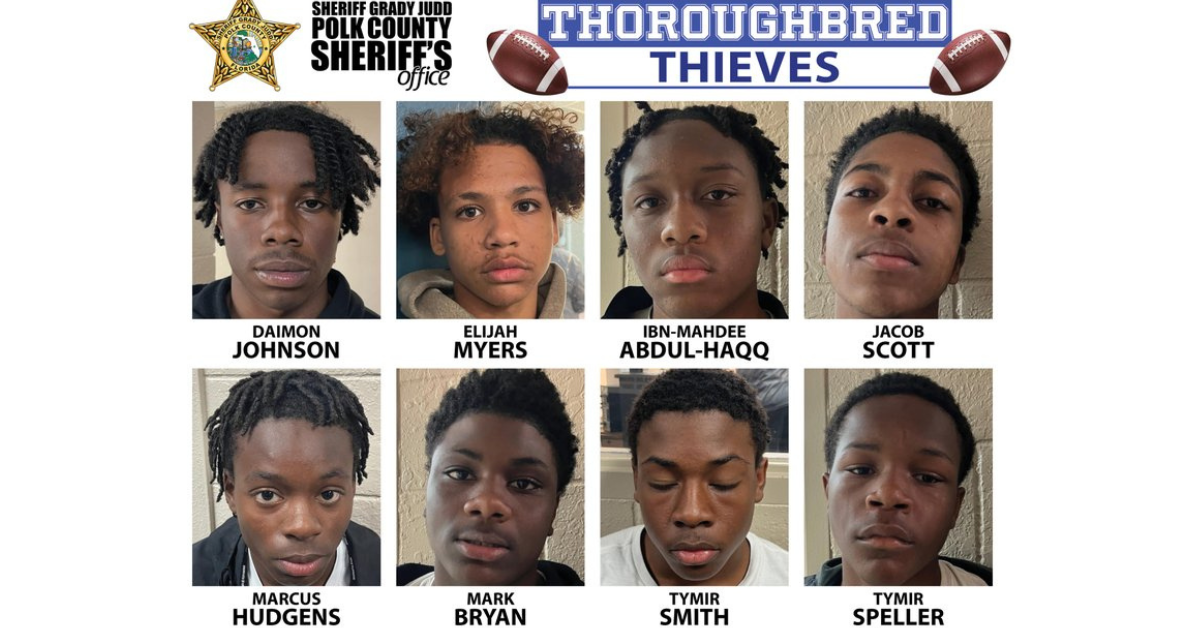
A trip meant for glory, a youth football championship tournament, turned into a criminal case after eight members of the United Thoroughbreds were charged with felony retail theft at a Florida store.
Eight teenage members of the United Thoroughbreds, a youth football team from Philadelphia, were arrested while in Polk County, Florida, on December 6, 2025, accused of stealing more than two thousand dollars' worth of merchandise from a Dick’s Sporting Goods store, a charge that ended their championship aspirations and shocked their community.
According to the Polk County Sheriff's Office (PCSO), the teens entered the store in two separate groups at around 10:55 a.m., concealed merchandise, including hoodies, gloves, and sports gear inside a shopping bag, and tried to exit, only to be intercepted by deputies waiting outside, acting on a tip from store management. The total value of the items reportedly amounted to US$2,296.07.
Authorities charged all eight, aged between fourteen and fifteen, with felony retail theft over $750 and conspiracy to commit retail theft.
Because they were minors, the case was lodged with juvenile justice processes, as they were taken to a Juvenile Assessment Center and now await court dates in Florida, with their participation in the tournament instantly terminated and their team status revoked.
A Coach’s Disappointment and an Instant Fallout
When the team’s offensive coordinator, Raekwon Bynes, arrived at the store, he found empty beds in the hotel room instead of the boys he had woken up for prayer, a moment that spiralled into alarm and confusion. Within hours, the coach learned of the arrests. His response was firm but layered with regret, saying the boys would have to face the consequences for their actions, and that he had even tried pleading with deputies and store management not to press charges. None of those efforts changed the outcome.
Bynes expressed remorse on behalf of the team and acknowledged the gravity of the situation, emphasizing that the values of discipline, schoolwork, and responsibility, principles his program claims to uphold, were overshadowed by what happened.
He said the incident should serve as a harsh lesson in accountability and the understanding that actions have consequences not just for the individual, but for teammates, families, and the entire program.
In the aftermath, the eight accused players have been removed from the team roster.
A Championship Lost, Reputation Tarnished, Trust Broken
The timing of the arrests could not have been worse. The team had travelled to Florida to play in a national-level youth football championship. Instead of lining up under the lights, the implicated players were led off in handcuffs, and the United Thoroughbreds went on to lose the championship game, with their hopes derailed in the most public and irreversible way possible.
Beyond the immediate legal consequences, the incident casts a long shadow over the integrity of the youth-sport program. Parents, community members, and other teams are likely to question oversight, supervision, and the values being instilled. Trust, essential in youth sports, has been fractured, and the reputational cost for players, families and coaches may stay far longer than any court outcome.
Youth Sports Pressure, Peer Influence and Accountability
This case is more than a theft, as it raises uncomfortable questions about the pressures youth athletes face, peer dynamics, socioeconomic factors, and decision-making under group influence. What leads a group of fifteen-year-olds to risk felony charges and their sporting future for merchandise worth a few thousand dollars?
The coaches, parents, and youth-sports organizations may need to re-examine how they harness discipline, accountability and moral compass in young athletes, especially when success, competition, and external expectations smell of glamour and opportunity. When the path to a championship feels within reach, the stakes would feel higher, but as this incident shows, the consequences of missteps are permanent and severe.
Legal Uncertainty and the Road Ahead
Although the juveniles face serious felony charges under Florida law, their status as minors means their case will likely run through juvenile-court procedures, which may include sealed records, rehabilitative rather than punitive outcomes, and potential for diversion, depending on their prior record, behaviour, and the discretion of prosecutors and judges. As of now, none of the teens have prior criminal histories, according to juvenile justice records.
It remains unclear when their next court appearance will be, and whether the full weight of the law will apply or whether leniency, probation, or other rehabilitative measures may be considered. Meanwhile, parents and families must contend with the social fallout, legal uncertainty, and emotional stress, an outcome likely to leave scars as enduring as any schoolyard memories.
The High Stakes of Youth Athletics
At its core, this event reveals how youth athletics, ambition, peer influence and adolescent risk-taking can collide disastrously when oversight loosens and discipline fractures. The allure of competition, travel and sporting prestige can blind young athletes to the consequences of poor decisions, even when values have been taught, repeated, and reinforced early.
The United Thoroughbreds incident serves as a stark warning that success in youth sports demands more than athletic skill. It requires character, judgement, and a sense of responsibility that extends beyond the field. When those are neglected or overshadowed by the desperation to win, the loss can be far greater than a lost game.
What began as a journey toward a championship ended with felony charges, jail cells, broken trust and a crashed dream. For the eight young men from Philadelphia, the cost of that decision will echo long after stolen merchandise is returned or court cases dismissed. This is a painful lesson in accountability, consequences and the fragile nature of trust when youth, pressure, and poor choices collide.
This episode may become a cautionary tale not only for one team but for all youth athletics, and a reminder that the character built off-field matters as much as the plays called on it.