Saks Global on Brink of Bankruptcy as $3.5B Flagship and Luxury Empire Hang in Balance

For more than a century, names like Saks Fifth Avenue, Neiman Marcus, and Bergdorf Goodman have defined luxury shopping in America. Now, the company behind those storied brands is facing a moment that could change everything.
Saks Global, the owner of several of the country’s most recognizable high-end department stores, is preparing for a possible bankruptcy filing that could come as soon as Tuesday, according to people familiar with the situation. If it happens, it would mark a dramatic turning point for a retail empire already under intense pressure from shifting consumer habits, rising costs, and growing competition online.
While a bankruptcy filing doesn’t necessarily mean stores will shut overnight, it does signal just how fragile the company’s position has become.
Racing to Secure Emergency Funding
At the center of Saks Global’s struggle is a desperate push to secure more than $1 billion in emergency funding to keep operations running. This type of funding, known as debtor-in-possession financing, allows a company to continue paying employees, suppliers, and landlords while it works through a court-supervised restructuring.
Two possible financing deals are reportedly being negotiated. One would bring in about $1.25 billion from investment firms Bracebridge Capital and Pentwater Capital. Another, potentially larger option involves a $1.5 billion lifeline from Pimco, a firm that has deep ties to the luxury retailer after previously co-owning Neiman Marcus before its sale to Saks in 2024.
Even with those talks underway, nothing is guaranteed. If a deal falls apart or funding arrives too late, the company could face deeper cuts and more chaos.
The Big Question: What Is the Real Estate Really Worth?
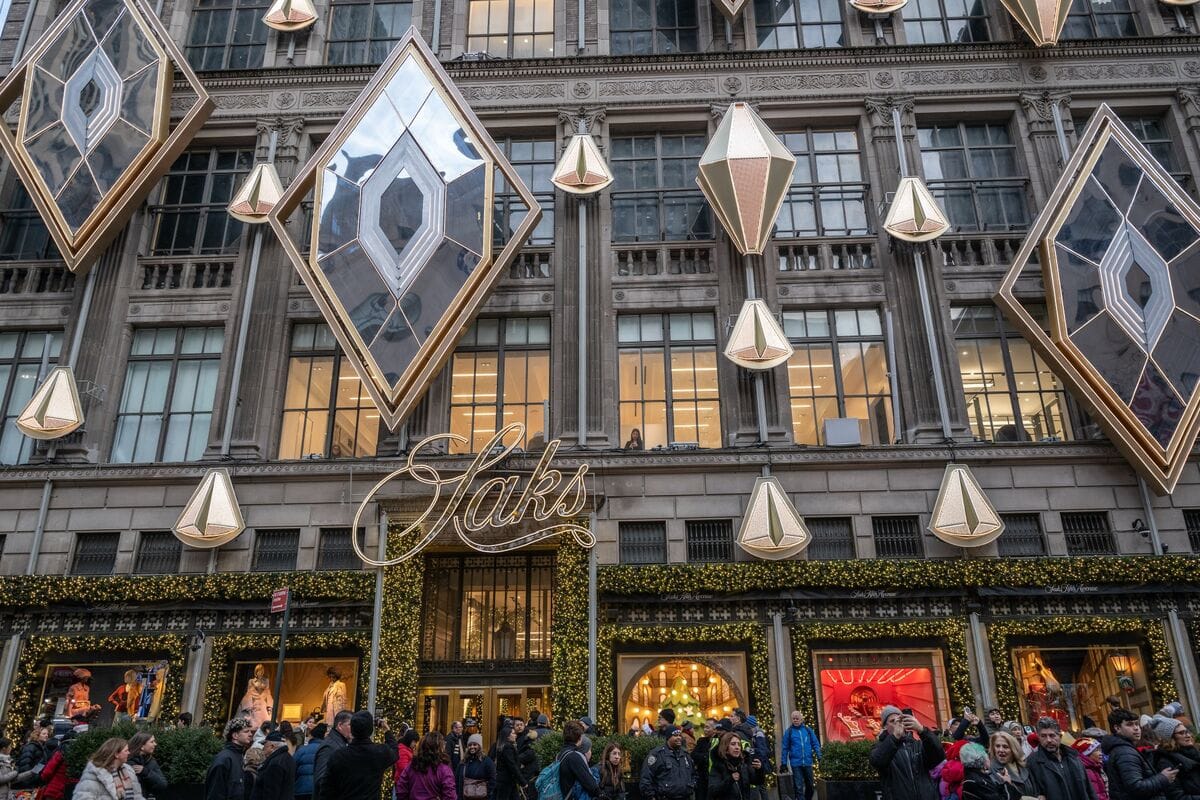
One of Saks Global’s most valuable assets is its real estate especially its legendary flagship store on Fifth Avenue in New York City. The building is widely viewed as one of the most valuable retail properties in the world, and it now sits at the center of the company’s financial survival.
Sources say the Fifth Avenue flagship has been appraised at roughly $3.5 billion. Against that, there is about $1.25 billion in debt, leaving an estimated $2 billion in equity. In theory, that equity could be used to reassure lenders or serve as collateral during a bankruptcy process.
But theory and reality don’t always match. It remains unclear how much of that value is truly accessible, how quickly it could be unlocked, or whether it would be enough to satisfy anxious creditors.
Beyond New York, Saks Global also controls or leases dozens of high-profile locations across the country. Whether those properties become lifelines or liabilities is still an open question.
A Complicated Web of Brand Licensing
Adding another layer of uncertainty is the role of Authentic, a major brand licensing company. Authentic owns a 50% stake in an entity that controls the licensing rights to the Saks and Neiman Marcus names. That means Saks Global doesn’t fully control how its own iconic brands can be sold, licensed, or monetized.
In a bankruptcy scenario, Authentic’s influence could grow, potentially making it harder for Saks Global to restructure or sell parts of its business without approval. Any future buyer or investor would almost certainly need to negotiate new licensing agreements, complicating an already delicate process.
This arrangement stems from a joint venture formed in 2024, when Authentic invested $150 million in a new luxury licensing group alongside Saks Global. At the time, it was pitched as a smart strategic move. Today, it’s another variable in an already crowded equation.
Vendors Pull Back as Anxiety Spreads
As uncertainty swirls, vendors are growing nervous and some are already taking action. There are reports that major luxury brands have begun pulling merchandise out of Saks stores, including locations outside traditional fashion capitals.
For suppliers, the fear is simple: if Saks Global files for bankruptcy, payments could be delayed, reduced, or stopped altogether. One restructuring attorney representing multiple vendors said one of his clients alone is owed about $600,000, with Saks Off 5th being its largest customer.
For smaller brands in particular, losing a major retail partner could be devastating. Many are now waiting anxiously, watching for any sign of what comes next.
Leadership Shake-Up Likely
If Saks Global does enter bankruptcy, a major leadership change is expected. Richard Baker, the company’s chief executive and the real estate investor who engineered the Neiman Marcus acquisition, would likely lose management control as part of the restructuring process.
That’s standard in large bankruptcies, but it still brings uncertainty. Employees, partners, and vendors will all be looking to see who steps in, what direction they choose, and whether the company can regain its footing.
What This Means for Luxury Retail
Saks Global’s potential bankruptcy is about more than one company. It reflects the broader struggles facing traditional department stores, even at the luxury end of the market. Shoppers are buying differently, brands are selling more directly to consumers, and the mall-based retail model continues to erode.
If Saks Global secures financing and successfully restructures, it could emerge leaner and more focused, with its most iconic stores intact. If it doesn’t, the fallout could reshape the luxury retail landscape for years to come.
As the deadline approaches, one thing is clear: the future of some of America’s most famous fashion brands is hanging in the balance, and the outcome will be felt far beyond the sales floor.