
Samsung Galaxy Z TriFold Debuts 10 Inch Multi Fold Phone for $2,440
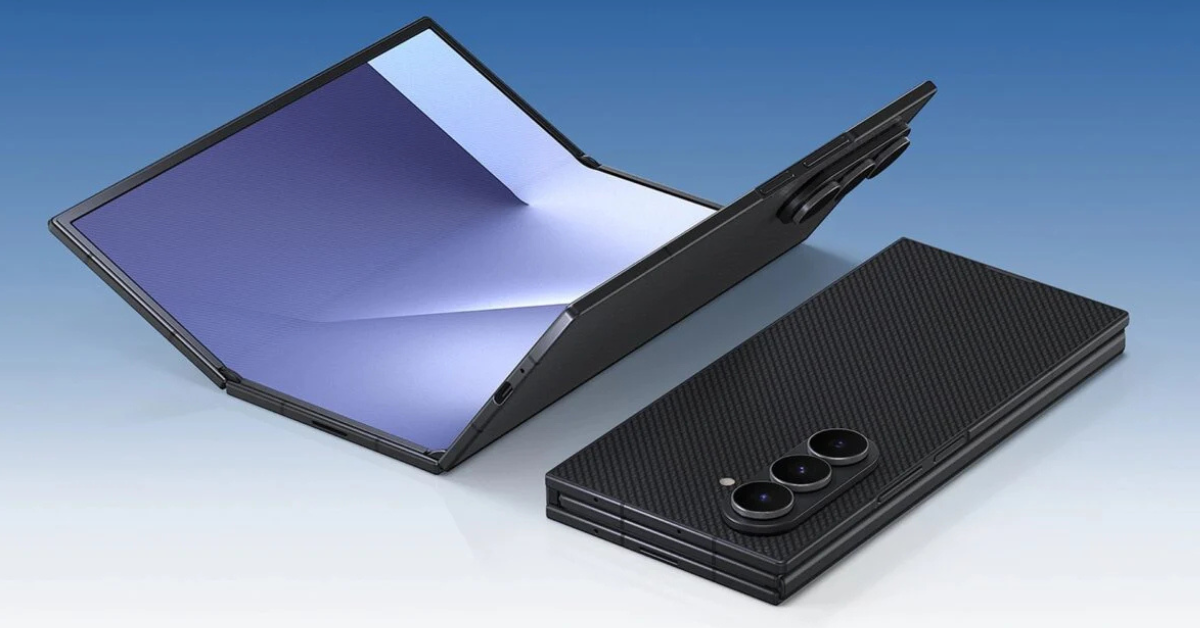
Samsung’s first multi-fold phone arrives at a moment when foldables still struggle for mainstream share, but TriFold can shift expectations and reset the industry pace
After years of refining foldable technology through its Z Flip and Z Fold series, Samsung has unveiled a new milestone, i.e. the Galaxy Z TriFold, which is the company’s first smartphone that folds twice, transforming into a 10-inch device capable of replacing a small tablet.
Announced on 2 December 2025, the TriFold offers a triple-panel, inward-folding design that collapses into a 6.5-inch phone and expands into a large, tablet-like canvas, making it roughly 25 per cent larger than Samsung’s latest dual-fold device.
On its outer face the TriFold carries a 6.5-inch FHD+ cover display for conventional use. When unfolded, the internal panel reaches 10 inches with a Dynamic AMOLED 2X display, featuring QXGA+ resolution, adaptive 120 Hz refresh rate, and peak brightness suited for outdoors and heavy multimedia consumption.
Under the hood, the phone packs a Snapdragon 8 Elite chipset paired with 16 GB RAM and up to 1 TB storage, aiming to deliver performance on par with flagship phones. A 5,600 mAh triple-cell battery supports extended screen use, backed by 45W fast charging, and the device supports Wi-Fi 7, 5G, dual SIM (Nano + eSIM), and Samsung’s desktop-style DeX mode.
Why Samsung Went Tri-Fold and What It Means for the Industry
The introduction of the TriFold seems less about mass-market domination and more about resetting the boundaries of design, functionality, and premium positioning. In Samsung’s case, this device shows confidence and a statement that foldables are no longer gimmicks, and also a legitimate alternative to tablets and laptops for productivity, multimedia, and creativity.
At the same time, the timing is strategic, as competing firms are accelerating their own foldable initiatives, with Chinese players like Huawei having already released their own tri-fold model, and whispers of a foldable from Apple are growing ever louder for 2026.
By entering the multi-fold game now, Samsung both leverages its global manufacturing footprint and challenges the narrative that foldables are fragile toys. If TriFold succeeds in real-world use, multitasking, display quality and durability, it could trigger a new cycle of innovation and competition.
Price, Niche Appeal and the Road to Mainstream
Despite its promise, TriFold arrives with some clear constraints, as the price tag is steep at around 3.59 million won (≈ US $2,440) at its launch in South Korea. The international rollout will follow, but even in global markets, that converts into a premium-segment cost, placing it out of reach for many consumers.
Analysts caution that tri-fold devices may remain a niche for some time. High component and manufacturing costs, added complexity from multiple hinges and fold points, and potential durability concerns, especially with repeated folding, mean that TriFold might initially appeal more to power-users than general smartphone buyers.
Current estimates suggest foldables will remain a small fraction of the total smartphone market, under 2 per cent in 2025, rising modestly toward 3 per cent by 2027.
For mass adoption, Samsung, and indeed all foldable makers, will need to bring prices down, improve hinge longevity and deliver a seamless user experience across apps and workflows. Until then, devices like TriFold may serve more as technological ambassadors than everyday essentials.
Multitasking, Media and Productivity on the Go
For certain user profiles, TriFold delivers experiences that conventional smartphones cannot match. The large 10-inch internal display transforms the phone into an on-the-go workstation of sorts, especially when paired with DeX mode. Multitasking on a tablet-sized canvas allows running multiple apps side by side, ideal for document editing, email, video calls, web browsing and entertainment all at once.
Content creators, designers, and media consumers stand to benefit too. The combination of a high-resolution screen with strong brightness levels, a 200 MP main camera plus supporting lenses, and ample processing power could make TriFold a compelling all-in-one device for photography, editing, streaming or remote work.
Moreover, for people who carry both a phone and a tablet or who travel frequently, TriFold offers the promise of consolidation, i.e. one device instead of two, less to charge, carry or forget, without compromising size or functionality.
What to Watch As the TriFold Launch Unfolds
The weeks and months ahead will determine whether TriFold remains a bold statement or becomes a cornerstone of foldable tech. Its durability will be under scrutiny, as Samsung claims that the dual-hinge mechanism and reinforced display layer underwent rigorous testing, but real users will reveal how it handles repeated folds, pocketing, pressure and daily use.
Also, software optimisation and app adaptation will matter in the long run. A 10-inch flexible canvas demands that apps scale gracefully, multitasking works smoothly, and battery life remains usable under heavy workloads. Performance in real-world multitasking and media-heavy use will shape opinion.
Further, price sensitivity will test demand, as at its launch price, TriFold competes with laptops and high-end tablets, conversions may force prospective buyers to weigh value, utility and longevity before committing.
Finally, competitive response and market dynamics will shape the foldable landscape. If competitors like Huawei, Apple or others push their own tri-fold or foldable designs with competitive pricing, innovation cycles may accelerate, forcing Samsung to refine TriFold quickly or risk ceding ground.
A Glimpse of the Future, But Not Yet the Future for All
The Galaxy Z TriFold is Samsung’s vision of what mobile computing can become when borders between phone, tablet and laptop diminish. It embodies ambition, pushing form factors, challenging user expectations and demanding a rethink of what a phone can be all about.
Yet right now, TriFold remains a statement aimed at early adopters, tech enthusiasts, power users, creators and those willing to pay for bleeding-edge design. Foldables may continue to exist on the edge of mainstream for some time, unless manufacturing costs fall and hinge/ display reliability improves dramatically.
Still, the arrival of a multi-fold phone from a global leader like Samsung signals that the era of incremental updates may be giving way to structural change. Whether TriFold becomes a legacy device, a halo product or a milestone on the road to mass-market foldables will become clearer as real users put it through real-world tests.
Currently, it offers a glimpse of a future where our devices don’t force trade-offs between size and portability, power and convenience, where a phone can be a tablet, a workstation, a creative studio, or simply a screen in your pocket. The gamble is big, and the payoff could transform mobile computing, or remain a high-end flourish.