Supreme Court Takes Up Birthright Citizenship Case in Historic 14th Amendment Clash
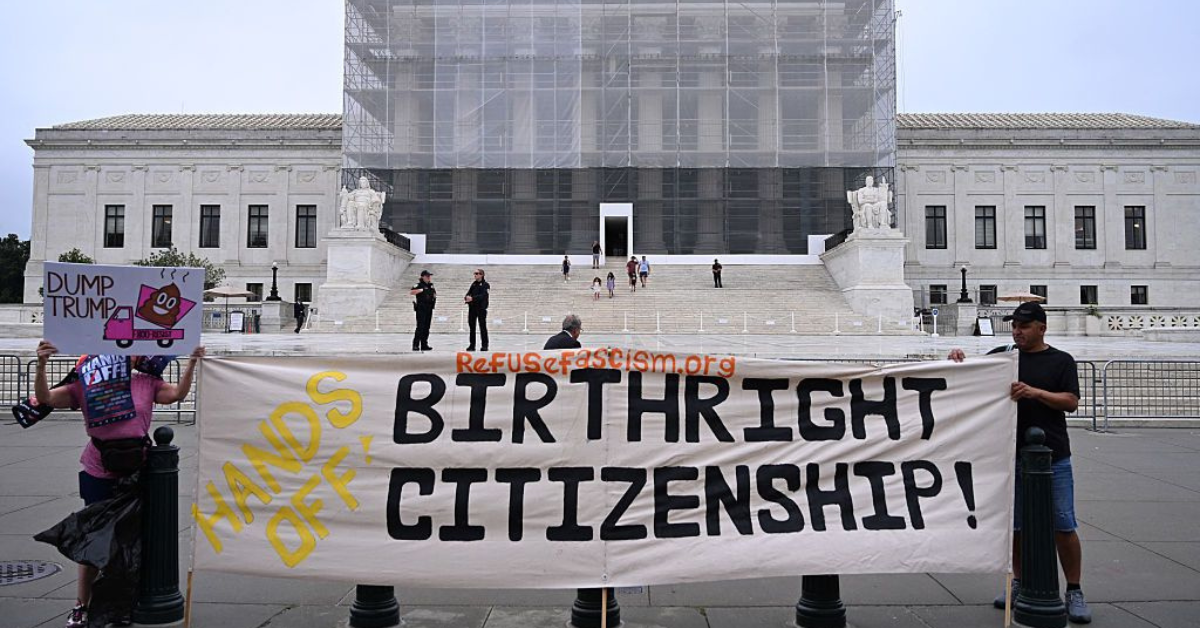
As Washington prepares for oral arguments, millions born in the United States could see their guaranteed citizenship rights re-examined, potentially altering the legal and social fabric of the nation.
In a significant decision with far-reaching consequences, the United States Supreme Court has accepted a case challenging the constitutionality of birthright citizenship, the principle enshrined in the 14th Amendment that ensures nearly everyone born on American soil is a US citizen.
The ruling means that sometime in the coming months, justices will hear arguments on whether that longstanding constitutional guarantee should stand or be overturned. The news has reignited fierce debate, casting uncertainty over the status of millions who until now assumed citizenship at birth.
For nearly 160 years, the 14th Amendment's Citizenship Clause: “All persons born or naturalized in the United States, and subject to the jurisdiction thereof, are citizens of the United States and of the State wherein they reside”, has been interpreted to grant automatic citizenship to virtually anyone born in the country, regardless of their parents’ immigration status. Now, with the Supreme Court taking up the matter, that interpretation stands on fragile new ground.
Why the Challenge Is Grounded
The challenge emerged after an executive order by the current US administration attempted to strip automatic citizenship from children born to parents living in the US illegally or on temporary visas. That order was blocked by lower courts, which deemed it unconstitutional. The Supreme Court’s decision to hear the appeal reflects the magnitude of its implications, not just for individual families, but for the principle of what it means to be “American by birth.”
At issue is the clause “subject to the jurisdiction thereof.”
Opponents argue that this language gives Congress, or perhaps courts, latitude to reinterpret citizenship rules to exclude children of non-citizen parents. Supporters counter that the clause was drafted precisely to guarantee inclusive citizenship after the Civil War, to avoid racial exclusion and ensure equal rights. The upcoming case thus promises to test not just the letter of constitutional text, but the spirit of America’s founding commitment to birthright equality.
The social stakes are profound, as should the Court rule against birthright citizenship, many who have lived as US citizens their entire lives could find their status thrown into doubt. Children born to immigrant parents, including legal residents and undocumented immigrants, could become subject to complex and uncertain legal regimes. The change could also ripple into areas such as voting, social welfare, education access, and civil rights, fundamentally altering the demographic landscape.
What the Justices Are Really Saying
That the Supreme Court chose to hear the case after decades of consistent precedent is itself a signal: the justices may be open to revisiting and possibly redefining one of the bedrock principles of American citizenship.
For years, lower courts uniformly rejected attempts to curtail birthright citizenship, relying on established jurisprudence. That the top court will now engage suggests a potential shift in constitutional interpretation at the highest level, one that could reshape immigration law and civil rights for generations.
Observers note that the Court’s decision does not guarantee a change, but it lifts the veil on a possibility many presumed settled. It makes clear that legal precedent, public expectations, and constitutionally enshrined rights are not eternally fixed, but subject to the changing composition of the judiciary and shifting political currents. For supporters of the current interpretation, this moment feels like a warning shot; for critics, a last chance to reshape foundational norms.
Outcomes and Fallout
If the Supreme Court overturns or significantly narrows birthright citizenship, the legal and practical consequences would be enormous. Congress or individual states might attempt to enact new laws defining who qualifies for citizenship, potentially creating multiple tiers of birthright eligibility. Children born to non-citizen parents might face new requirements, delayed citizenship, or even uncertain status, depending on legal interpretations or administrative rules.
Beyond legal chaos, such a decision could sow fear and uncertainty across immigrant communities, undermining trust in institutions, heightening social divides, and triggering a wave of political and humanitarian challenges. Questions of identity, belonging, and citizenship could become battlegrounds once again in a deeply polarized nation.
Conversely, if the Court upholds birthright citizenship, it would reaffirm a constitutional guarantee that many Americans consider fundamental to equality and justice. It would signal that despite changing politics and shifting attitudes toward immigration, some foundational principles remain protected under the law.
Societal Ripple Effects
The outcome will matter not just for the court system, but for educators, employers, social services, and every institution that relies on citizenship status. Birthright citizenship underpins access to public benefits, the right to vote, eligibility for social programs, legal protections, and national identity itself. If the right is stripped or curtailed, those systems could be forced to adapt to a new reality in which citizenship is uncertain, conditional, or delayed.
For millions of immigrants and their descendants, the stakes are deeply personal: a child born in the US from parents working legitimately, or from recent arrivals seeking opportunity, may find their legal status and future uncertain, a seismic shift not only in law but in family stability, community trust, and the promise of equal opportunity.
America’s Decision Resonates Globally
Because the United States long served as a global standard-bearer for birthright citizenship among Western democracies, this case will attract worldwide attention. A rollback could embolden similar challenges globally, in nations wrestling with immigration, identity, and demographic change. It could redefine international norms around citizenship, migration rights, and immigrant integration, sending shockwaves far beyond American borders.
In a moment when migration debates dominate politics across continents, the Supreme Court’s decision may send either a message of inclusion or exclusion, altering not only US domestic policy but global expectations of what birthright citizenship means in a modern, mobile world.
A Constitutional Crossroads
The Supreme Court’s agreement to hear the challenge to birthright citizenship marks a constitutional crossroads with consequences that reach far beyond the courtroom. It spotlights deep tensions between tradition and transformation, constitutional text and modern political pressures, national identity and personal rights.
In the coming months, when oral arguments are heard and the justices deliberate, the world, and especially the communities most affected, will watch with high stakes. What emerges will not just be a legal ruling, but a verdict on what America becomes, a nation that upholds an inclusive birthright or one that redraws the boundaries of belonging.