Tim Keller Re-Elected Albuquerque Mayor for a Third Term

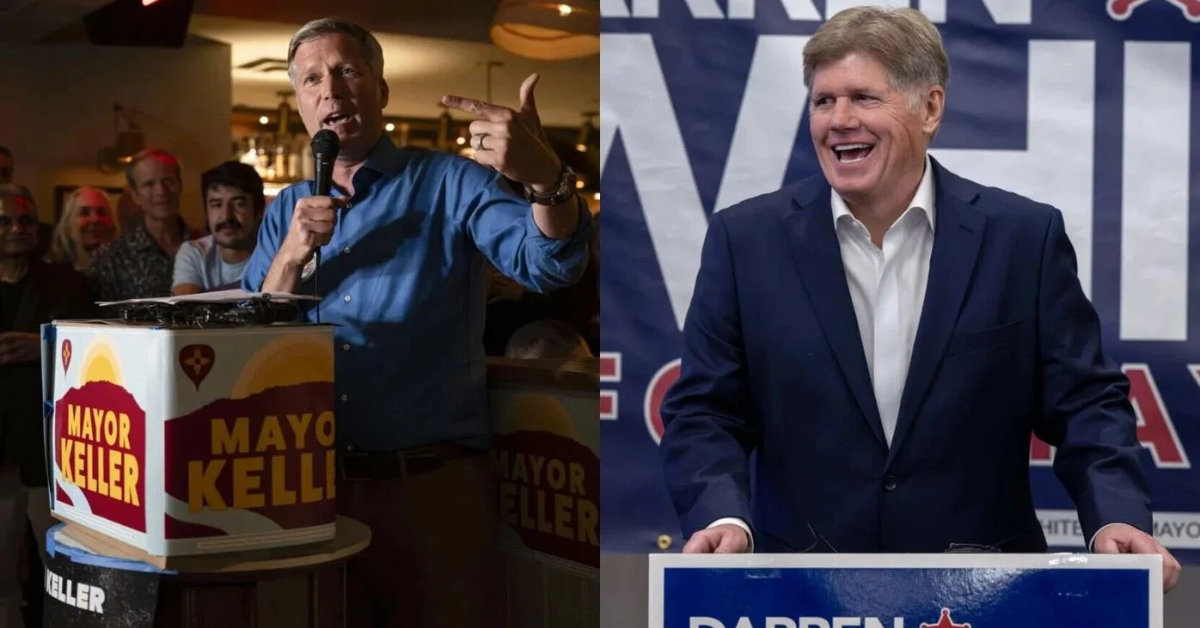
After a crowded 2025 mayoral contest, incumbent Tim Keller prevailed in a December runoff, securing a third consecutive term and reaffirming voter trust amid debates over crime, homelessness, and the city’s direction.
On December 9, 2025, voters in Albuquerque decisively chose to return incumbent mayor Tim Keller to office, defeating former sheriff Darren White in a runoff that concluded a fiercely contested mayoral race. With 58.4% of the vote to White’s 41.6%, Keller secured his third consecutive term, making him only the second mayor in recent history to achieve such a feat.
That result came after the November 4 general election in which Keller led a field of seven candidates with around 36 % of the vote, followed by White with roughly 31%, but without a majority, triggering the runoff under Albuquerque’s election rules.
Record, Messaging and the Stakes
Throughout the campaign, Keller framed his bid for a third term as a continuation of ongoing efforts to address entrenched issues in Albuquerque, i.e., crime, homelessness, and urban deterioration. In interviews and public statements, he described first-term achievements and pledged to build on them, highlighting a message of stability and incremental progress.
Supporters pointed to reductions in certain crime statistics, investments in affordable housing and shelter infrastructure, and reforms in policing as evidence that his administration was making headway. His public-financing-backed campaign showed a commitment to transparency and grassroots support rather than reliance on large donors.
That message appears to have resonated. In a year marked by political and social turbulence, many voters seem to have opted for continuity over uncertainty, choosing a familiar name over a candidate promising abrupt change.
Criticism, Alternatives and Voter Discontent
Darren White mounted a campaign focused on public safety, arguing that rising crime, homelessness, and perceived decline in city services demanded a new direction. As a former sheriff and public-safety official, White stressed law enforcement and criticised elements of Keller’s policy on homelessness and immigration.
Given the crowded field in the first round, with multiple candidates splitting the vote, some analysts had speculated that Albuquerque voters might seek a reset rather than repeat a second term under the same leadership. Indeed, the presence of several challengers, including former US Attorney and other public-service figures, suggested an appetite for alternatives.
But ultimately, the electorate opted for measured progress over sweeping change, as shown by the margin of Keller’s victory and the coalition that coalesced behind him in the runoff.
Continuity with Challenges Ahead
With the win secured, Keller enters what will be a third term carrying both opportunity and heavy expectations. The issues that dominated the race, crime, homelessness, public-safety reform, and urban renewal are deeply embedded in Albuquerque’s social fabric. Many residents will expect swift, tangible improvements and real follow-through rather than campaign promises.
Keller’s administration will likely press ahead on shelter expansion, affordable housing development, community-based safety initiatives, and attempts to balance policing with alternatives for dealing with unhoused people and mental-health crises.
At the same time, challenges loom over city finances, resource allocation, public trust, and social inequities, all demand careful management. Delivering results across a large and diverse city will require not just leadership but coalition-building, transparency, and sustained engagement with stakeholders across communities.
A Signal for Stability, But a Test of Governance
Keller’s victory offers more than just personal political success, and it reinforces a narrative of continuity in Albuquerque at a time of shifting political winds across the nation. Voters, in choosing experience, may have signalled a preference for pragmatic governance over ideological extremes or abrupt overhauls.
For the city council and other local bodies, that may mean a more predictable working environment, enabling planning and long-term strategy rather than short-term disruption. For constituents, it provides a yardstick, as seventeen years after his first election, Keller’s third term will serve as a measuring stick for whether his promises translate into sustained improvement.
What Albuquerque’s Choice Reflects About Urban America
Albuquerque’s 2025 mayoral outcome highlights a broader dynamic seen in many American cities, and when confronted with complex challenges like homelessness, public safety, and affordable housing, voters often weigh leadership history and incremental gains more than sweeping promises.
In such contexts, mayors with track records may hold an advantage over candidates promising radical change, especially in times of economic uncertainty or social strain.
The election also illustrates how urban electorates are increasingly scrutinising the balance between public-safety priorities and social welfare, demanding nuanced solutions rather than binary choices. For city leaders across the United States, Albuquerque’s electorate represents an illustration of how voters want their cities managed with pragmatism, inclusion, and realistic expectations.
A Third Term Begins Under High Expectations
As Tim Keller’s third term is now confirmed, Albuquerque begins a new chapter built on the premise of continuity and cautious optimism. The electorate has granted him both a mandate and a test. The real question is whether he can deliver the same for all of the city.
When the ballots were cast and counted, the message from Albuquerque was clear: to give the existing leadership another shot, but now, the burden of results rests in a greater capacity.