Trump and Zelensky Report Progress in Ukraine Peace Talks, Key Issues Remain

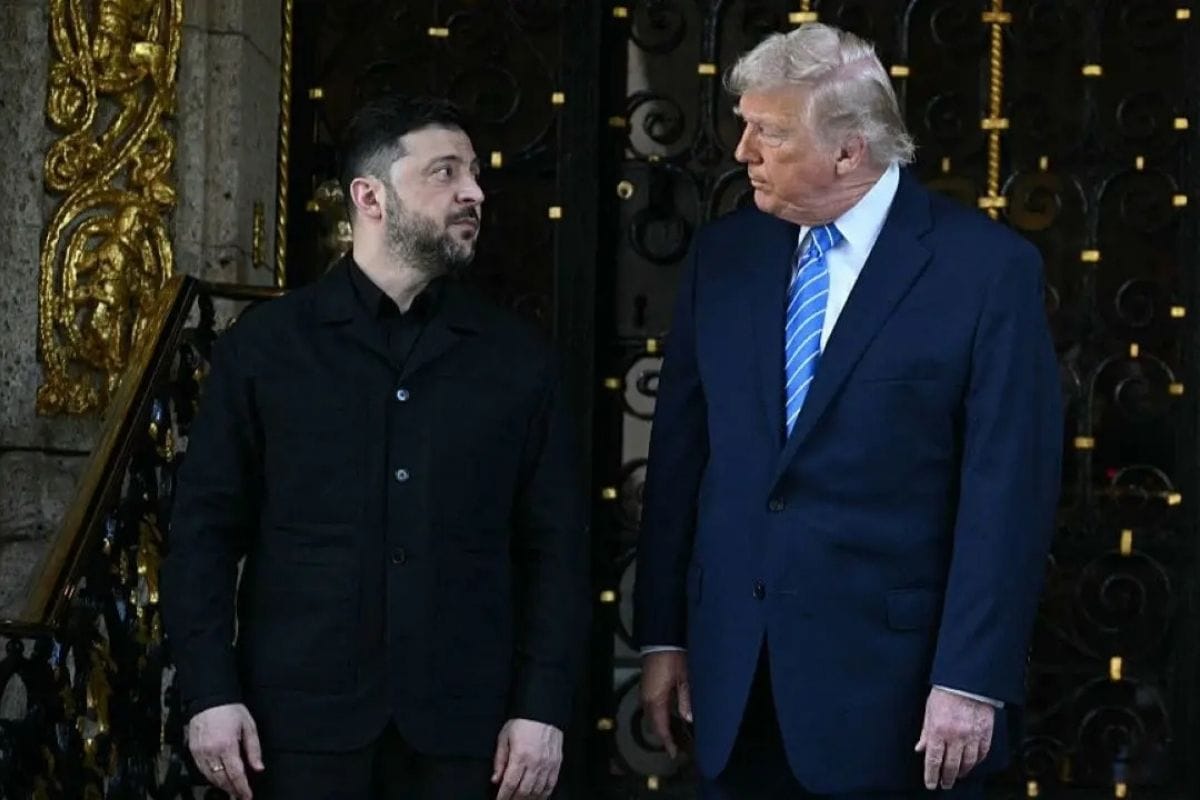
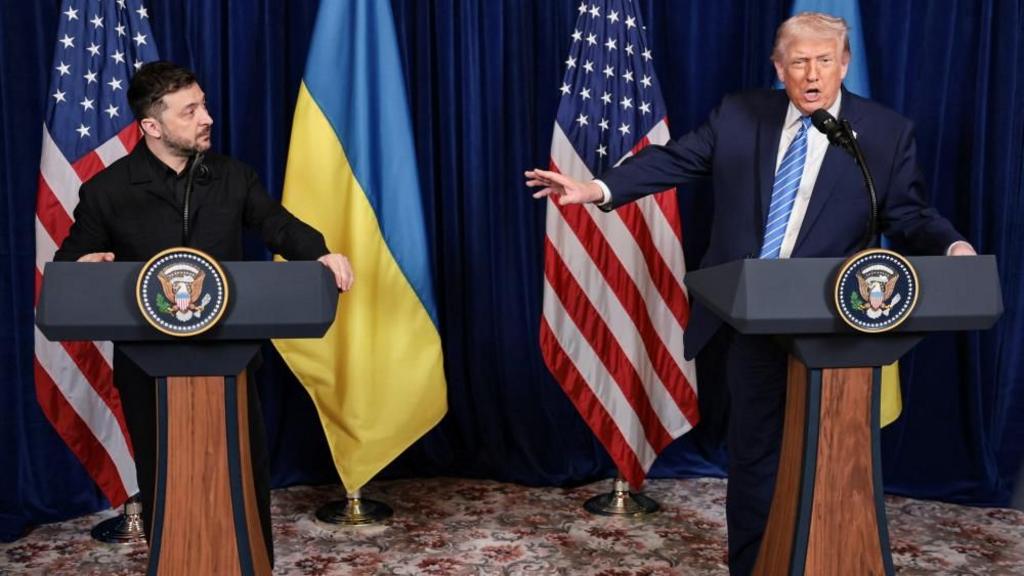
After months of uncertainty and stalled diplomacy, U.S. President Donald Trump and Ukrainian President Volodymyr Zelensky emerged from talks in Florida this week with cautious optimism about ending the war in Ukraine. Both leaders described their meeting as productive and said meaningful progress had been made. Still, they acknowledged that several major issues, especially the future of the disputed territory, remain difficult to resolve.
The meeting, held at Trump’s Mar-a-Lago residence, focused on a U.S.-brokered peace plan aimed at ending Russia’s nearly four-year war in Ukraine. Zelensky told reporters that roughly 90% of a proposed 20-point agreement had been finalised, while Trump said security guarantees for Ukraine were “close to 95% done.”
Despite the positive tone, Trump was blunt about the challenges ahead. “There are one or two very thorny issues,” he said, pointing directly to the question of territory, the most sensitive and divisive element of the negotiations.
Territory Remains the Central Obstacle
Russia currently occupies about 20% of Ukraine’s territory, including large portions of the eastern Donbas region. Moscow has long demanded that Ukraine formally give up land that Russian forces now control, a condition Kyiv has repeatedly rejected.
Trump told reporters that the fate of these territories is still undecided and will be the hardest part of any final deal.
“Some of that land has been taken,” Trump said. “Some of that land is maybe up for grabs, but it may be taken over the next period of several months.”
The Donbas region, which includes Donetsk and Luhansk, is at the heart of the dispute. Russia controls roughly 75% of Donetsk and almost all of Luhansk. While Russia wants Ukraine to withdraw completely from the areas it still holds, Ukraine has proposed a different solution: turning parts of Donbas into a demilitarised free economic zone under Ukrainian control.
That proposal, Trump admitted, remains unresolved.
“It’s a very tough issue,” he said. “But it will get resolved.”
Security Guarantees Still Taking Shape
Another major focus of the Florida talks was how to ensure Ukraine’s long-term security if a peace agreement is reached. Zelensky has repeatedly stressed that Ukraine needs firm guarantees to prevent Russia from launching another invasion in the future.
Trump said those guarantees are nearly finalised but stopped short of committing to specific details, such as whether the U.S. would provide troops or direct military protection.
“We’re very close,” Trump said. “But there are still details to work through.”
Zelensky later confirmed that U.S. and Ukrainian teams would continue discussions next week to finalise unresolved issues, including security arrangements and economic agreements tied to reconstruction.
“We had a substantive conversation on all issues,” Zelensky said in a statement. “We highly value the progress our teams have made.”
Russia’s Position and Trump’s Call With Putin
Ahead of the Florida meeting, Trump also spoke by phone with Russian President Vladimir Putin. While Trump did not offer many specifics about the conversation, he said he believed Putin wanted a resolution to the conflict.
“I think he wants Ukraine to succeed,” Trump said.
Russian officials offered a more cautious interpretation. Kremlin adviser Yuri Ushakov said Trump initiated the call and listened to Moscow’s concerns about recent European and Ukrainian proposals. According to Ushakov, both leaders agreed that a temporary ceasefire proposed by Ukraine and supported by the European Union would likely only delay the conflict rather than end it.
Trump echoed that view, saying Russia had little interest in a ceasefire that would allow Ukraine to hold a referendum in occupied areas.
“I understand that position,” Trump said.
Europe Watches Closely
European leaders reacted carefully but positively to the news from Florida. European Commission President Ursula von der Leyen welcomed what she called “good progress” but stressed that any peace deal must include strong security guarantees for Ukraine from the outset.
French President Emmanuel Macron announced that European allies would meet in Paris early next year to coordinate their role in supporting Ukraine’s security.
“We will bring together the countries of the Coalition of the Willing in early January,” Macron said, adding that each nation would outline concrete contributions to Ukraine’s future defence.
Zelensky suggested that Ukrainian officials could meet with U.S. and European leaders at the White House in January as negotiations move closer to a final stage.
A Fragile Path Forward
Trump made clear that while he is eager to add the Ukraine war to the list of conflicts he claims to have resolved, success is not guaranteed.
“If talks go really badly,” he warned, “this war could continue.”
That uncertainty looms large over all sides. Ukraine continues to face daily attacks, with Russian air strikes injuring civilians in Kyiv and killing residents in other cities, even as negotiations proceed. For many Ukrainians, the idea of peace is welcome but only if it does not come at the cost of sovereignty or security.
For now, the Florida talks represent a rare moment of forward momentum after years of bloodshed. Whether that momentum leads to a lasting agreement will depend on how negotiators bridge the final, deeply contested gaps, especially those related to land, security, and trust.
As Trump and Zelensky prepare for the next round of talks, the world will be watching closely to see whether cautious optimism can turn into a durable peace.