Trump Leaks Jobs Data Early on Truth Social, Sparks Protocol Questions
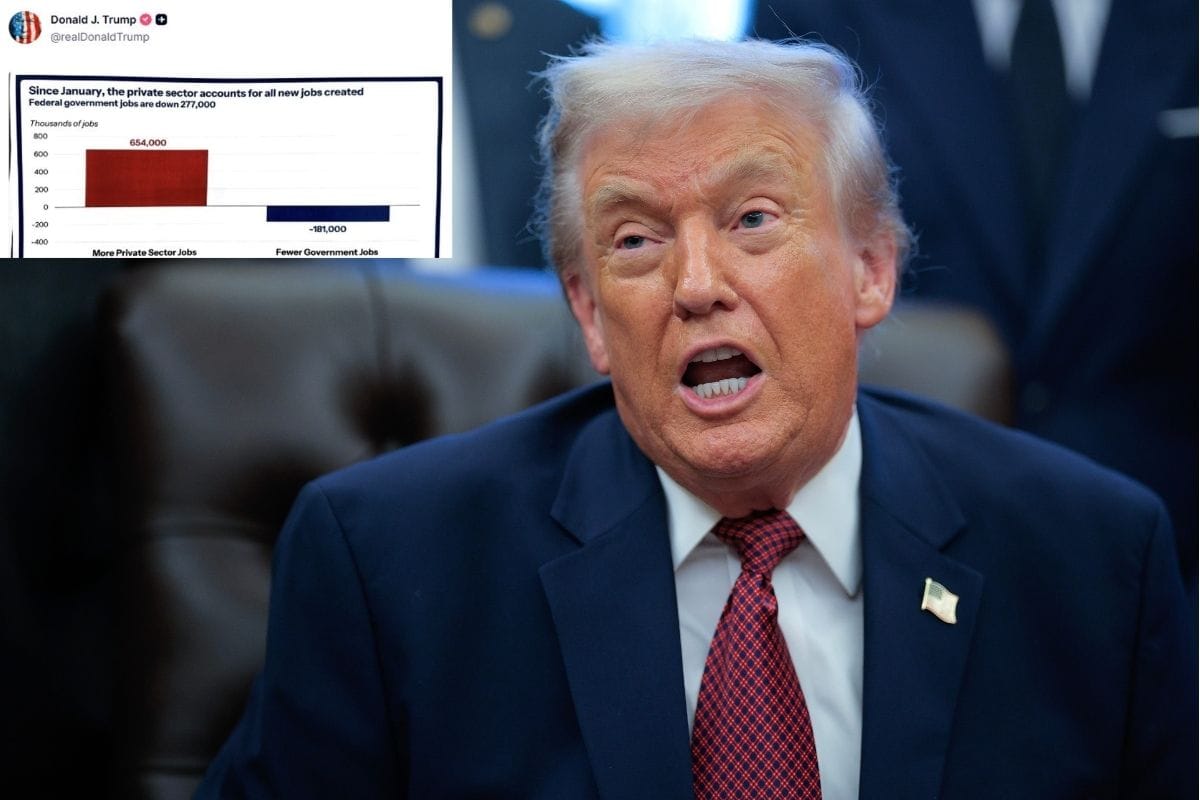
President Donald Trump once again stirred debate on Thursday night after posting fresh U.S. employment data on his Truth Social account nearly half a day before the government was scheduled to release it officially.
The post, which included a chart highlighting job gains since January, appeared to reveal key insights from the upcoming Bureau of Labour Statistics (BLS) report. By the time the official numbers were released Friday morning, Trump’s claims largely matched what the government later confirmed. Still, the early disclosure raised eyebrows across Washington, Wall Street, and the media.
According to the data Trump shared, the private sector added more than 650,000 jobs since the beginning of the year, while federal government employment declined sharply. That message echoed the broader narrative Trump has been pushing since returning to office that his policies are fueling private-sector growth while shrinking what he calls an overgrown federal bureaucracy.
Hoost Happened
A White House official acknowledged that the information Trump shared came from materials presidents are typically briefed on ahead of major economic releases. These briefings are standard practice, designed to ensure the president is prepared to comment once the data becomes public.
In this case, however, the official said there was an “inadvertent public disclosure” of aggregate information that was partially based on pre-release data. The administration said it is now reviewing its internal procedures to prevent similar incidents in the future.
The White House also pushed back against criticism, arguing that the focus should be on what the jobs report actually showed rather than the timing of the post. Officials emphasized that recent employment numbers reflect what they described as accelerating economic momentum, with rising wages and stronger growth driven by private businesses.
What the Jobs Report Showed
When the Bureau of Labor Statistics released its report Friday morning, it confirmed that employers added roughly 525,000 jobs over the course of 2025. Most of those gains came from the private sector, while federal employment declined due to layoffs, hiring freezes, and restructuring across government agencies.
Analysts noted that private employers added closer to 687,000 jobs between January and November, with government job losses offsetting part of that growth. Trump’s Truth Social post did not include specific monthly payroll numbers, but it appeared to signal the overall direction of the report, something that could have influenced market expectations ahead of the release.
While markets did not see immediate turbulence, economists said even partial early disclosures can matter, especially in an environment where investors closely watch government data for clues about interest rates, inflation, and economic health.
A Pattern That Goes Back Years
This is not the first time Trump has drawn scrutiny for how he handles sensitive or closely guarded government information. During his first term, he frequently broke from long-standing presidential norms around economic data and intelligence material.
In 2018, Trump tweeted optimism about an upcoming jobs report roughly an hour before it was released, signaling positive news before investors had access to the official figures. At the time, critics said the post risked giving some market participants an unfair advantage.
A year later, Trump shared a classified satellite image of a failed Iranian rocket launch, stunning intelligence officials and prompting questions about how tightly sensitive information was being controlled inside the White House.
After leaving office, Trump again became the focus of controversy when classified documents were discovered at his Florida residence. The issue led to a federal investigation, which Trump repeatedly dismissed as politically motivated. The probe was later dropped following his victory in the 2024 election.
While Trump’s critics point to these incidents as evidence of carelessness, supporters argue that such concerns are overblown. Representatives from the National Archives have previously stated that document handling issues have occurred in every administration since the Reagan era.
Political Reactions and Media Scrutiny
The early release of jobs data quickly became fodder for political debate. Critics accused Trump of blurring the line between official government information and political messaging, especially given the influence economic data can have on financial markets.
Some observers argued that even aggregate information, if released ahead of schedule, can shape investor sentiment and undermine confidence in the neutrality of government statistics.
Supporters, however, defended the president, saying the data reflected real economic gains under his leadership and that the outrage was driven more by politics than policy. They noted that Trump did not release detailed payroll breakdowns or confidential documents, only high-level figures consistent with the final report.
Why the Timing Matters
Economic data releases are carefully timed for a reason. Markets, policymakers, and businesses rely on equal access to information to make decisions. Any perception that data is being selectively shared, even unintentionally, can raise concerns about fairness and transparency.
That said, experts also noted that presidents are routinely briefed ahead of major reports and that accidental disclosures, while rare, are not unprecedented. The key issue moving forward will be whether the administration tightens its protocols to avoid similar situations.
What Comes Next
The White House says it is reviewing its internal processes to ensure economic data remains secure until official release times. It remains unclear whether any formal changes will be announced or whether the incident will lead to new guidelines around presidential social media use.
For now, the episode adds another chapter to Trump’s long and complicated relationship with government information, media norms, and public disclosure.
Whether supporters see the post as transparency or critics view it as recklessness, one thing is clear: Trump’s unconventional approach to communication continues to blur the line between politics, policy, and the public release of government data.