Trump Orders 19 Nation Green Card Crackdown After Security Fears

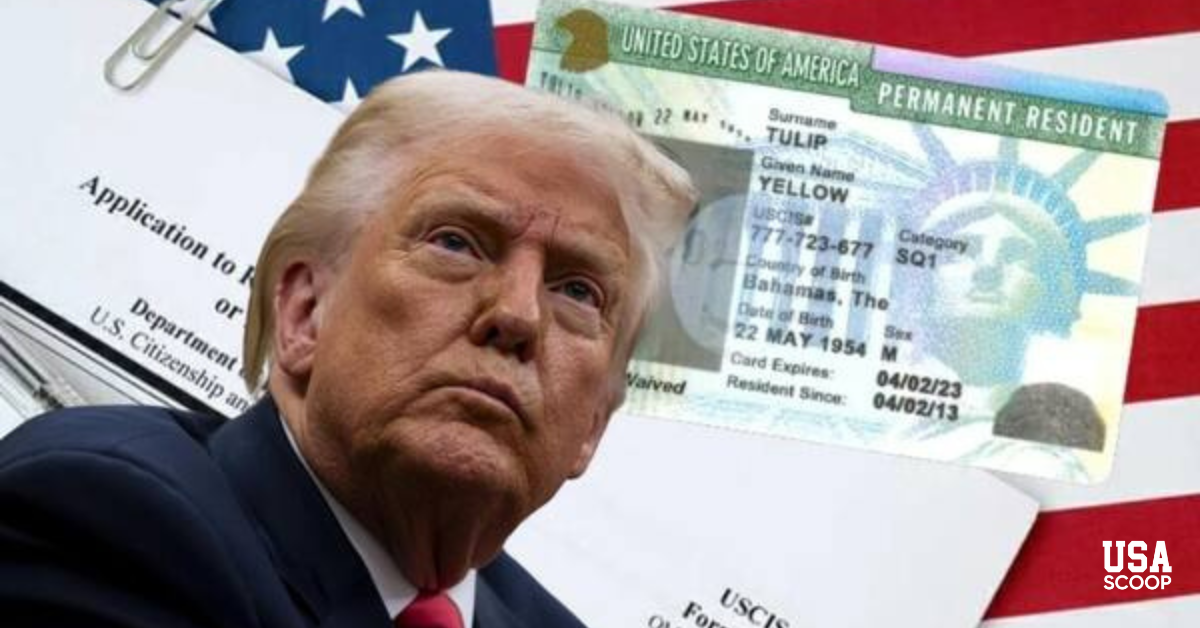
A sweeping re-examination of permanent residents, sparked by a violent crime, pits national security priorities against immigrant communities and democratic values
The catalyst was a tragic and shocking shooting involving a former asylum-seeker now accused of murdering a member of the US National Guard in Washington, DC. Within hours, the federal immigration apparatus was reconfigured. The administration chose to move swiftly, suspending all immigration requests for Afghan nationals and expanding scrutiny to every green card issued to citizens from 19 countries the White House deems of concern.
This is a wholesale re-examination of permanent resident status across communities defined by their national origin.
The 19-country list, drawn from a June 2025 presidential proclamation, includes Afghanistan, Burma (Myanmar), Chad, the Republic of the Congo, Equatorial Guinea, Eritrea, Haiti, Iran, Libya, Somalia, Sudan, Yemen, Burundi, Cuba, Laos, Sierra Leone, Togo, Turkmenistan, and Venezuela.
Federal agencies have been instructed to review every relevant case, reassessing past asylum approvals, green card grants, and refugee entries, even if those individuals have lived in the US for years. The message from the administration is that, after what officials call the reckless resettlement policies under previous administrations, no residency claim will go unchecked.
The Perils of Collective Judgement
On its face, the review is framed as a national-security necessity, and supporters insist that the state must shield itself from potential threats hidden within immigrant flows. But by lumping wide swathes of people under suspicion based solely on their nationality, the policy revives a pattern of collective punishment, which is an approach that treats entire communities as potential risks instead of individual cases as discrete matters.
This could amount to mass discrimination disguised as security policy.
Detainees, long-standing residents, families, and children may suddenly find themselves under threat not because of any wrongdoing, but because of the happenstance of origin. For communities from those 19 countries, the move suggests that green cards, once considered nearly permanent, could now be viewed as provisional, revocable, and contingent upon ongoing vetting and shifting definitions of risk.
Moreover, the decision deepens uncertainty for refugees and asylum-seekers, as the administration has suspended Afghan immigration indefinitely and also shown that prior approvals may be reconsidered. In effect, the promise of haven provided under earlier policy regimes now appears undone, with dire consequences for public trust and displaced populations that had believed they were secure.
Hardening Lines, Polarised Perceptions
Politically, the move has seismic implications as supporters of the crackdown have cast it as a necessary recalibration, and voters who felt exposed by terrorism or crime can see action, and political capital is gained by delivering on tough-on-immigration rhetoric.
On the other side, advocates for immigrant rights, civil-liberties organisations, religious groups, and many US allies see a regression and a reversal of America’s tradition as a refuge for the persecuted and a nation of immigrants.
The timing amplifies the stakes, as with an election cycle looming, immigration, always a flashpoint, has become a dynamic wedge issue.
For many Americans, growing unrest over economic inequality, jobs, and social cohesion can easily align with fears of national security threats misportrayed as immigration issues. The administration’s message appeals to that anxiety, but in doing so, it draws a sharp line across the social fabric, between citizens and non-citizens.
It also highlights a broader shift in US identity politics, where once immigrants were seen as part of the American dream, now many have the risk of being repositioned, as contributors, and also as aliens, under continuous surveillance, whose very legitimacy is subject to periodic re-evaluation.
Rights and Arbitrary Boundaries
Beyond politics lies the question of legality, and the broad reassessment of green cards and asylum approvals raises core concerns about due process, equal protection under law, and the principle that individuals should stand or fall on their own merits. The policy also revokes the stability and predictability long associated with lawful permanent residency.
This also opens the door to administrative arbitrariness, and if a single violent act triggers nationwide re-vetting, how many more would be needed to justify similarly sweeping measures in the future? Once that precedent is set, the legal system will become a matter of reactive heuristics.
Ethically, there is also the burden on communities that built lives around the US system. Families who believed in the permanence of their status may suddenly see their future threatened, and children born in America, raised as Americans, now see the risk of the state treating their legal status as provisional. This level of human uncertainty has consequences for those directly affected, but for entire diaspora communities, socially, economically, and psychologically.
Consequences for US Global Image and International Law
Internationally, America’s stance under this new policy may affect how other nations view US asylum policy and human rights commitments. The original 2025 travel-ban proclamation, which sealed entry for certain foreign nationals from high-risk countries, had already drawn criticism from allies and human-rights organisations.
Now, by extending scrutiny to residents with green cards, some of whom might have lived in the US for years, had stable jobs, raised families, and contributed to society, the government is risking undermining its moral standing as a refuge for victims of conflict, oppression, and displacement. Refugee agencies preparing for subsequent crises could find fewer willing partners in the US.
In the coming weeks, the direction of this policy will be shaped by a complex interplay of procedure, public response and social impact, beginning with the process itself, as federal agencies determine how re-examinations will be conducted, what standards will govern them, how much transparency will be offered, and whether the government will establish a meaningful appeals mechanism for individuals who find their residency suddenly under scrutiny.
At the same time, civil-society organisations, from immigrant-rights advocates to legal aid groups, faith communities, and international human-rights bodies, will take a call on whether to challenge the policy in court or mobilise pressure through public campaigns, a decision that could determine whether the re-vetting becomes an accepted feature of immigration enforcement or meets sustained structural resistance.
Beneath these institutional and legal battles lies the more delicate question of social cohesion, as immigrant communities from the 19 affected countries have already shown growing fear and uncertainty, which is a psychological burden that erodes trust in government, weakening civic engagement and deepening feelings of exclusion, turning what was introduced as a security review into a wider test of America’s capacity for fairness, stability and shared belonging.
As the 2026 midterm elections approach, immigration and national security rhetoric will double down as key burning issues. Candidates, parties, and policymakers will exploit the outcome of this re-examination process, and the lines of inclusion and exclusion will become part of the electoral debate, shaping national identity.
A Policy That Redefines Permanence
What began as a call for security after tragedy has morphed into a sweeping policy that challenges foundational ideas about immigration, citizenship, and trust. The re-examination of green cards issued to people from 19 countries may satisfy some demands for vigilance, but it also could reshape America’s social fabric in ways that extend well beyond immediate security concerns.
If the United States wishes to remain a land of opportunity and refuge, it must balance its legitimate need for safety with the legal rights, human dignity, and long-term integration of those who call it home. Otherwise, permanence could turn out to be temporary, and in that uncertainty emerges the greatest danger.