Trump Pushes Bold New Air Force One Paint Redesign
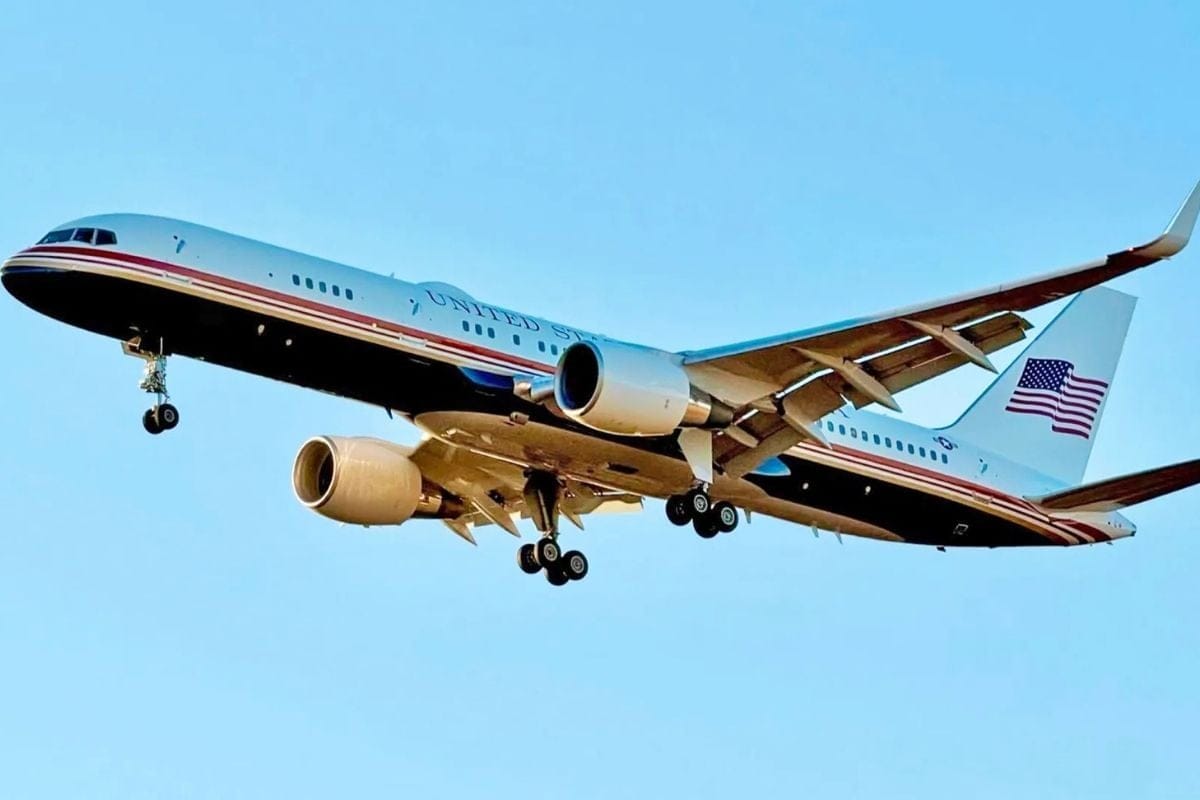
Former President Donald Trump has once again moved to change the look of Air Force One, reviving plans to replace the aircraft’s traditional light-blue design with a darker, more dramatic color scheme.
The proposal centers on repainting the next generation of the presidential aircraft with deeper navy tones and bold red accents, a departure from the pale blue and white livery that has defined Air Force One for decades.
This is not simply about aesthetics. It reflects branding, legacy, and executive symbolism at the highest level of government.
A Return to Trump’s Original Vision for Air Force One
During his first term, Trump pushed for a redesign of Air Force One that would replace the iconic light-blue Kennedy-era scheme with darker blue and red striping. At the time, the proposal sparked debate inside defense and aviation circles. Now, that vision has returned to the forefront.
The traditional Air Force One design dates back to President John F. Kennedy’s administration in the early 1960s. Designers created the look to project calm authority and continuity. The pale blue color has since become synonymous with presidential power.
Trump’s updated proposal favors a stronger visual contrast. Supporters argue the darker palette reflects a more modern, assertive tone. Critics question whether the redesign introduces unnecessary cost and logistical complexity. The debate highlights how even small design changes carry symbolic weight when tied to the presidency.
The Business and Cost Considerations Behind the Paint
Repainting a presidential aircraft is not as simple as refreshing a private jet. Air Force One operates as a heavily modified Boeing 747 platform with extensive security, communications, and structural systems embedded throughout.
Any paint redesign must account for engineering requirements, thermal considerations, and long-term maintenance costs. Aviation experts note that darker colors can affect heat absorption at high altitudes, which engineers must evaluate carefully.
The aircraft program already faces scrutiny over cost and delivery timelines. Boeing continues to manage the next-generation Air Force One replacement program under a fixed-price contract negotiated during Trump’s previous term. In that context, even cosmetic updates draw financial attention.
Federal aviation programs operate under strict oversight. Any redesign must pass technical review and budgetary examination before implementation.
Why Air Force One’s Image Matters Politically
Air Force One serves as more than transportation. It functions as a flying symbol of American executive power. The aircraft appears in diplomatic arrivals, global summits, and moments of national crisis. Its design carries visual meaning.
When a president steps off the aircraft onto foreign soil, the plane’s exterior becomes part of the image broadcast worldwide. For decades, the soft blue scheme has represented stability and tradition. Trump’s proposed design signals a sharper contrast. It aligns with his broader branding style, which often emphasizes bold visual identity.
Presidential branding matters because it communicates tone without words. Even paint color choices contribute to how leadership projects itself internationally.
Balancing Tradition and Modernization
The Air Force One replacement program already reflects modernization efforts. The new aircraft models will incorporate updated communications systems, enhanced security infrastructure, and operational efficiencies. The question now centers on how much modernization should extend to appearance.
Some aviation historians argue that preserving the Kennedy-era design maintains continuity across administrations. Others believe updating the look reflects a natural evolution in national identity. Design decisions in government programs often balance tradition with innovation. Air Force One sits at the center of that tension.
The redesign proposal does not immediately change the aircraft’s appearance. The program remains subject to technical review, defense department coordination, and budget considerations. Ultimately, executive approval and operational feasibility will determine the outcome.
For now, the discussion underscores how symbolic assets like Air Force One operate at the intersection of politics, branding, and federal procurement.
Final Assessment
Trump’s renewed push to alter Air Force One’s paint scheme highlights a broader theme: leadership style extends beyond policy into presentation.
The aircraft represents continuity of office, not individual preference. Yet each administration leaves its mark in visible and subtle ways.
The debate over red and navy versus pale blue reflects more than color theory. It reflects competing views on presidential symbolism, fiscal discipline, and institutional tradition.
Air Force One remains one of the most recognizable aircraft in the world. Whether its colors change or remain the same, its role as a symbol of American leadership endures.