Trump Seeks Record $1.5T Defense Spend to Keep America ‘Safe and Secure’
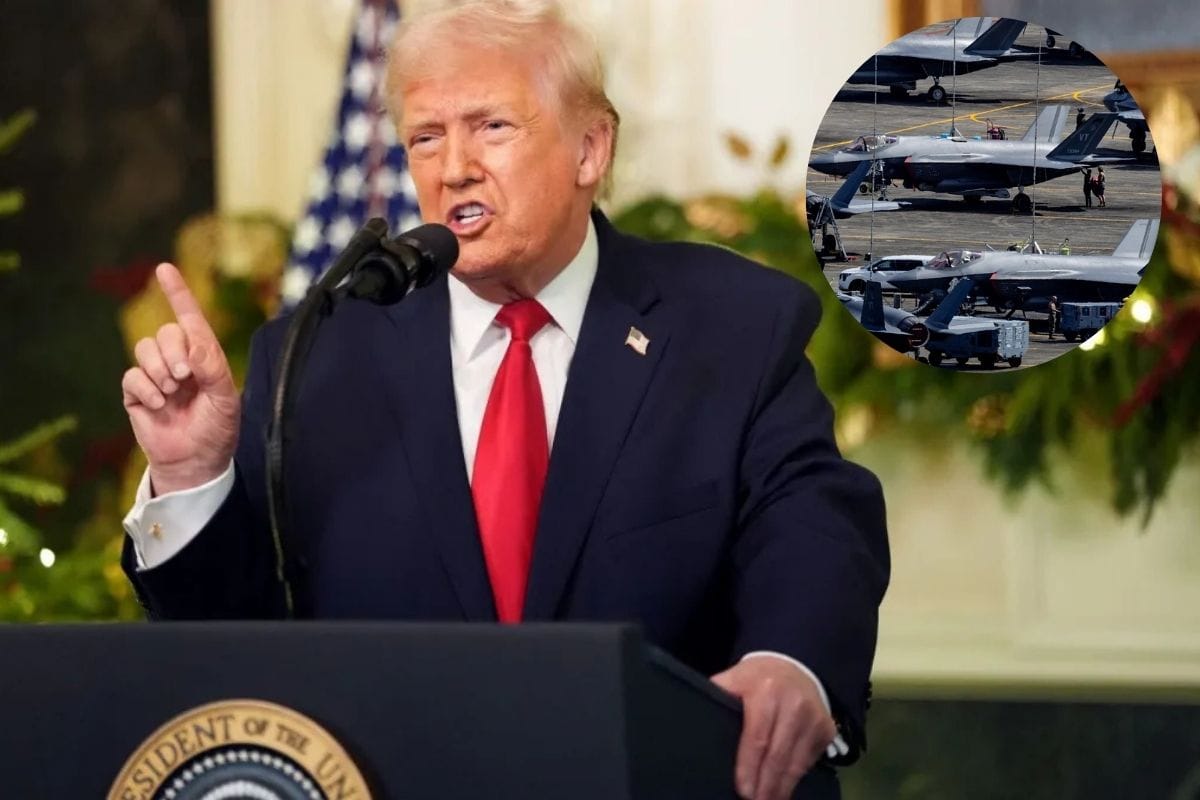
President Donald Trump has unveiled a bold and controversial plan to dramatically expand the United States military budget, calling for $1.5 trillion in defence spending for the 2027 fiscal year.
The proposal represents a massive jump from the roughly $901 billion defense budget approved by Congress for 2026 an increase of more than 50%. Trump says the funding boost is necessary to build what he calls a “dream military” capable of protecting the country during what he describes as “very troubled and dangerous times.”
Trump announced the proposal in a public statement, saying the decision followed extensive discussions with lawmakers, military leaders, and administration officials.
“Our Military Budget for the year 2027 should not be 1 trillion dollars, but rather 1.5 trillion dollars,” Trump said. “This will allow us to build the dream military we have long been entitled to and, more importantly, keep us safe and secure no matter the threat.”
A Push for Unmatched Military Strength
According to Trump, the increased spending would ensure the United States maintains unquestioned military dominance across the globe. He has repeatedly argued that America’s strength lies in staying far ahead of rivals when it comes to defence spending, advanced weapons systems, and readiness.
Trump also suggested that revenue generated from tariffs could help offset the cost of the massive budget hike. He claimed the federal government is bringing in “tremendous income” through tariffs, making the larger military budget achievable.
While Trump acknowledged that $1 trillion would normally be enough, he said current global instability justified a much larger investment.
“These are dangerous times,” he said. “We have to be prepared.”
What the Money Could Be Used For
If approved by Congress, the $1.5 trillion defense budget would be the largest military spending plan in U.S. history. Defence experts say the money could go toward several major priorities, including:
- Expanding troop readiness and recruitment
- Purchasing advanced fighter jets, warships, and missile defence systems
- Investing in next-generation military technology
- Modernising ageing military infrastructure
- Strengthening cyber defence and space-based capabilities
Supporters of the proposal argue that such investments would deter adversaries and ensure long-term national security.
Critics Raise Alarm Over Cost
Not everyone is convinced the plan is wise.
Budget watchdog groups and fiscal conservatives have strongly criticised the proposal, calling it reckless and unnecessary. They point out that the United States already carries more than $38 trillion in national debt and warn that a sharp rise in military spending could worsen the financial burden on taxpayers.
Critics also question Trump’s claim that tariff revenue could cover the increase, noting that the same revenue has been promised for other initiatives, including deficit reduction, economic relief payments, and support for farmers impacted by trade disputes.
“This is not sustainable,” one budget analyst said. “You can’t fund everything with the same pool of money.”
Congressional Approval Is Required
Trump’s proposal is far from becoming law.
Any increase to the Pentagon’s budget must be approved by Congress, where lawmakers from both parties are expected to scrutinise the plan closely. While Republicans hold slim majorities in both the House and Senate, not all members are likely to support such a dramatic spending increase.
Some lawmakers have expressed concern that the U.S. already spends more on defence than the next several countries combined, and that further increases should be carefully justified.
Others, however, see the proposal as consistent with Trump’s long-standing commitment to military strength and may support it as part of a broader national security strategy.
Defence Industry Reacts
The proposal has already had ripple effects in financial markets.
Shares of major U.S. defense contractors rose after Trump’s announcement, as investors speculated that higher military spending could lead to increased government contracts. Companies involved in weapons manufacturing, aerospace, and military technology stand to benefit if the budget is approved.
At the same time, Trump has publicly criticised defense companies for prioritising shareholder payouts over production. He has warned that companies engaging in stock buybacks instead of investing in manufacturing and innovation could face consequences when it comes to Pentagon contracts.
The comments have added tension between the administration and parts of the defence industry.
Foreign Policy Context
Trump’s call for a massive defense budget increase comes amid heightened global tensions.
In recent days, the U.S. carried out a dramatic military operation in Venezuela, capturing the country’s leader in an overnight raid. The administration has also acknowledged discussions regarding the acquisition of Greenland and has issued warnings to other nations deemed security risks.
Together, these actions suggest a more aggressive U.S. posture on the world stage one that Trump says requires unmatched military strength.
What Happens Next
The defense budget proposal will now enter the congressional debate process, where it is likely to be revised, challenged, and negotiated over the coming months.
Lawmakers will need to balance national security concerns with fiscal responsibility, a debate that is expected to dominate budget discussions ahead of the 2027 fiscal year.
Whether Trump’s vision of a $1.5 trillion “dream military” becomes reality remains uncertain. What is clear, however, is that the proposal has reignited a national conversation about defence spending, government priorities, and America’s role in an increasingly unstable world.