Trump, Sons Sue IRS for $10 Billion Over Leaked Tax Records
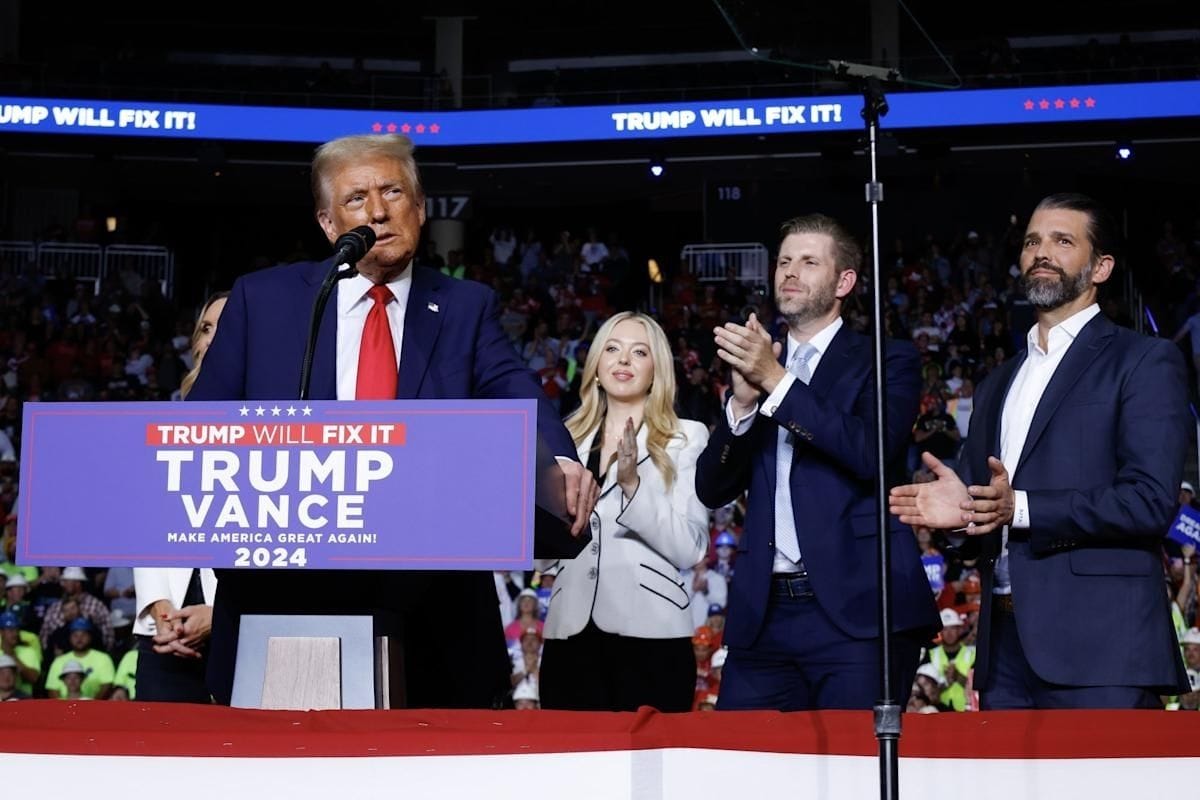
President Donald Trump and his eldest sons, Donald Trump Jr. and Eric Trump, have launched a massive legal battle against the federal government, filing a $10 billion lawsuit against the IRS and the U.S. Treasury Department. The suit accuses the agencies of failing to protect their confidential tax information, which was later leaked to the media.
Filed Thursday in a federal court in Miami, the lawsuit also lists The Trump Organization as a plaintiff. At its core, the complaint argues that the leak caused serious damage to the Trump family’s reputation, finances, and business interests and that the government should be held accountable.
What the Lawsuit Claims
According to the complaint, the Trump family says federal agencies allowed a contractor with access to sensitive tax data to unlawfully obtain and share private records. The lawsuit claims the disclosures led to widespread public embarrassment, damaged business relationships, and harmed President Trump’s standing both personally and professionally.
The filing argues that the IRS and Treasury failed in their basic responsibility to safeguard taxpayer information especially data belonging to a sitting president and his family.
The suit states that the alleged negligence and oversight failures directly enabled the leak and its aftermath, which played out publicly across major news outlets.
The lawsuit stems from the actions of Charles “Chaz” Littlejohn, a former IRS contractor who was convicted of leaking tax records belonging to Trump and other wealthy individuals.
Littlejohn pleaded guilty in October 2023 to unlawfully disclosing tax return information. He admitted to sharing sensitive documents with journalists and is currently serving a five-year federal prison sentence.
During a deposition, Littlejohn reportedly acknowledged that the information he leaked included detailed records of Trump’s businesses and financial history. The lawsuit claims that these disclosures went far beyond any public-interest justification and violated strict federal privacy laws.
Allegations Against Media Coverage
Trump’s legal team also aims how the leaked information was reported once it reached the public. The lawsuit alleges that some outlets misleadingly portrayed Trump’s tax filings, suggesting wrongdoing or fraud where none had been proven.
According to the complaint, those reports unfairly damaged Trump’s image and business reputation, amplifying the harm caused by the original leak.
While the media organizations themselves are not defendants in the lawsuit, the filing argues that the government’s failure to secure the data set off a chain reaction that led to long-term reputational damage.
Treasury Department Takes Action
The lawsuit comes as the Treasury Department has already taken steps in response to the broader data breach.
Earlier this week, Treasury Secretary Scott Bessent announced the cancellation of more than $21 million in contracts with Booz Allen Hamilton, the consulting firm that employed Littlejohn at the time of the leaks.
In a statement, the Treasury Department said the firm failed to put adequate safeguards in place to protect confidential taxpayer information. The department also noted that Littlejohn accessed and leaked tax data belonging to hundreds of thousands of taxpayers not just Trump.
The Trump lawsuit argues that these contract cancellations further prove the government knew serious failures occurred.
A Broader Pattern of Legal Action
This is not the first time Trump has sought damages from federal agencies during his second term.
Last year, Trump pursued a large financial settlement from the Justice Department over claims that he was improperly targeted by the FBI. Those complaints, filed in 2023 and 2024, reportedly sought damages totaling as much as $230 million.
At the time, Trump publicly said that if he were awarded money from the government, he would consider donating it to charity or using it for public purposes.
The new IRS lawsuit fits into a broader pattern of Trump aggressively challenging federal institutions he believes wronged him or his family.
Why the Case Matters
Tax records are among the most tightly protected forms of personal data under U.S. law. Unauthorized disclosure is a serious crime, and the case raises major questions about how federal agencies handle sensitive information, especially when contractors are involved.
Legal experts say the size of the lawsuit is striking. While the Trump family would still need to prove the full extent of the damages, the $10 billion figure underscores how seriously they view the leak and its consequences.
The case could also have wider implications for how government agencies manage outside contractors and protect taxpayer privacy going forward.
What Happens Next
The IRS and Treasury Department have not yet publicly responded to the lawsuit. The government will likely move to dismiss or limit the case, arguing that Littlejohn acted independently and outside his authority.
Still, the lawsuit ensures that the leak and the systems that allowed it will be closely examined in court.
For Trump and his sons, the case is framed as a matter of accountability. For the federal government, it may become a test of whether existing safeguards were strong enough and whether taxpayers can hold agencies financially responsible when those safeguards fail.
As the legal battle unfolds, the case is set to draw national attention, touching on privacy, politics, and trust in government institutions at the highest level.