U.S. Quietly Upgrades Greenland Military Base as Trump Pushes Control

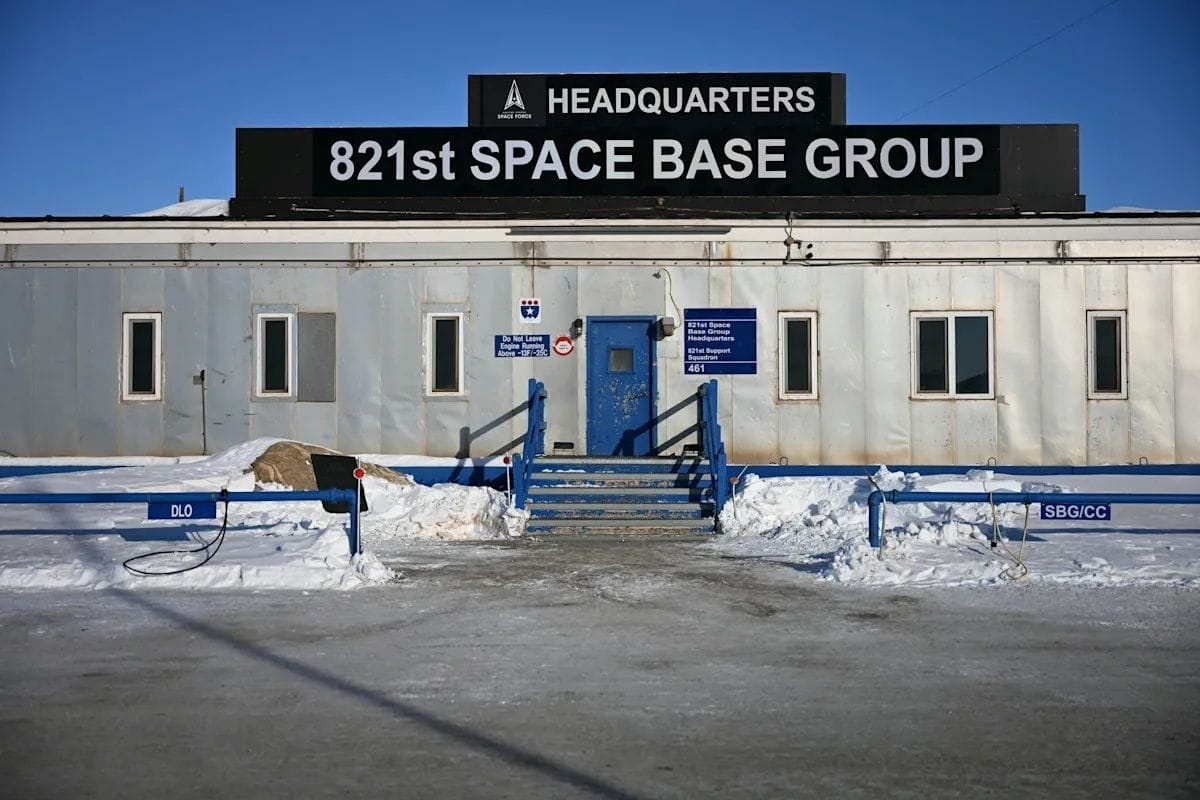
While President Donald Trump continues to publicly argue that the United States must take control of Greenland for national security reasons, a quieter effort is already underway on the ground. Far from the headlines, the U.S. government is preparing to spend tens of millions of dollars upgrading America’s only military base on the massive Arctic island.
The base, known as Pituffik Space Base, sits on Greenland’s remote northwestern coast, surrounded by ice, darkness, and extreme cold. Once called Thule Air Force Base, the installation has been a strategic U.S. outpost since the Cold War. Now, as global tensions rise and interest in the Arctic grows, Pituffik is being modernized for the future.
What’s Being Upgraded at Pituffik
Federal contracting records show plans for a wide range of improvements at the base. These include repairs and upgrades to the two-mile-long runway, which is essential for supply flights coming from the United States. Given that the base spends months in near-total darkness during winter, improvements to runway lighting systems are considered critical for safety and operations.
Other projects include acquiring a new boat to help keep the base’s small port free of icebergs, repairs to aging facilities such as the Dundas dining hall, and updates to infrastructure that has endured decades of brutal Arctic weather.
While none of the upgrades appear to dramatically expand the size of the base or change its stated mission, some contracting notes reference classified work that could involve specialized military teams or contractors. Those details remain undisclosed.
A Base Built for the Cold — and the Dark
Life at Pituffik is unlike anywhere else in the U.S. military. About 150 American personnel are stationed there, alongside hundreds of Canadian, Danish, and Greenlandic military members and civilian contractors.
During the winter, the sun disappears for more than three months. Temperatures can drop as low as minus 50 degrees Fahrenheit. To help combat the mental toll of constant darkness, the base uses special “happy lamps” that simulate sunlight and reduce seasonal depression.
In the summer, the situation flips completely. The sun stays up nearly 24 hours a day for months, forcing residents to use blackout curtains just to sleep.
Because of these extreme conditions, construction work can only happen during a short summer window, making logistics complicated and expensive. Materials and workers must be flown or shipped in carefully, and many contractors are required to be licensed under Danish regulations.
Why Greenland Matters More Than Ever
Pituffik’s location is no accident. The base sits roughly halfway between Washington and Moscow, making it ideal for monitoring missile activity and satellite movements. U.S. officials say its systems can detect objects as small as a softball from thousands of miles away.
The base’s current mission focuses on missile warning, space surveillance, and satellite communications. It also hosts the northernmost deepwater port operated by the U.S. Department of Defense.
As climate change melts Arctic ice, Greenland’s importance has grown rapidly. Sea routes that were once frozen most of the year are becoming navigable, opening new shipping lanes between Europe, Asia, and North America. At the same time, Russia and China have increased their presence in the region, sending ships and conducting research missions.
Trump has repeatedly argued that Greenland is essential to U.S. security, writing recently that “the United States needs Greenland.” He has also suggested that American control of the island would prevent rival powers from gaining influence there.
A History Rooted in the Cold War
Pituffik was built with Denmark’s permission during the Cold War, when the U.S. was racing to counter Soviet missile threats. At one point, American planners even considered burying nuclear missiles beneath the Greenland ice sheet as part of a secret plan known as Project Iceworm.
That project was eventually abandoned after scientists realized the ice was shifting too quickly to safely house underground missile silos. Still, the base remained a key part of America’s early-warning defense network.
In 2023, the base was officially renamed Pituffik to honor Greenlandic language and culture. The name change was symbolic, but the base’s strategic value has only grown.
Political Tensions Surround the Base
Although Greenland governs itself, it remains part of the Kingdom of Denmark, a NATO ally of the United States. Danish and Greenlandic leaders have strongly rejected any suggestion that the island is for sale or could be taken by force.
The base is jointly staffed by U.S. and Danish forces, reflecting that alliance. Still, tensions have surfaced. Last year, the Trump administration fired Pituffik’s base commander after comments she made promoting unity among the multinational workforce. White House officials reportedly felt her remarks conflicted with Trump’s hard-line stance on Greenland.
U.S. military officials have declined to comment publicly on the ongoing upgrades or their long-term implications.
Quiet Moves With Big Implications
On paper, the upgrades at Pituffik look routine: better lighting, safer runways, repaired buildings. But taken together and timed alongside Trump’s renewed push for control over Greenland, they signal something larger.
The U.S. may not be expanding the base outright, but it is clearly investing in making it more reliable, more modern, and better suited for long-term operations in an increasingly contested region.
As global powers turn their attention northward, Pituffik Space Base is quietly being prepared for whatever comes next, whether that’s increased surveillance, expanded space operations, or a more prominent role in America’s Arctic strategy.
For now, the changes are happening far from public view, in one of the coldest and most isolated places on Earth. But their impact could shape the future of U.S. security in the Arctic for decades to come.