US and Ukraine Head to Florida for Secretive Peace Push

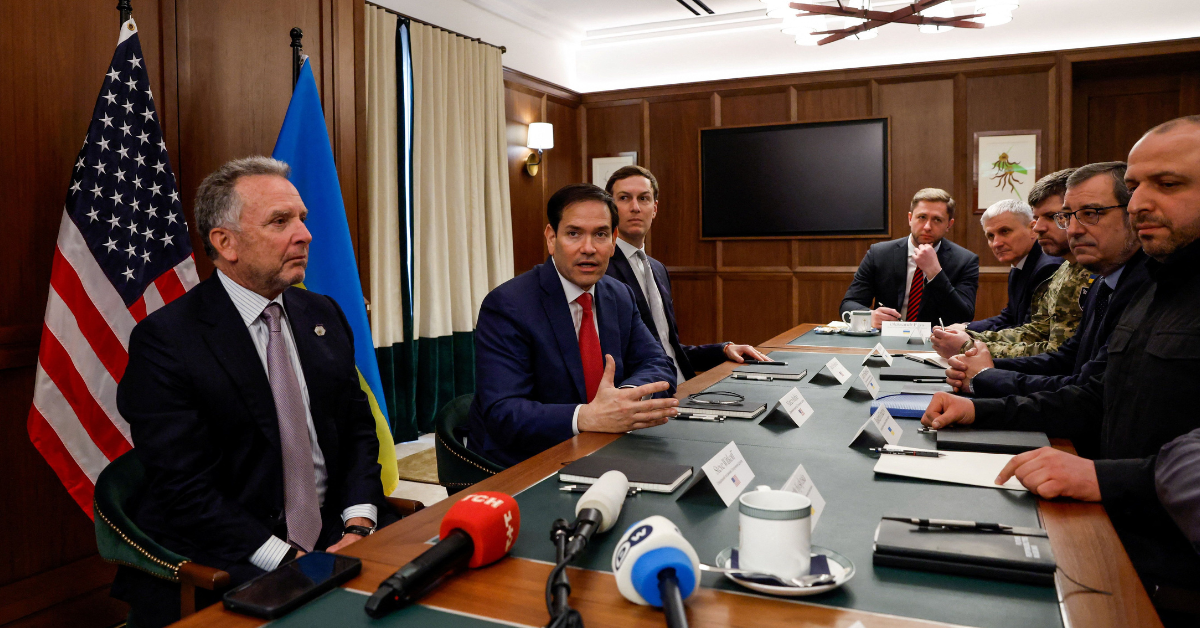
A quiet room in Florida may decide what two years of war, sanctions, and battlefield exhaustion could not.
It will be Florida this time. Not Brussels or Warsaw, but rather a quieter venue, removed from the heavy architecture of Europe and away from the G7 corridors where policy has defined the war since 2022.
American envoys are meeting Ukrainian negotiators once more, continuing a diplomatic line Washington revived over the past month. This is one of those closed-door conversations where words are measured more than announced, where tone matters as much as text, and when both sides know that every concession will echo far beyond that table.
France 24 confirmed that US officials invited Kyiv’s delegation for another round of structured talks, marking the latest step in a negotiation cycle that seems to gather pace even as the war continues to grind across the eastern frontlines.
The Ukrainian side will be represented by senior officials, including those directly plugged into President Zelenskyy’s security team, reflecting that, however politically sensitive a compromise may be, dialogue remains the only realistic bridge toward a future without artillery fire.
A shuttle diplomacy moment
These Florida sessions are not happening in isolation, as US envoy Steve Witkoff has already held conversations with Moscow in recent weeks, engaging Vladimir Putin’s circle with propositions shaped in Washington. Not formal negotiations perhaps, but signals and feelers that the war may be shifting from a battlefield rhythm to a diplomatic one.
As news agencies have noted, Witkoff is expected to continue travelling between parties, carrying proposals and counter-positions like a diplomatic courier of twenty-first-century brinkmanship.
It feels like a moment that could tip either way, as there is energy in movement, yes, but also unease, because every door that opens also risks closing another. Too much push from the American side could make Kyiv fear abandonment. Too little, and Moscow may see no incentive to bend to any form of settlement.
What everyone wants but cannot say openly
In the grand scheme, Washington wants de-escalation, and it wants the machinery of war to slow, the spending to reduce, and the European front to stabilise, soon. Ukraine, meanwhile, wants survival, territorial integrity, sovereignty, and a future where its borders are not redrawn on maps without consent. Russia, from its end, wants guarantees and legitimacy that sanctions currently deny.
So the conversations in Florida are less about a neat peace package and more about architecture, terms, and format. Who would oversee ceasefire enforcement? What do security guarantees look like? Whether NATO support would remain open or soften under a deal, and whether Crimea remains the eternal sticking point or becomes the shadow everyone negotiates around without naming.
Diplomacy’s truth is rarely printed in headlines, but rather in how negotiators lean back after a sentence as if waiting for someone to blink.
A conference that carries more weight than press releases suggest
These talks, while quiet, sit in a global environment that is anything but. European capitals remain split, some hardened behind Kyiv’s maximalist position, others increasingly anxious about a prolonged war fatigue. The American message is that the talks must continue, even if terms appear to be distant. Peace is rarely about immediate agreement, but it is about refusing to let communication die.
Yet risk is everywhere. If Ukraine is pressured into concessions publicly, trust might fracture among allies, and if Washington signals willingness to allow territorial compromise, domestic political blowback could follow soon. If Moscow believes time is on its side, negotiations could drag endlessly, functionally freezing the conflict without resolution.
In diplomacy, timing matters almost as much as content, and right now, with winter slowing ground advances and economic pressure sharpening in Russia and Europe alike, there is an opening, though a very narrow one.
Florida as a stage for realism
The image is almost cinematic, with delegates flying in under strict scheduling, security teams weaving through hotel lobbies, and documents sliding across polished tables. Outside, the world argues on social media about whether peace is honourable or compromise is betrayal, but inside, the room is quieter, as the war has been reduced to paragraphs.
The US delegation, according to reports earlier this week, is likely to push again for a framework that freezes combat lines under international monitoring while larger political questions are deferred. Ukraine has resisted versions of this proposal before, fearing it cements loss rather than pauses fighting. Yet the difference now is fatigue, as diplomacy becomes less about victory and more about survivability.
What would success even look like?
Success here is not a handshake or a podium announcement, but rather an incremental shift, with softened language, an accepted clause, and another scheduled round instead of a walkout.
Peace talks rarely succeed in a single sitting; instead, progress arrives like melting ice, slowly, quietly, unnoticed until a critical inch disappears. Florida could be inch one, or it could be another round where sides restate positions and leave them unchanged. No one knows right now, and that uncertainty is the heart of international negotiation.
But what makes this moment interesting is that both Kyiv and Washington continue to meet. The most dangerous moment in war is silence, because silence is what precedes escalation.
A future built from rooms like this
When history is written, the world rarely remembers the conference rooms, only the outcomes, but those outcomes are made here, in sessions like this one, far from frontlines and cameras. Decisions about territory, autonomy, aid, access, calls that later determine whether families return to homes or remain scattered across continents, begin with negotiation tables like the one now waiting in Florida.
If both delegations walk out believing another meeting is necessary, that alone counts as movement, and it begins long before the world notices.
The only certainty is that this week matters, and that even cautious dialogue is better than none. And that in Florida, far from artillery and smoke, the war enters a phase where words may hold influence as much as weapons, and where diplomacy tries once more to do what armies have failed to achieve.