US Gender Crackdown Sparks Nationwide Clash Over Identity

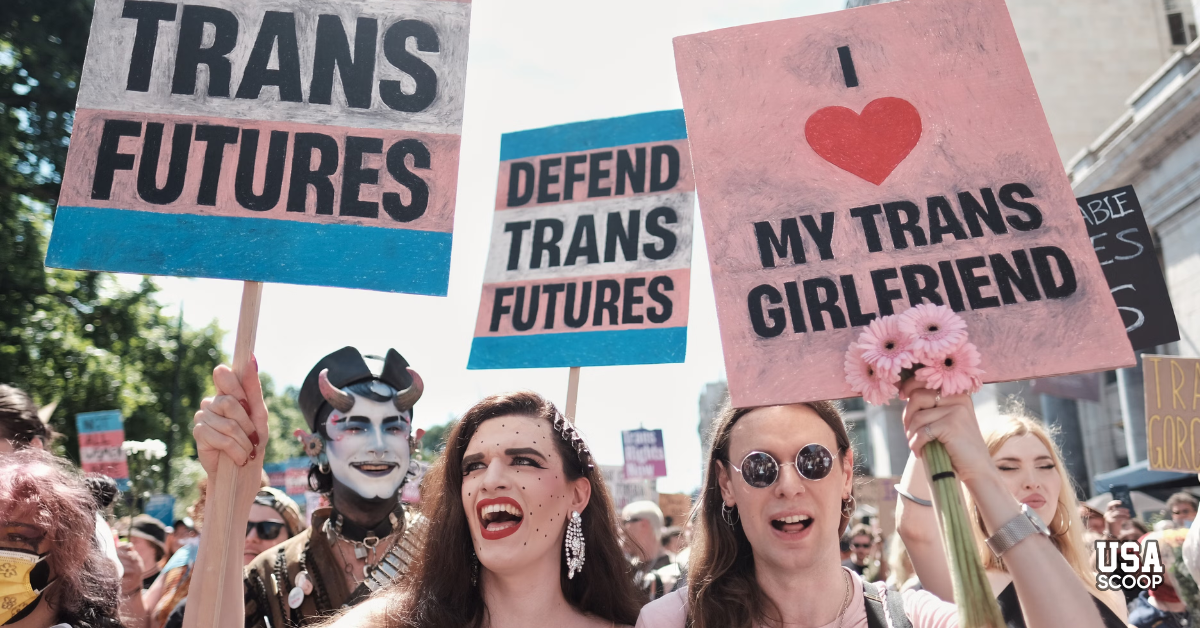
A federal crackdown on gender-identity language is changing education, healthcare and civil rights in ways the country has not seen in decades.
In Washington, a single phrase has now become the gravitational centre of a national storm.
The administration’s campaign against what it calls gender ideology has shifted the country from a conversation about recognition to an argument about restriction, as federal directives pushed a binary definition of sex into every corner of public policy.
When the executive order first landed at the beginning of the year, it marked a deliberate reshaping of how the government intends to view and govern identity itself.
What began as a directive within federal agencies quickly expanded into a nationwide recalibration. Letters were sent to nearly every state warning that programmes receiving federal funding must strip out references to gender identity if they wished to remain compliant. That move created immediate tension between federal authority and state autonomy.
The political framing is unmistakable, as by labelling gender identity as ideology, the administration transformed a civil rights issue into a cultural threat narrative, giving supporters a simple storyline and opponents a complex crisis.
How a Bureaucratic Phrase Became a Cultural Weapon
The consequences are most visible in schools and medical centres, where the people most affected are often the least able to shape the debate.
Teachers now face uncertainty about what they can say when students ask questions about identity, while healthcare providers must navigate a regulatory landscape that diverges sharply from clinical practice.
Families have reported confusion and fear as the services their children relied on become vulnerable to funding pressure or institutional retreat. These are not abstract policy shifts, but tangible changes that affect daily lives and access to support.
Legal challenge was inevitable, and it arrived swiftly, as Democratic-led states moved to block federal attempts to condition funding on the removal of gender-identity content.
The courts now sit at the centre of a widening struggle, as they are asked to interpret whether the federal government can reclassify gender identity as ideology without violating constitutional protections.
The directive is seen to be more than cultural signalling, as it is a calculated play aimed at energising voters who feel unmoored by rapid social change and who view gender identity as a symbol of broader moral and political drift.
By drawing a stark line between biological truth and ideological threat, the administration positions itself as defender of clarity in a world it argues is clouded by social progressive influence, and this strategy may reshape voter blocs and recalibrate campaign priorities heading into the next election cycle.
The Real World Fallout in Classrooms and Clinics
Despite the political force behind the movement, scientific organisations remain clear that gender is a multifaceted experience and that biological sex does not account for the full spectrum of human identity.
This disconnect between political rhetoric and scientific consensus places institutions in an impossible position. Schools and healthcare systems must reconcile evidence-based practice with policy-driven mandates that disregard decades of research, as the misalignment deepens the sense that identity is being legislated through ideology rather than understanding.
Beneath the legislative language lies a broader question about who gets to define identity in a country built on the promise of individual freedom.
Transgender Americans feel that the shift is like a rollback of recognition that was hard-won and too fragile to withstand politicisation, and communities watching from the sidelines, the debate offers a mirror reflecting what kind of society the US is becoming, one in which identity is increasingly governed from the top rather than shaped through shared social experience.
A National Identity Question That Runs Deeper Than Policy
As legal battles unfold and states choose whether to comply or resist, the path ahead grows more complicated. If federal agencies continue to enforce a narrow definition, public institutions will either align or defy, each choice carrying political, financial and cultural consequences.
Meanwhile, transgender youth and adults must navigate a reality where recognition is no longer guaranteed and where everyday interactions become fraught with policy implications.
The fight over gender ideology is a striking moment in the ongoing struggle over identity rights and the role of government in private lives. When federal power is used to narrow how people are recognised, the issue transcends politics and enters the terrain of dignity and existence.
The country now stands at a crossroads where definitions carry the weight of lives, and the next chapter will reveal whether the nation chooses rigidity or recognition as its guiding principle.