White House Confirms Trump Weighing Military Options to Take Greenland

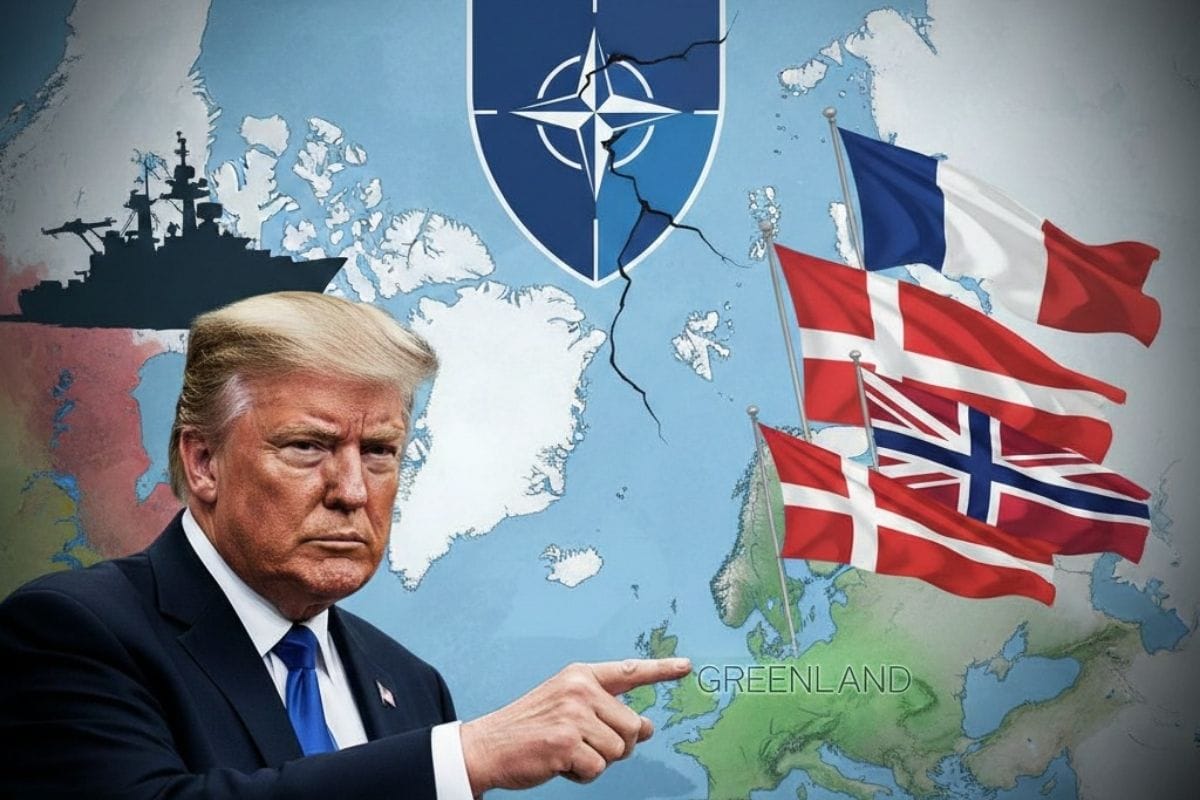
A new wave of global tension has emerged after the White House confirmed that President Donald Trump and his advisers are actively discussing ways for the United States to acquire Greenland, including the possible use of military force.
The revelation has sparked sharp reactions across Europe, reignited fears about American expansionism, and raised serious questions about the future of NATO, international law, and the rights of Greenland’s people.
While Trump has floated the idea of acquiring Greenland before, this time the rhetoric appears far more serious and far more unsettling for America’s allies.
“A National Security Priority”
In a statement to the BBC, the White House said Greenland had become a “national security priority” for the United States. Officials confirmed that Trump’s team is reviewing “a range of options” to pursue control of the vast Arctic island, adding that the use of military force was not being ruled out.
“The president and his team are discussing a range of options to pursue this important foreign policy goal,” the statement said. “Utilizing the US military is always an option at the commander-in-chief’s disposal.”
Those words sent shockwaves through diplomatic circles. Greenland is a semi-autonomous territory of Denmark, a fellow NATO member and long-time US ally. Any hostile action against it would challenge the very foundations of the trans-Atlantic alliance.
Europe Pushes Back
Within hours of the White House’s statement, European leaders moved to show unity behind Denmark.
In a rare joint declaration, the leaders of the UK, France, Germany, Italy, Poland, Spain, and Denmark issued a strong statement rejecting any suggestion that Greenland could be seized or annexed.
“Greenland belongs to its people,” the statement said. “Only Denmark and Greenland can decide on matters concerning their relations.”
The leaders emphasized that while Arctic security is important and shared by NATO allies, it must be addressed collectively, through cooperation, not coercion.
They also stressed the importance of international law, citing the principles of sovereignty, territorial integrity, and the inviolability of borders under the United Nations Charter.
Greenland’s Prime Minister, Jens-Frederik Nielsen, welcomed the European response and called for calm but firm dialogue.
“Any discussion must take place with respect,” he said. “Greenland’s status is rooted in international law and the will of its people.”
Trump Doubles Down
Despite growing backlash, Trump has shown no signs of backing down. Over the weekend, he again insisted that the US “needs” Greenland for security reasons, pointing to increased Russian and Chinese activity in the Arctic.
He has argued that Greenland’s strategic location and its vast reserves of rare-earth minerals make it too important to be left outside American control.
Danish Prime Minister Mette Frederiksen responded bluntly, warning that any US attack on Greenland would effectively end NATO.
“You cannot attack another NATO country,” she said. “That would destroy the alliance from within.”
Yet Trump’s allies appear emboldened. Stephen Miller, one of the president’s closest advisers, stated publicly that it is now “the formal position of the US government” that Greenland should become part of the United States.
When asked whether force was off the table, Miller dismissed the idea that anyone would resist.
“Nobody’s going to fight the US over the future of Greenland,” he said.
Fear Among Greenlanders
For many people in Greenland, the debate unfolding thousands of miles away feels deeply personal and deeply frightening.
Greenland has a population of just 57,000 people and has enjoyed extensive self-government since 1979, though Denmark still controls defense and foreign policy. While many Greenlanders favor eventual independence from Denmark, polls show overwhelming opposition to becoming part of the United States.
Morgan Angaju, a 27-year-old Inuit resident of Ilulissat, described listening to Trump’s comments as “terrifying.”
“He talks about us like we’re something to claim,” Angaju said. “But we are already claimed by the Greenlandic people. Kalaallit Nunaat means ‘the land of the Greenlandic people.’”
Angaju said recent events have heightened anxiety, especially after watching how quickly Venezuela’s president was captured and removed by US forces.
“Now we’re wondering that could happen here?” he said. “Could our prime minister be next? Could the US just come in?”
Shadow of Venezuela Looms Large
Those fears are not unfounded in the minds of many observers.
Greenland’s situation is being viewed through the lens of the recent US military operation in Venezuela, where American forces seized President Nicolás Maduro in a dramatic overnight raid and brought him to New York to face criminal charges.
The operation shocked the world and raised concerns about whether the US is willing to bypass international norms when it sees fit.
The day after the Venezuela raid, Katie Miller the wife of Stephen Miller posted a map of Greenland colored like the American flag with the word “SOON.” The post was widely seen as provocative and threatening.
To critics, the message was clear: Venezuela may not be the last target.
NATO at a Breaking Point?
At the heart of the controversy is NATO itself. The alliance is built on the promise that members will defend one another against external threats. But what happens when the threat comes from inside?
If the US were to use force against Greenland, it would place NATO in an unprecedented crisis. European leaders fear it could unravel decades of security cooperation and destabilize the global order.
Even US lawmakers have expressed concern privately about the long-term consequences of such a move, warning it could push allies closer to Russia or China.
What Happens Next?
For now, no formal action has been announced. But the rhetoric alone has already altered diplomatic relationships and shaken confidence in America’s leadership.
Greenland’s leaders are calling for respect and dialogue. European governments are urging restraint. And ordinary Greenlanders are watching anxiously, unsure whether their homeland is about to become the center of a geopolitical storm.
As one Greenland resident put it, “We are not a prize. We are a people.”
Whether Washington listens may shape the future of the Arctic and the world for years to come.