Why Top US Newsrooms Just Walked out of the Pentagon and Who Replaced Them
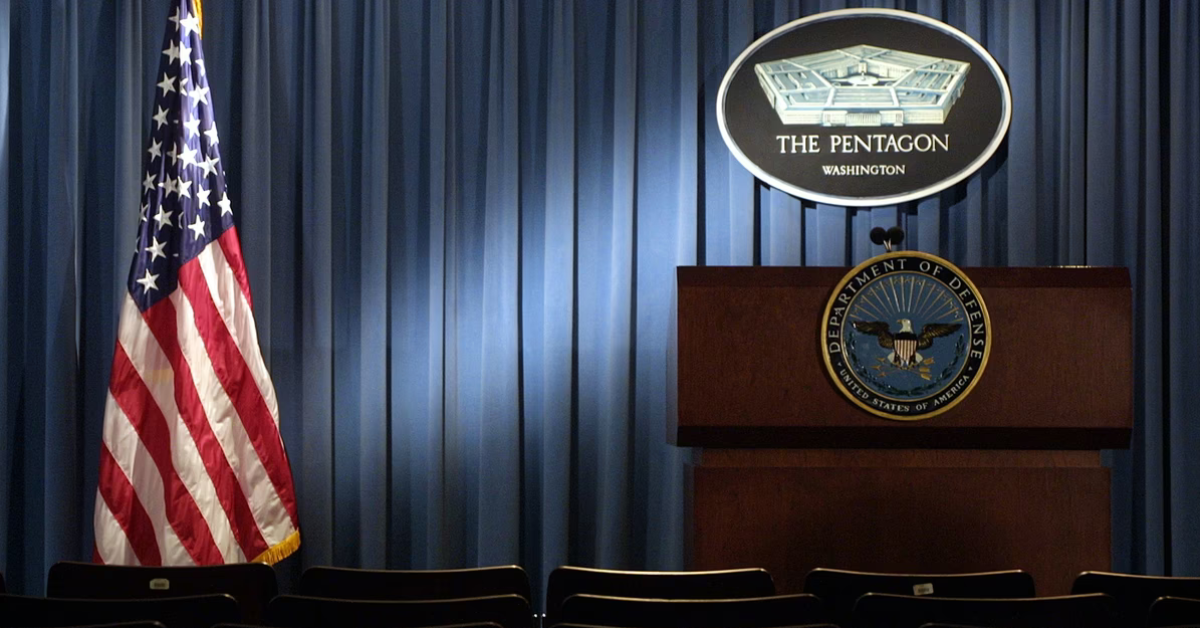
With legacy journalists gone and a hand-picked corps in place, the Pentagon under Pete Hegseth pursues control over what counts as authorised coverage.
In mid-October 2025, nearly every major US news organisation that traditionally covered day-to-day DoD activity made a dramatic choice by surrendering its Pentagon press badges.
Outlets such as The New York Times, CNN, Reuters, The Associated Press, and many others cited a sweeping new press-access policy introduced by Secretary Hegseth that imposes strict restrictions, i.e., reporters must accept pre-approved reporting rules before covering the Pentagon, limit access to certain areas, and reportedly face restrictions on querying unsanctioned sources.
As of that moment, the Pentagon stood empty of the mainstream press corps for the first time in decades.
Friendly Faces, Familiar Talking Points
In response, the Pentagon opened its doors, but only to a newly credentialed press corps made up almost entirely of right-leaning, pro-government outlets and personalities willing to sign on to the new media rules. The first official briefing under this new arrangement took place in early December 2025, with press secretary Kingsley Wilson leading the session.
Questions arrived, some routine and some pointed, but several veteran journalists watching from outside described much of the session as a more polished performance than journalism. One former Pentagon correspondent observing remotely said that while some questions appeared “on-the-news,” few answers addressed underlying issues with clarity or accountability.
Members of the new press corps included figures such as the former congressman Matt Gaetz, now credentialed to report on national defense for a fringe network.
Transparency, Access, and Institutional Memory
The mass walkout shows the deep concerns inside the journalism community, as the new rules effectively transform the Pentagon’s media operation into a managed communications channel. Without on-site independent reporters, much of what the public knows about day-to-day military decisions, internal memos, dissent inside the ranks, operational failures, all may be filtered, sanitised, or suppressed.
For years, the Pentagon maintained a robust tradition of frequent briefings, field access, and checks and balances. That structure played a vital role in holding US defense policy accountable, a critical function given the immense budget, complex global responsibilities, and history of military overreach.
Officials in the DoD argue the new restrictions and curated press corps are designed to protect operational security, prevent leaks, and streamline communications in an era where classified information spills rapidly over social media and hostile platforms. The department frames the policy changes as common-sense updates to a system that had grown outdated, even chaotic, in its openness.
They claim the limited-access model ensures better control over what gets released publicly, a potentially appealing prospect for officials wary of unauthorized leaks, misinformation, or misinterpretation during ongoing sensitive operations abroad.
Accountability, Democracy and the Public’s Right to Know
But warnings remain that this model changes the role of the press from watchdog to being a gatekeeper’s ally. By effectively granting access only to friendly media, the Pentagon risks becoming a closed system where dissenting voices, critical questions, and investigative scrutiny are frozen out. As one veteran reporter put it, this is more about controlling the narrative.
The stakes go beyond simple optics, as Congress is investigating recent US military strikes on suspected drug-smuggling vessels in the Caribbean and Pacific. The public deserves to know whether proper procedures were followed, whether survivors were treated humanely, and whether orders were complied with in domestic and international law. Without a genuine independent press inside the Pentagon, verifying claims, obtaining eyewitness testimony, or even tracking internal missteps becomes far more difficult.
Moreover, the shift could set a precedent for other federal agencies; if access becomes contingent on compliance with restrictive rules, the entire architecture of government transparency may erode.
The coming weeks matter. The Pentagon has promised further briefings with the new press corps, including a session with Defense Secretary Hegseth himself.
How those briefings unfold will test whether this new model can survive scrutiny. Key signals to watch for are whether the same limited group of outlets continues to dominate coverage, whether livestreams or public transcripts are provided, whether controversial topics, such as lethal strikes on suspected drug boats, are addressed openly with verifiable information, and whether the absence of mainstream outlets finds alternative means to report independently.
If critical incidents or leaks occur that only friendly media report on, and those reports lack credibility or corroboration, public faith in Pentagon transparency may recede further.
A Turning Point for Military Communications
The Pentagon’s shift marks a historical moment, as a power centre once accustomed to wide media access is now standing behind a curated curtain. For those inside, the new press corps offers privileged access and influence, but in the case of the public and for defenders of open government, it presents tough complications about who gets to see the inner workings of US military policy, and about who gets to hold power to account.
Whether this experiment will last, whether it will lead to more concerted efforts to reclaim independent access, or whether it will further entrench a broken model of filtered truth remains to be seen. However, at this moment, the message is unmistakable, i.e., the Pentagon’s doors are open to some, and that they have been closed for a select few.