Zelensky to Meet Trump in Florida as Ukraine Peace Talks Reach Critical Point

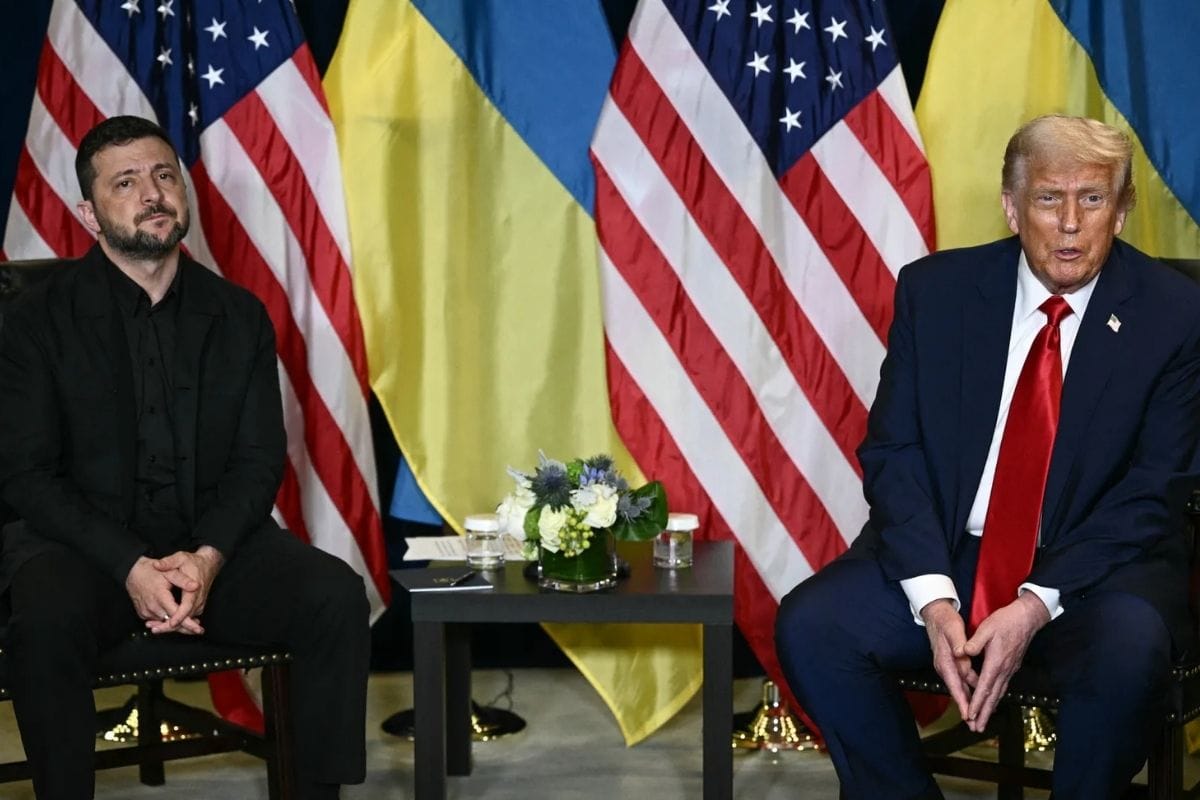
Ukrainian President Volodymyr Zelensky has confirmed that he will meet with U.S. President Donald Trump in Florida on Sunday, as diplomatic efforts intensify to find a way to end Russia’s full-scale war against Ukraine.
The meeting comes at a highly sensitive moment. Fighting continues on the ground, civilians are still being injured in air strikes, and behind closed doors, competing visions for peace are colliding. Zelensky has said the talks will focus on a U.S.-brokered peace plan, along with separate proposals for American security guarantees, something Ukraine has long demanded.
Russia, however, has already signalled resistance. A senior Russian official said the plan Ukraine is discussing is “radically different” from the version Moscow has been negotiating with Washington, underscoring how fragile and uncertain the diplomatic process remains.
Attacks Continue as Diplomacy Moves Forward
Even as leaders prepare for talks, the war shows no sign of slowing. Overnight, Russian air strikes injured at least five people in Kyiv, according to city officials. Another person was wounded in the surrounding region.
Kyiv Mayor Vitaliy Klitschko said Ukraine’s air defence systems were active throughout the night, with explosions heard across the city. Hours later, officials in Kharkiv reported that two people had been killed and several others injured in a separate Russian strike.
By Saturday morning, Ukraine’s air force warned that missile and drone threats remained in effect across the entire country.
These attacks highlight the difficult reality facing negotiators: diplomacy is unfolding while bombs are still falling.
Trump Signals Confidence and Control
In an interview published ahead of the Florida meeting, Trump expressed confidence about his relationships with both Zelensky and Russian President Vladimir Putin.
“I think it’s going to go good with him,” Trump said of Zelensky. “I think it’s going to go well with Putin.”
Trump also suggested that Ukraine’s leverage depends heavily on U.S. approval, saying Zelensky “doesn’t have anything until I approve it.” He added that he expects to speak with Putin soon, signalling that Washington continues to maintain direct communication with Moscow.
Trump also revealed that Israeli Prime Minister Benjamin Netanyahu is expected to visit him in the coming days, highlighting how global conflicts are converging around U.S. diplomacy.
Behind-the-Scenes Talks With Russia
While Trump and Zelensky prepare for their meeting, Russia has continued quiet discussions with U.S. officials. Kremlin envoy Kirill Dmitriev recently returned from talks in Florida, and Russian Deputy Foreign Minister Sergey Ryabkov said discussions were making progress, though he accused Ukraine of trying to undermine negotiations.
Ryabkov described December 25, 2025, as a potential “milestone” in efforts to resolve the conflict but said success depends on political will from all sides.
Russia’s Foreign Ministry has also accused Western European countries of trying to derail diplomacy, suggesting divisions among Ukraine’s allies may complicate the path forward.
The Core Dispute: Territory and Security
At the heart of the talks lies a difficult question: territory.
Russia currently controls roughly 75% of Ukraine’s Donetsk region and nearly all of neighbouring Luhansk region. Together, these regions are known as Donbas.
Zelensky has floated a proposal that would involve creating a demilitarised “free economic zone” in parts of Donbas that Russia has failed to seize. Under the idea, Ukrainian forces would pull back up to 40 kilometres from the front line but only if Russian forces do the same.
The White House has proposed a similar approach, envisioning a demilitarised zone where neither side deploys troops, sidestepping the thorny issue of legal ownership for now.
Zelensky has acknowledged that territory is the hardest issue to resolve, along with the future of the Zaporizhzhia nuclear power plant, Europe’s largest nuclear plant, which is currently controlled by Russian forces.
Under U.S. proposals, Ukraine and Russia would share the energy produced by the plant — an idea Moscow has not publicly accepted.
A Peace Plan Still Taking Shape
Zelensky has said the current peace plan is about 90% complete, with discussions ongoing over security guarantees and economic arrangements. He emphasised that Ukraine is “not losing a single day” as it pushes to finalise the remaining details.
In recent days, Zelensky held an hour-long call with Trump’s chief negotiators, including Special Envoy Steve Witkoff and Trump’s son-in-law, Jared Kushner. He described the conversation as productive and said it generated “new ideas” for ending the war.
The updated plan includes commitments from the U.S. and European allies to provide security guarantees modelled after NATO’s Article 5, a provision that treats an attack on one ally as an attack on all. It would also allow Ukraine to maintain a military force of 800,000 personnel, a point Russia strongly opposes.
Russia’s Red Lines Remain Firm
Despite the diplomatic momentum, Moscow has made clear it will not accept several key elements of the plan. Putin has repeatedly warned that Ukraine must withdraw fully from Donbas or Russia will seize the remaining territory by force.
Russian officials have rejected compromises on troop withdrawals and continue to insist on limits to Ukraine’s military size demands, Kyiv says, would leave the country vulnerable to future attacks.
A High-Stakes Weekend Ahead
Zelensky and Trump have met several times this year, including a tense encounter in February that devolved into shouting. Their most recent meeting in October was far more cordial, suggesting both sides are trying to keep talks constructive.
This weekend’s meeting in Florida could prove decisive. With violence escalating, political pressure mounting, and international attention fixed on the negotiations, even small breakthroughs could have major consequences.
For now, Ukrainians continue to endure air raids and uncertainty, while leaders debate maps, guarantees, and compromises far from the front lines. Whether diplomacy can finally overtake the battlefield remains the question hanging over the talks.