Zohran Mamdani Sworn In as New York City’s Youngest and First Muslim Mayor
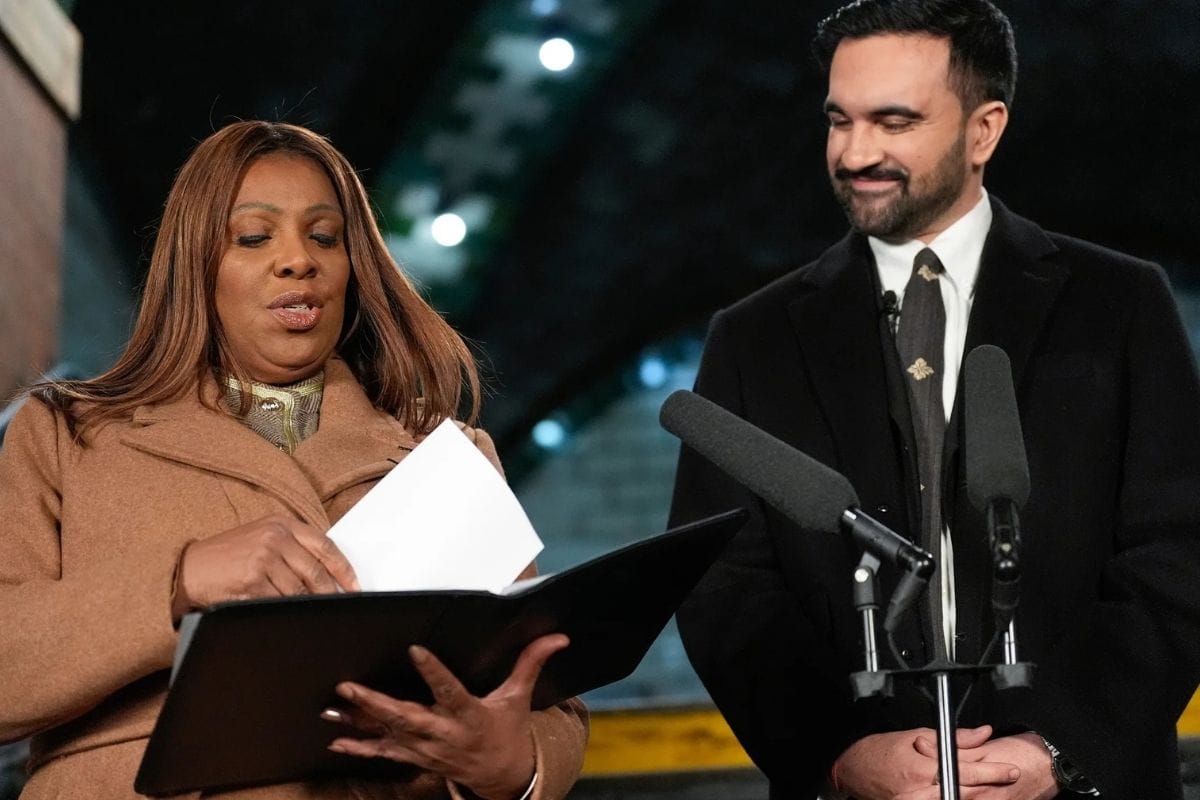
Just after the clock struck midnight on New Year’s Day, Zohran Mamdani officially became the mayor of New York City. The quiet moment marked the end of an extraordinary political journey for the 34-year-old democratic socialist, whose rise once seemed unlikely in a city dominated for decades by powerful political figures and entrenched institutions.
The ceremony took place beneath City Hall, inside a landmarked former subway station with Spanish-tiled arches. Unlike flashy inaugurations of the past, this was a restrained and deeply personal event. Mamdani stood alongside family members and close allies as he took the oath of office, administered by New York Attorney General Letitia James.
After signing the paperwork, Mamdani paid the required $9 filing fee, carefully counted out in exact change. Smiling, he described stepping into the role as “the honor and privilege of a lifetime.” The simplicity of the moment reflected the tone he hopes to set for his administration: grounded, accessible, and focused on everyday New Yorkers.
A Historic First for the City and a Meaningful Ceremony
Mamdani’s inauguration was historic in more ways than one. He is the first Muslim mayor of New York City and the first person of South Asian descent to lead America’s largest city. He also became the first New York mayor to take the oath of office on the Quran.
For the ceremony, Mamdani chose two Qurans: one that belonged to his grandfather and another connected to Arturo Schomburg, the renowned Black writer and historian. The choice symbolised both his family’s journey and the city’s long tradition of cultural diversity and activism.
In brief remarks after the oath, Mamdani reflected on the location of the ceremony itself. Standing underground, in a former subway station, he called it “a testament to the importance of public transit to the vitality, health, and legacy of our city.” It was a clear signal of how central transportation and accessibility will be to his leadership.
He also announced his first major appointment, naming Mike Flynn as commissioner of the Department of Transportation, an early move that aligns with his focus on transit reform and affordability.
From Queens Assemblyman to City Hall Power Broker
Just a few years ago, Mamdani was serving as a state assemblyman representing Queens. His mayoral campaign initially raised eyebrows, especially when he challenged well-known political figures with decades of experience and name recognition.
Yet his message resonated. In the November 4 general election, Mamdani secured more than one million votes, defeating former New York Governor Andrew Cuomo, who ran as an independent, as well as Republican candidate Curtis Sliwa. The victory marked a dramatic political upset and ended the grip of a six-decade political dynasty.
Mamdani’s campaign drew energy from young voters, working-class communities, and progressives frustrated with rising living costs and stagnant wages. His ability to connect across neighbourhoods from outer boroughs to Manhattan reshaped the city’s political conversation and attracted national attention.
What once seemed improbable quickly became inevitable as turnout surged and support widened, turning Mamdani into a symbol of a broader political shift underway in major U.S. cities.
A Public Celebration Designed for the People
While the early-morning swearing-in was private, the rest of Mamdani’s inauguration day was designed to be anything but exclusive. His team planned a large public ceremony and block party later in the afternoon, expected to draw tens of thousands of New Yorkers into the streets around City Hall.
Unlike previous inaugurations that were limited to a few thousand ticketed guests, Mamdani’s celebration aimed to be open, accessible, and communal. His transition team described it as a reflection of the grassroots movement that powered his campaign.
“This inauguration is a celebration of the movement we built, the mandate we won, and the city we are prepared to lead,” Mamdani said.
U.S. Senator Bernie Sanders, a Brooklyn native and longtime democratic socialist, was scheduled to publicly swear Mamdani in during the outdoor ceremony, underscoring the ideological alignment and national interest surrounding his administration.
Taking Over After Turmoil, Facing Enormous Expectations
Mamdani replaces Eric Adams, the centrist Democrat who leaves office after one troubled term marked by corruption investigations and political controversy. Adams dropped his reelection bid amid growing scrutiny, creating an opening for Mamdani’s campaign to gain momentum.
Four years earlier, Adams had taken his oath of office in a high-profile Times Square ceremony just after the New Year’s ball dropped. Mamdani’s low-key midnight oath offered a sharp contrast, emphasising substance and symbolism over spectacle.
Now in office, Mamdani faces enormous expectations. His campaign promised sweeping changes aimed at lowering the cost of living, including a rent freeze on roughly one million apartments, free buses, and universal free childcare. Supporters see his leadership as a chance to prove that bold progressive policies can work in a city as complex and expensive as New York.
Critics, however, question whether such ambitions are realistic given political resistance, budget constraints, and the city’s deep inequalities.
As New York welcomed 2026, Mamdani stepped into City Hall carrying both hope and pressure. His inauguration has already marked a turning point. Whether his promises become lasting change will define not only his mayoralty, but how the nation views progressive leadership in the years ahead.